


INTRODUCTION
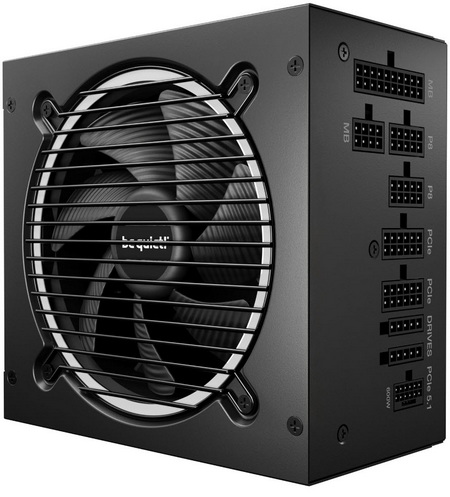
A system’s power supply shapes the entire experience of using a PC, from how smoothly components behave under load to how efficiently the machine draws and distributes energy. It’s the one part of a build that has to perform consistently every single moment the system is running, absorbing voltage fluctuations, handling sudden spikes, and keeping everything fed without adding unnecessary heat or noise. Modern units also carry the responsibility of supporting new electrical standards, higher transient demands from GPUs, and the long‑term reliability expectations of users who want a build to last through multiple upgrade cycles. be quiet! has steadily refined its approach in this space, focusing on clean electrical performance, restrained acoustics, and practical design choices rather than gimmicks. That philosophy continues with the newest entry in the lineup, the Pure Power 13 M 1200W.
We are the German premium brand manufacturer of quiet hardware components for gaming, workstations and desktop PCs. Since our foundation in 2001, we are proud to have more than 20 years of experience in the industry. Our goal from the very beginning has been to develop products of the highest quality that are not only quiet, but also extremely powerful. With a wide range of power supplies, PC cases, water and air coolers and fans, we have established ourselves as a leading manufacturer in this field.
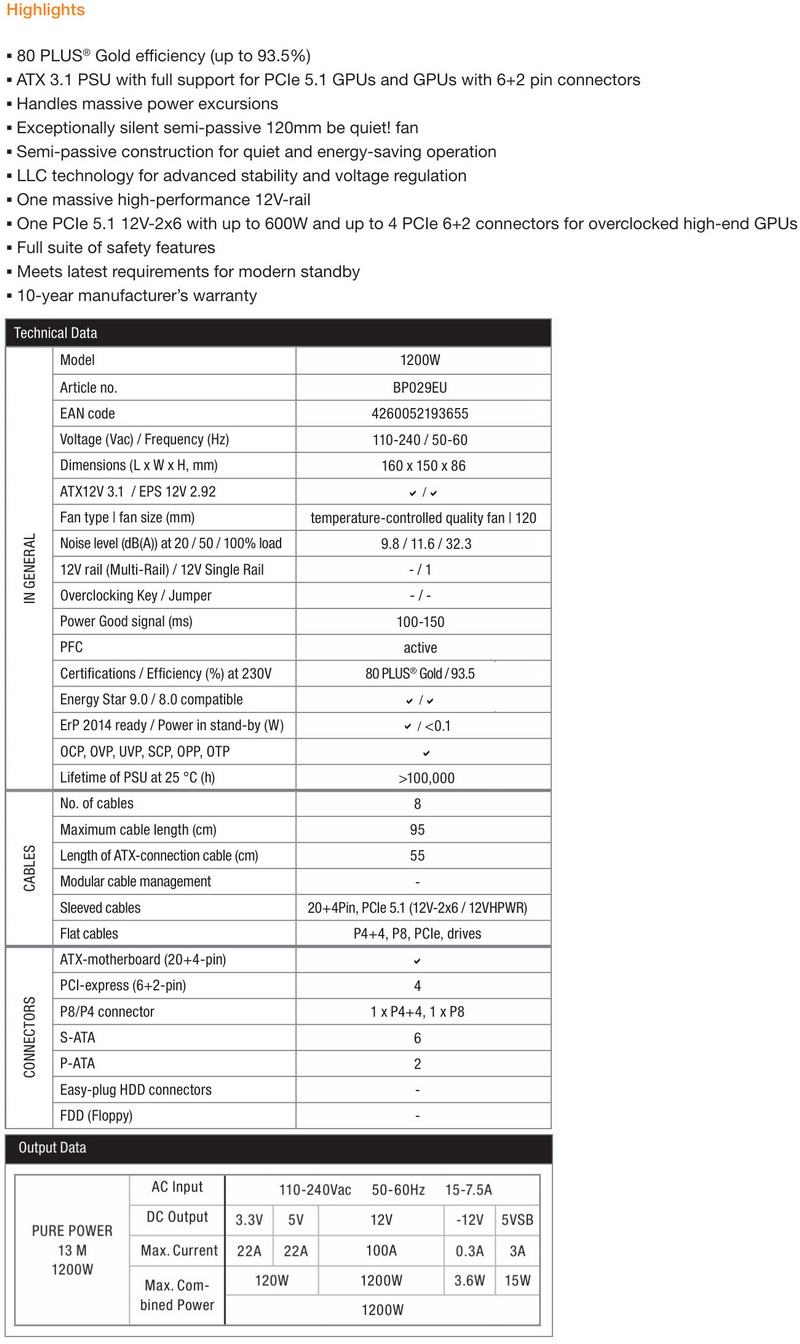
Right now, the Pure Power 13 M line of power supply units includes 6 outputs (550/650/750/850/1000/1200W) all of which are fully modular, ATX 3.1 & PCIe 5.1 compliant and 80 PLUS Gold certified (up to 93.5% efficiency). be quiet! just released the 1200W output model that features a single 12V-2x6 power connector, four 6+2 pin PCIe power connectors, single +12V rail (100A) capable of delivering 100% of the units’ total power output and has a total power output of no less than 1338W (peak should be up to 2676W for up to 100ms - once again however this is not something I can test). Other features and specifications of the Pure Power 13 M 1200W include LLC resonant converter paired with synchronous rectification and DC‑to‑DC regulation (thus allowing the unit to sustain stable voltage output even under rapid load shifts), active PFC, semi-passive zero-RPM fan mode for the 120mm fan (starts spinning after a specific load), and a full array of electrical protections including over-current (OCP), over-voltage (OVP), under-voltage (UVP), short-circuit (SCP), over-temperature (OTP), and over-power (OPP). Finally, be quiet! covers the Pure Power 13 M 1200W power supply unit with a generous 10-year limited warranty.
SPECIFICATIONS AND FEATURES
PACKAGING AND CONTENTS

Once again be quiet! uses the same package so at the front we find their logo, certifications, output and a product picture.

At the rear we find the electrical table, several certifications and warnings, output and a few words about be quiet!

The unit is placed in a formed piece of cardboard.

Along with the brand-new Pure Power 13 M 1200W its modular cables and power cord inside the box you'll also find 5 thick cable ties, 5 mounting screws and the user manual.
THE PURE POWER 13 M 1200W EXTERIOR

Even though the main power cables (motherboard, 12V-2X6) are braided the rest are low-profile ones.

Measuring 160mm in length, 150mm in width and 86mm in height the Pure Power 13 M 1200W follows the typical ATX form factor.

Be quiet! has used an 120mm rifle-bearing fan with this model.

On the left side of the enclosure, we find a sticker with the units electrical table.

The company logo is on the opposite side.

All 9 power cable ports located at the front are tagged.

At the rear we find the usual honeycomb perforation, power on/off switch and the power port.
THE PURE POWER 13 M 1200W INTERIOR

The 120mm rifle-bearing fan used is able to spin up to 2700RPM and produces up to 32.3dBA of noise.

Once again, CWT (Channel Well Technologies) seems to be the OEM behind the Pure Power 13 M 1200W.

Primary capacitor is manufactured by the Taiwanese Teapo and is certified for use up to 85 degrees Celsius.

Secondary capacitors are also manufactured by Teapo but are certified for use up to 105 degrees.
TEST BED
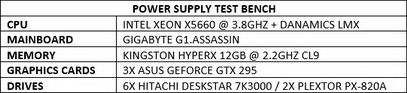
TESTING METHODOLOGY
Using a dedicated measurement instrument such as a Chroma or a SunMoon to test power supply units is without doubt the most ideal and accurate way (not to mention the fastest) to do that currently. However, it's certainly not the only way there is and so pretty much anyone can test a power supply unit just by using a test rig. Certainly, limitations do apply and so you can't really push a 1000W power supply to its limits if your system only uses 500W at peak loads and that's why over the years we saved certain hardware components for the purpose of building a dedicated PSU test rig. True it may not be as accurate as the above mentioned solutions, but it comes really close and is in fact much closer to real world usage. So as always, we ran several games with maximum graphic options enabled at a resolution of 2560x1600 in order to stress every hardware component and increase the overall power demands of the system. The Passmark BurnIn Test was also used to overstress the components in an effort to provide the most accurate results possible. As a final test we also used the latest OCCT software and its dedicated PSU testing suite since it can really bring a power supply to its knees after inside a few minutes.
Rail stability was checked/measured with the CPUID Hardware monitor and a Metex multimeter which also recorded the system load in idle and in load. As always try to remember that the power consumption numbers listed in the graph are the highest (Peak) ones recorded during the entire duration of the tests and not the average ones. Noise levels coming from the fan were recorded using the high precision HD600 ExTech Sound dBA Meter from the rear of the unit and at a range of no more than 5-10cm. Readings under load are recorded the exact moment we manually switch the fans of all graphics cards from full speed to almost zero, that way the fan of the power supply does not have enough time to slow its RPM and so by doing this we get very accurate noise level readings. Needless to say, in order to get 100% accurate readings, you need to have a noise isolated room for that exact purpose, something which is quite impossible unless you are working inside a real lab (some people use very small noise insulated boxes but due to their size both heat and noise exceed normal levels and so the results can't really be considered to be 100% accurate, nor realistic for that matter). Also do take into account that since all noise measurements take place from just 5-10cm away the final noise levels to reach your ears will be considerably less.
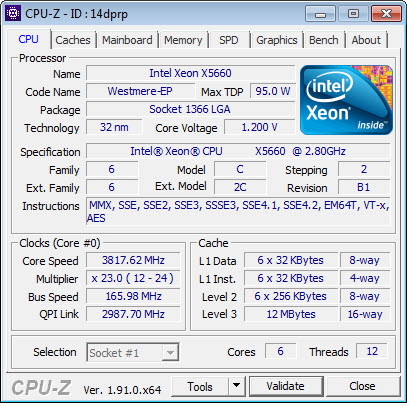
* After well over 10 years of testing PSUs the Intel Core i7-920 CPU of this rig failed and so we replaced it with a Xeon X5660 (we also swapped the GA-X58A-UD7 for the G1. Assassin).
TEST RESULTS
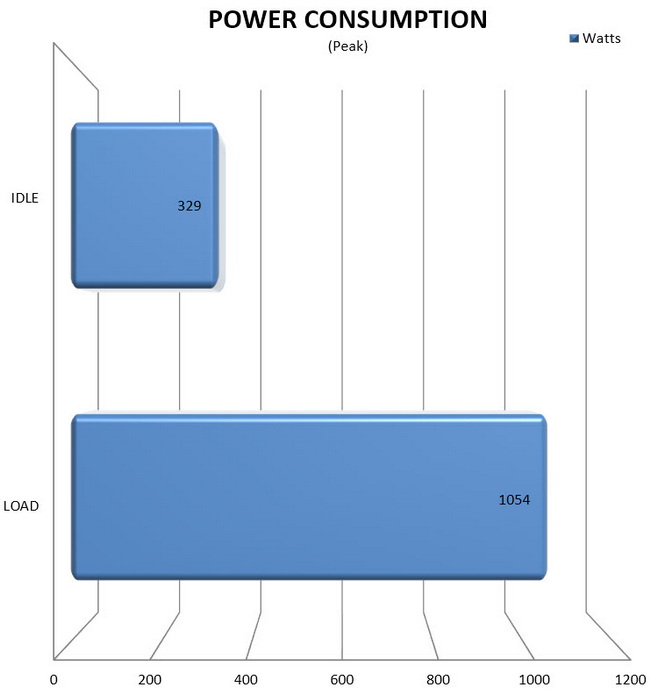
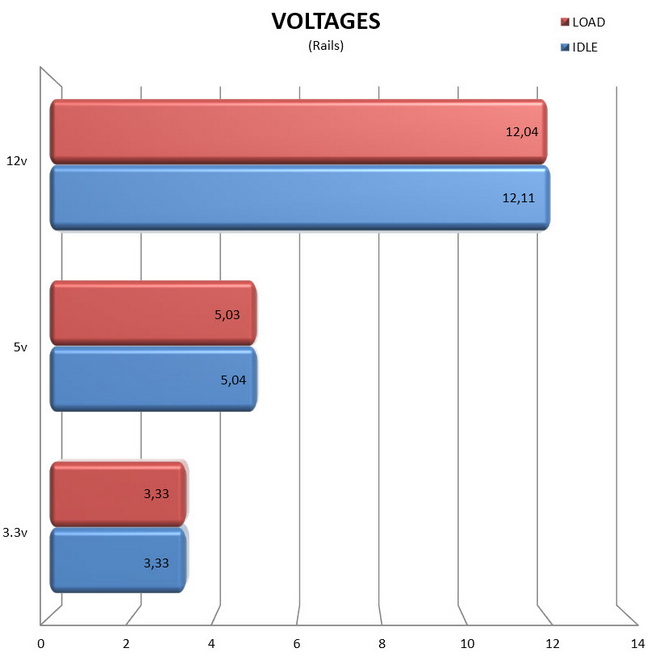
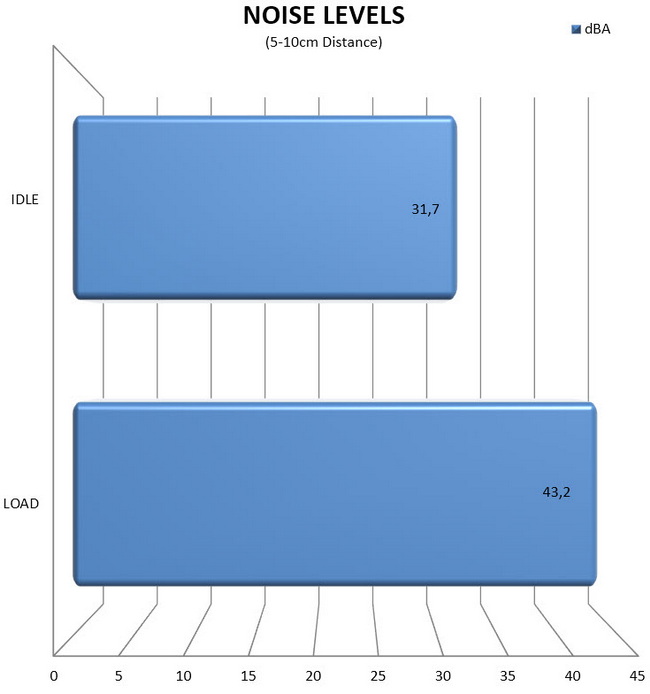
CONCLUSION

The Pure Power 13 M 1200W ultimately stands out for its electrical consistency, delivering stable 12V performance even when pushed by heavy GPU transients or sustained multi‑core workloads. Its internal layout is clean, the modular interface is well‑executed, and the overall construction reflects the same disciplined engineering be quiet! has built its reputation on. That said, the acoustic behavior does shift once the unit is operating near its upper range, with the fan becoming more noticeable under prolonged high‑load scenarios. And while the PSU uses reliable Taiwanese Teapo capacitors, this is largely a result of the unit being manufactured by CWT, which recently has been sourcing capacitors from Teapo for these platforms. Even so, the combination of rail stability, efficiency, and solid build quality makes it a strong option for systems that demand dependable high‑capacity power delivery.
The Pure Power 13 M 1200W model was released just now for around USD215 inside the USA and 208.30Euros inside the EU (Amazon.de) and so it’s a tad higher than expected (and very close to the higher-performance power zone 2 1200W model). Cost aside however the Pure Power 13 M 1200W power supply unit does a good job not only in terms of rail stability but also features and so I do recommend checking it out if you’re in the market for one.
PROS
- Good Build Quality
- Good Rail Stability
- ATX 3.1 & PCIe 5.1 Compliant
- 80 PLUS Gold Certified
- 1200W Output
- Electrical Protections (OCP/OVP/SSP/OPP/UVP/OTP/SIP)
- 10 Year Limited Warranty
CONS
- Teapo Capacitors (For Some)
- Noise Levels (At Load)
- Price (For Some)