

INTRODUCTION
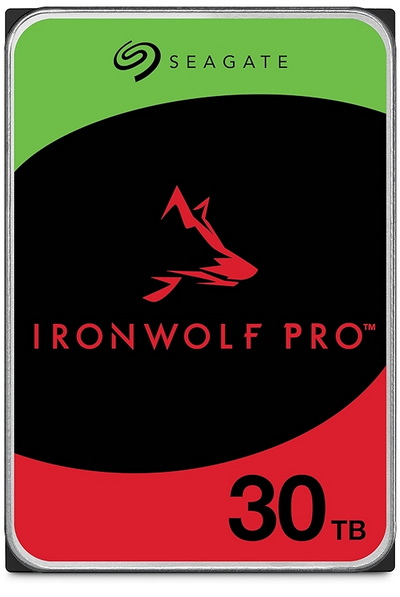
Thanks to the long awaited HAMR technology 30TB hard disk drives are finally here and significantly sooner than what I had initially anticipated back in 2019 when Seagate released their first 16TB models. The recent introduction of HAMR technology based hard disk drives also effectively means that we should see 40TB models hit the global market by early to mid-2026 and if things go as planned by the people over at Seagate, we may even see 100TB capacities by 2030. My very first HAMR HDD review was of the latest EXOS M 30TB hard disk drive by Seagate a couple of weeks ago and since it delivered as advertised today, I'll be testing the also HAMR based IronWolf Pro 30TB model.
Seagate is a global leader in mass-capacity data storage, having delivered over 4.5 billion terabytes of capacity over four decades. From edge to core to cloud, Seagate builds trust in data by delivering scalable, sustainable, and secure storage solutions. Learn more at www.seagate.com.
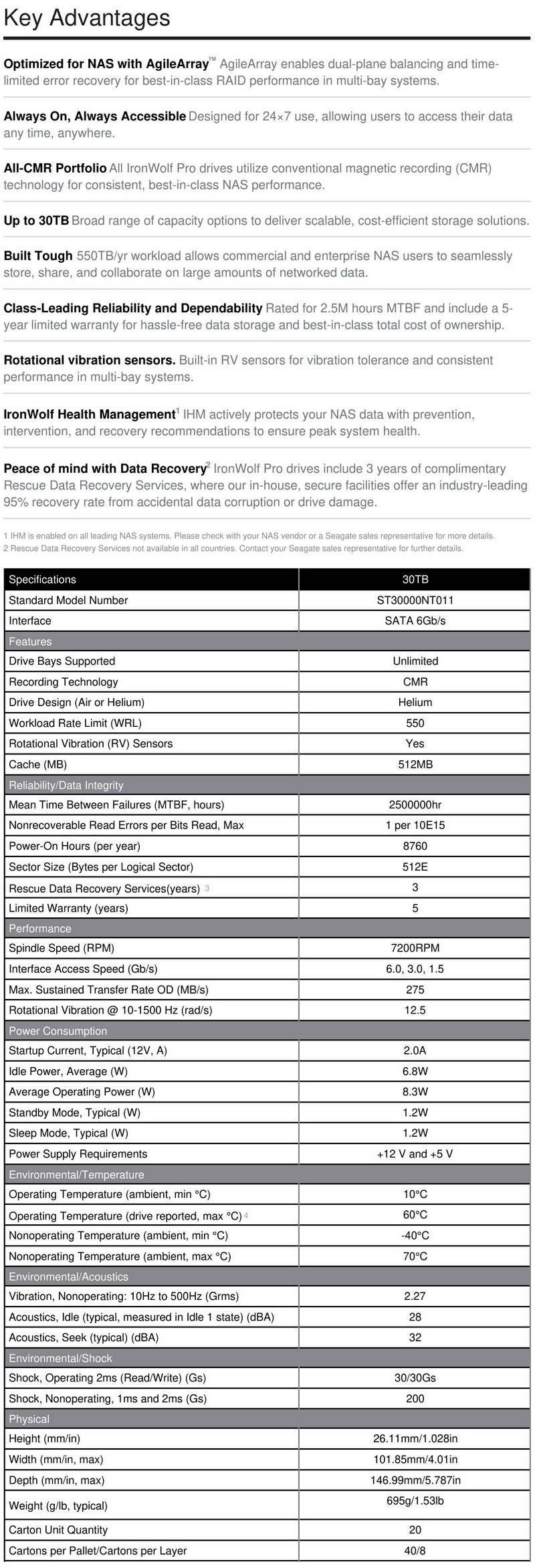
Just like the Exos M 30TB the IronWolf Pro 30TB HDD (primarily designed for use with NAS) is also a helium sealed model based on Seagate’s Mozaic3+ platform and is powered by CMR (conventional magnetic recording) technology. The Mozaic3+ HAMR technology allows for more data density with improved reliability and reduced power consumption (thus carbon footprint) thanks to a combination of superlattice platinum-alloy media for the platters, plasmonic writer (nanophotonic laser, photonic funnel and quantum antenna combination), Gen 7 spintronic reader and a 12nm integrated controller. Seagate has plans for 4TB, 5TB and 6TB capacities per platter in the coming years but for now the new 30TB models feature a total of 10 platters. Moving to specifications the platters of the IronWolf Pro 30TB spin at 7200RPM while the drive itself has 512MB of cache resulting to a maximum sustained transfer rate of 275MB/s. Once again, Seagate covers their IronWolf Pro 30TB drives with a 5-year limited warranty (including 3-years or their rescue data recovery services) and reports an MTBF (meantime between failures) of 2.5 million hours.
SPECIFICATIONS AND FEATURES
THE IRONWOLF PRO 30TB
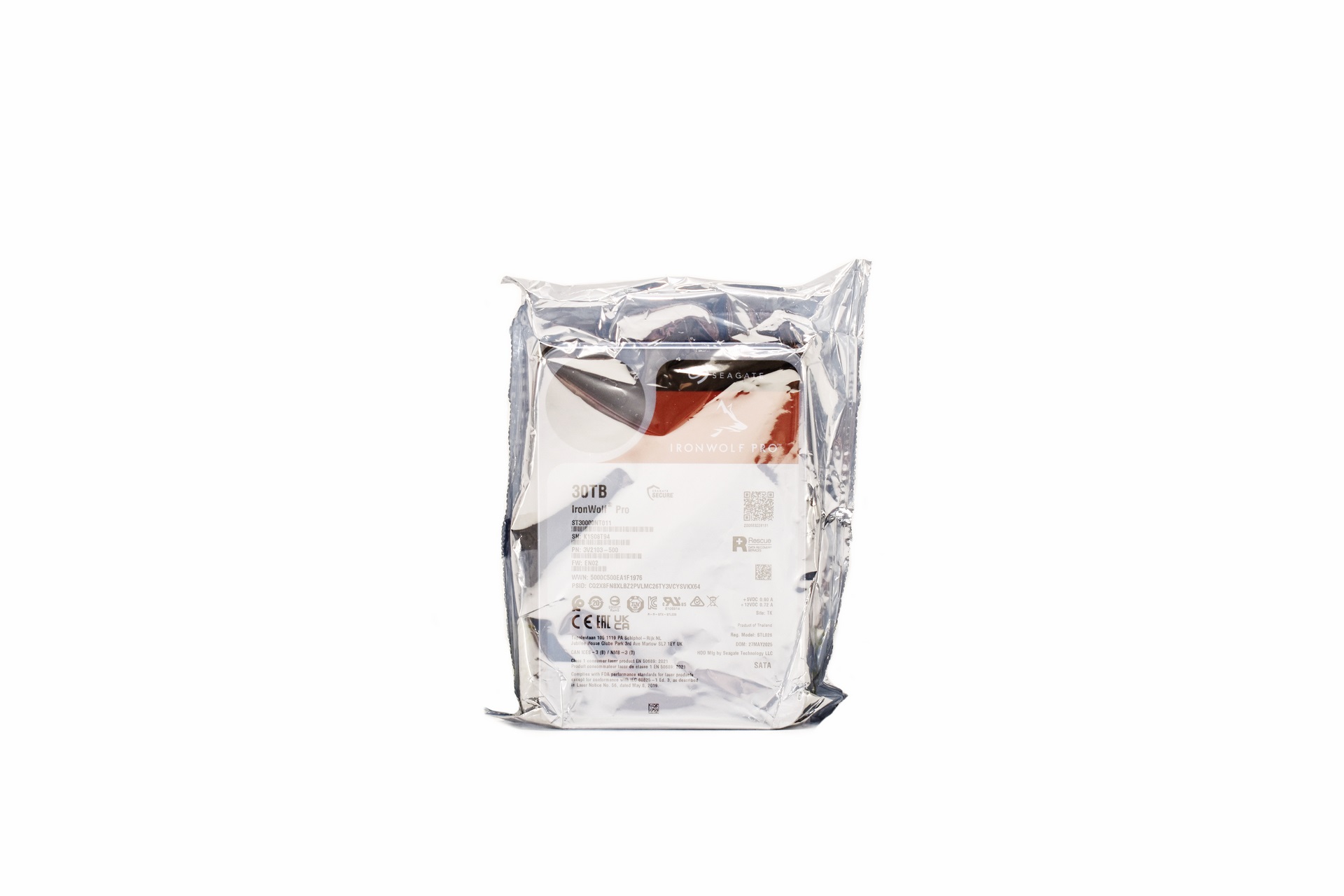
Just like with most past HDD reviews, I received my sample inside a static-free bag as seen above.
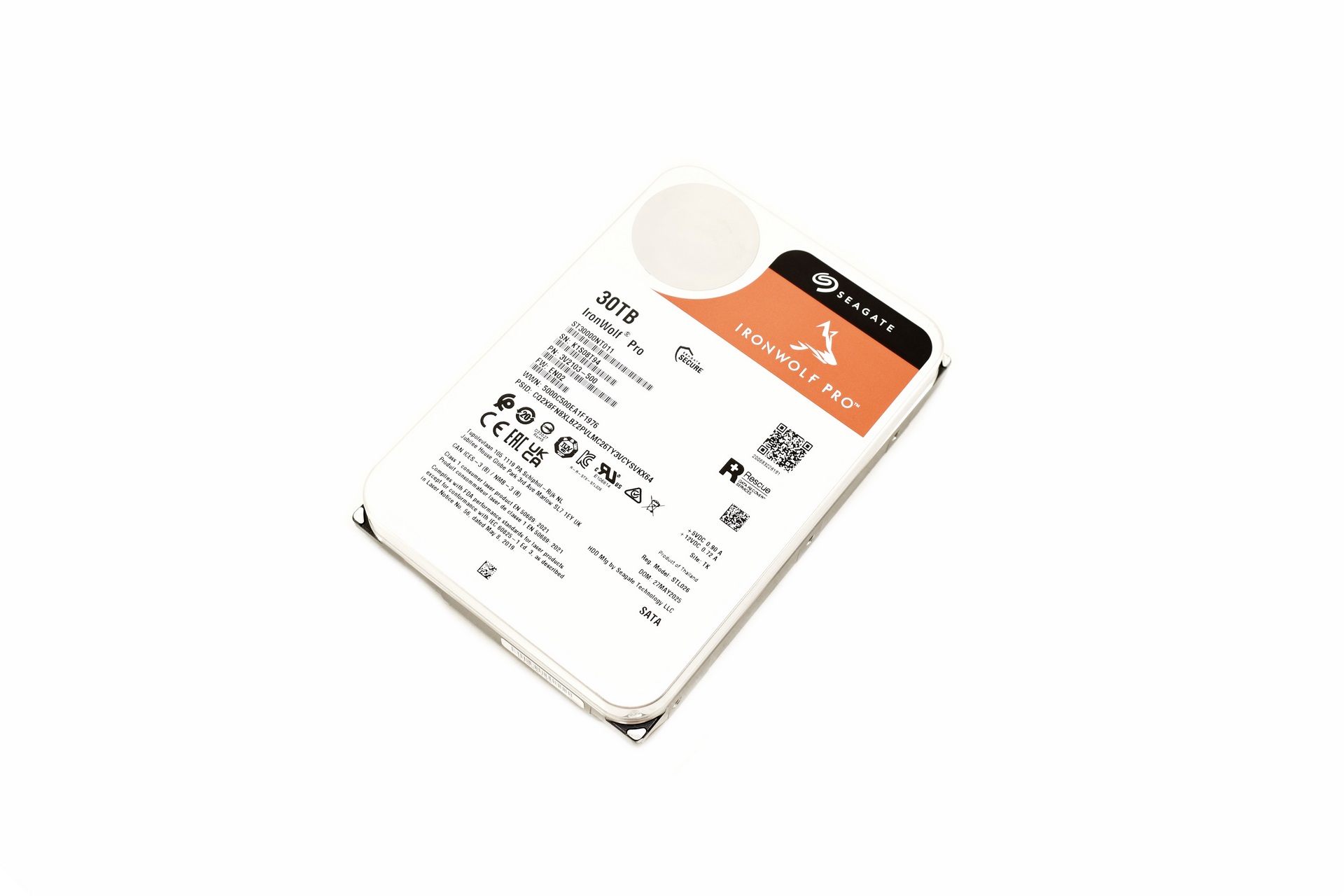
On a large sticker at the top of the drive we find details along with its serial number and barcode.
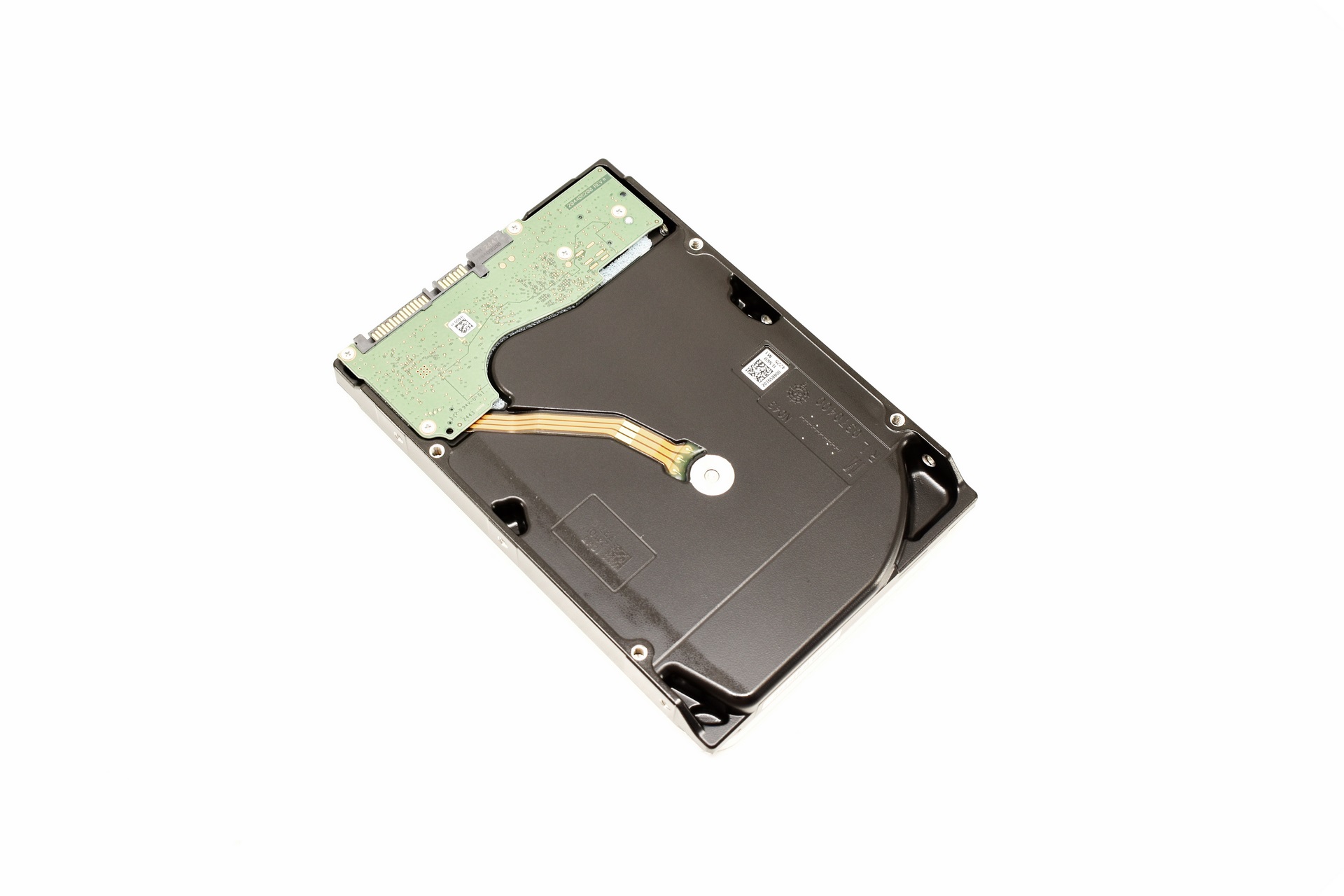
Turning over the drive we find a tiny PCB which means that once again there’s minimal exposure of internal parts.
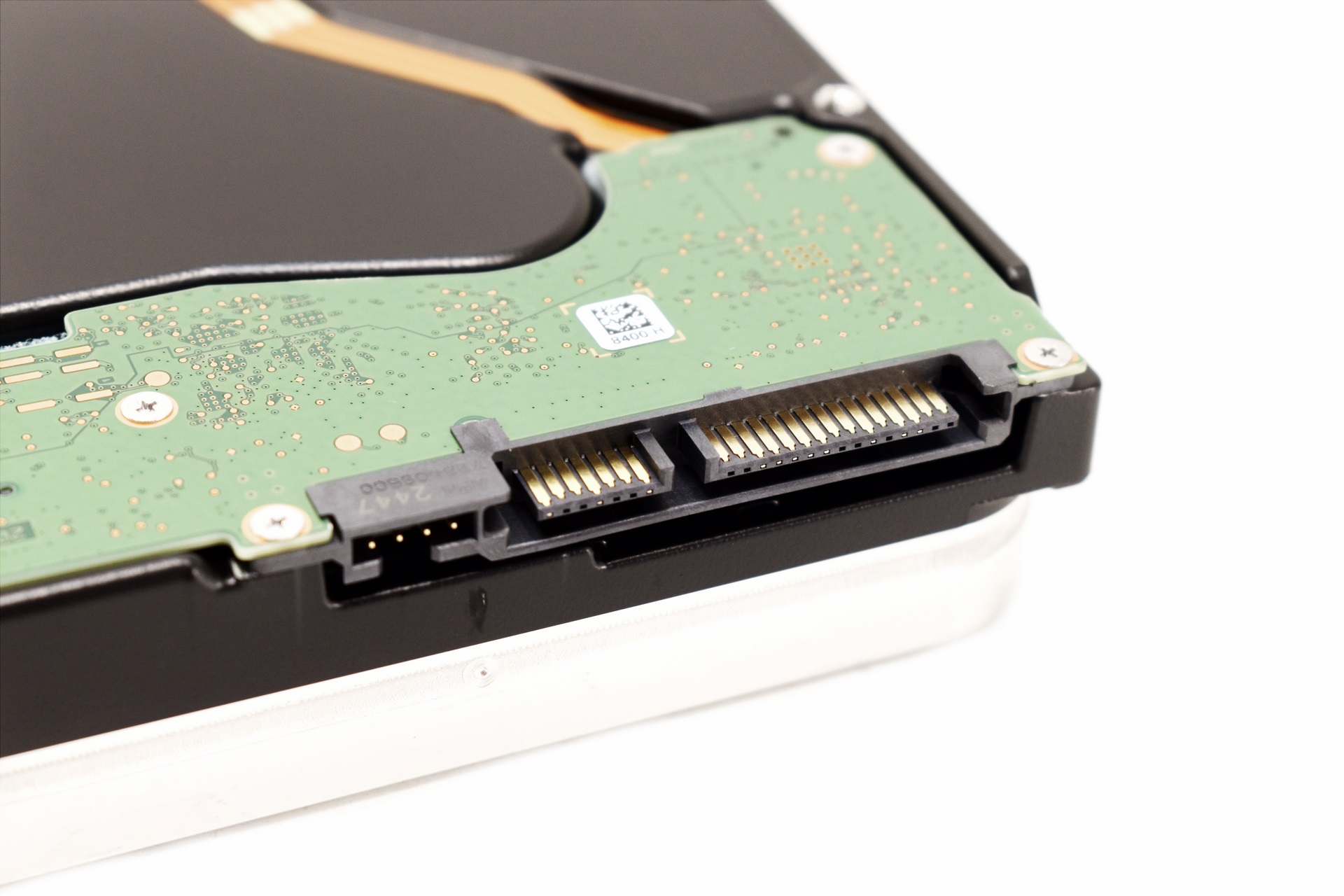
The usual SATA III (600 - 6Gb/s) power and data connectors are located at the rear of the drive right next to three pins (probably used for firmware updates).
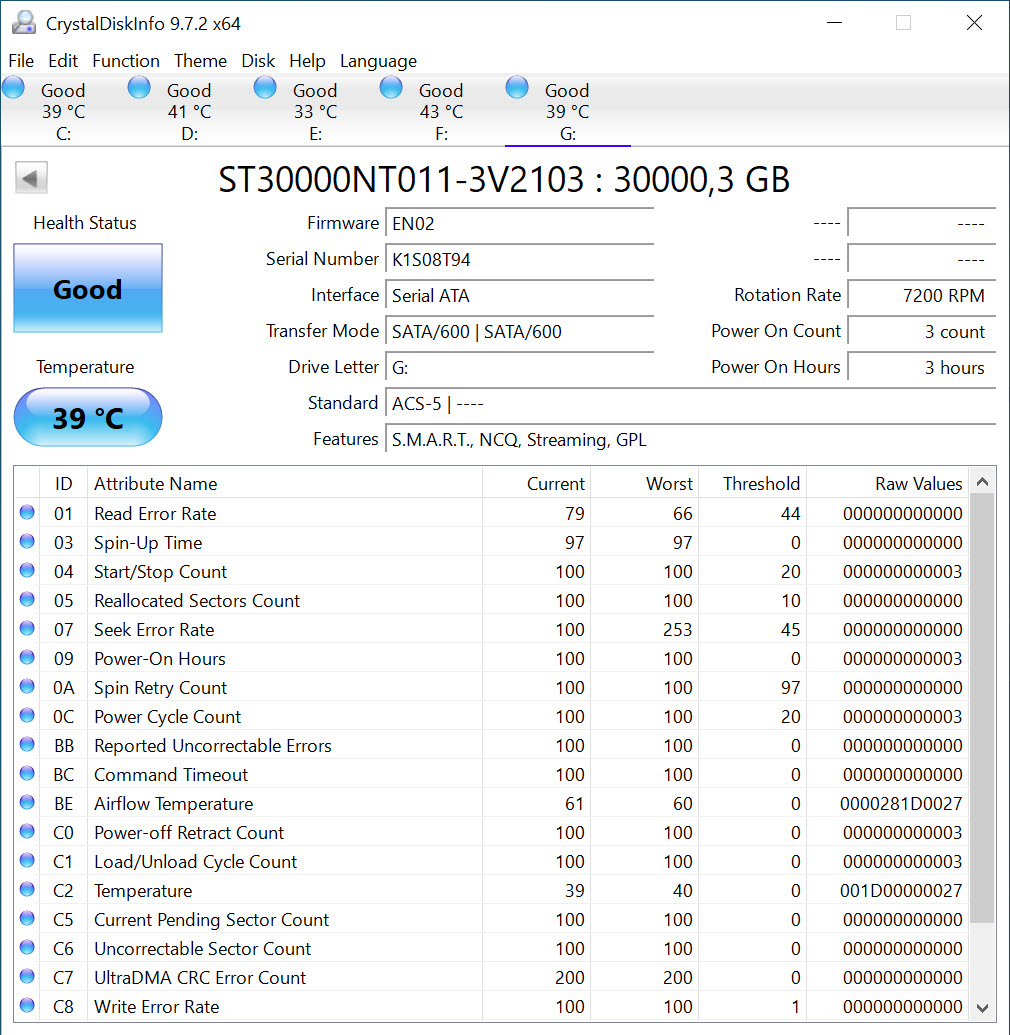
Details on the drive thanks to Crystal Disk Info are available above.
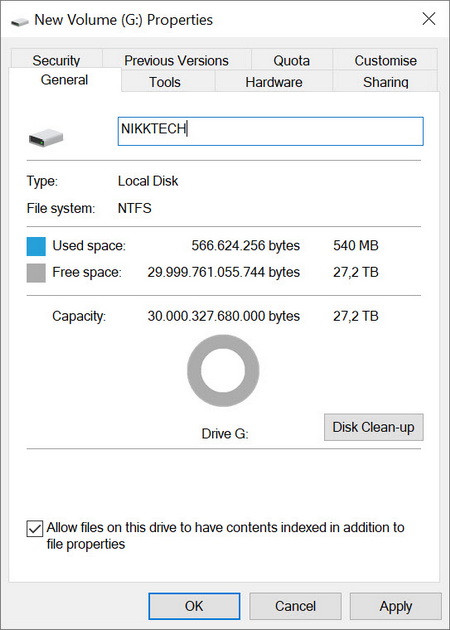
For anyone wondering available space in Windows is around 27.2TB.
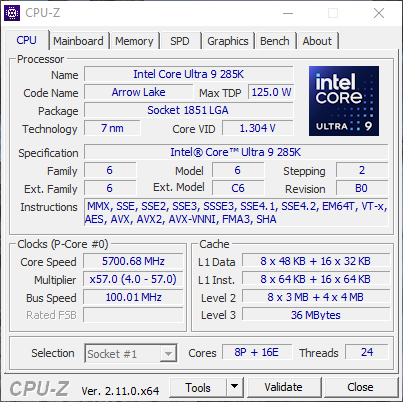
TEST BED

TESTING METHODOLOGY
Thoroughly testing hard disk drives may require time and patience but that's just about it. Of course, that doesn't mean that one must take it lightly, at least not when people base their decision on your results. True some choose to only use 2 or 3 benchmarking suits in order to measure the performance of a drive or drives since quite honestly most benchmarking suites do tend to agree with each other (so it's not really wrong) but I've always liked taking things a step further in order to be almost 100% certain of the results I get and post in the charts.
So, in this kind of reviews I'll be using a total of 7 different benchmarking suites in an effort to bring you the most accurate results across the board. Now the only reason why i say effort is because real-world usage is not always on par with what results one gets by running several benchmarks on a drive and that's mainly because there are many variables at work from ambient temperatures to hardware configurations and even firmware versions. The benchmarking applications use are AIDA64 suite (former Everest Pro), HD Tune Professional (as of October 2016 seek times of 3.5” drives are also recorded), HD Tach RW, ATTO*, Sisoftware Sandra Titanium, Crystal Disk Mark 64bit* and the PCMARK 7** (secondary storage suite). These benchmarking tools are the best in what they do and as you will also see later on their results more or less agree. Each test is performed a total of 6 times and then the average is recorded into the charts. Temperatures are recorded using Hard Disk Sentinel and after 45 minutes of continuous testing in a 23 degrees Celsius temperature controlled room. Finally, I also make use of the ExTech HD600 dBA meter on each of the drives (2-5cm away) in order to accurately record their noise levels (during access), although if you don't turn off all system fans when doing so it's quite possible that you will never even hear the drive. The operating system used is a fresh installation of Microsoft Windows 10 Pro with every update installed up until the time of testing.
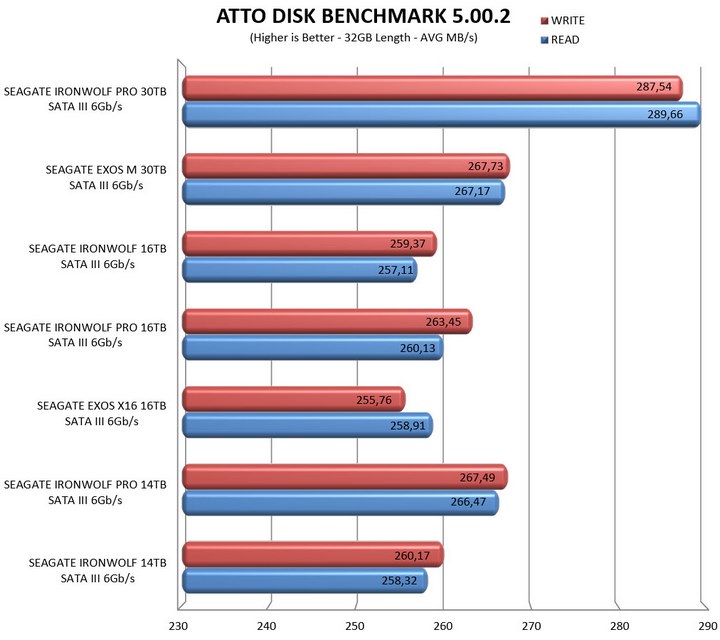
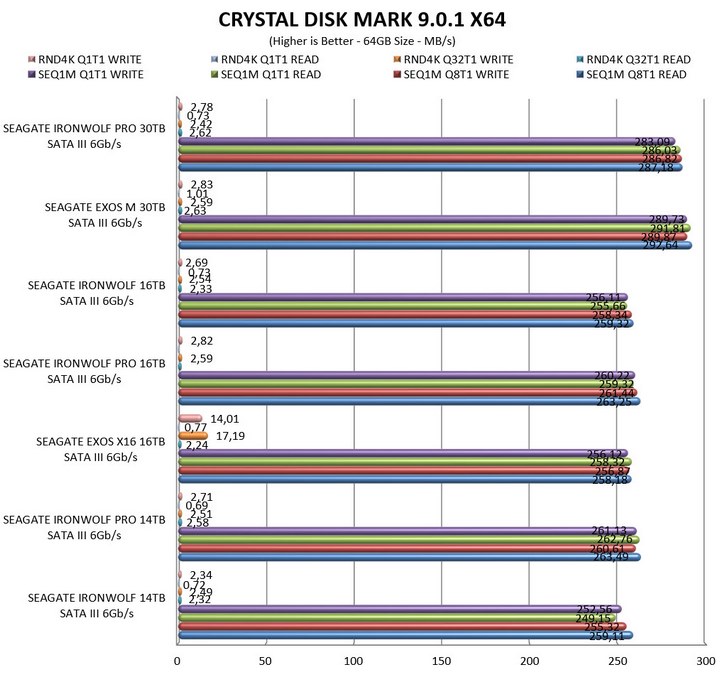
* As of August 2025, I'll be introducing extra tests with ATTO v5.00.2 and Crystal Disk Mark v9.0.1.
** Support for PCMARK 7 has been discontinued since 2020 but it's still valid for SATA & SAS drives.
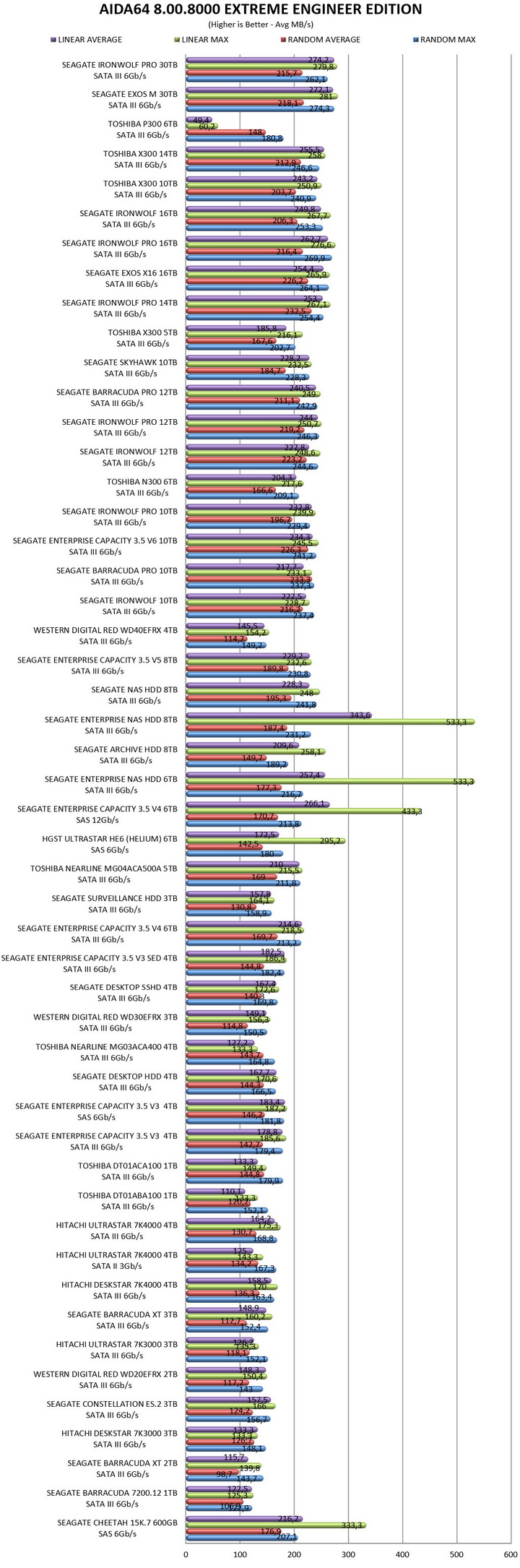
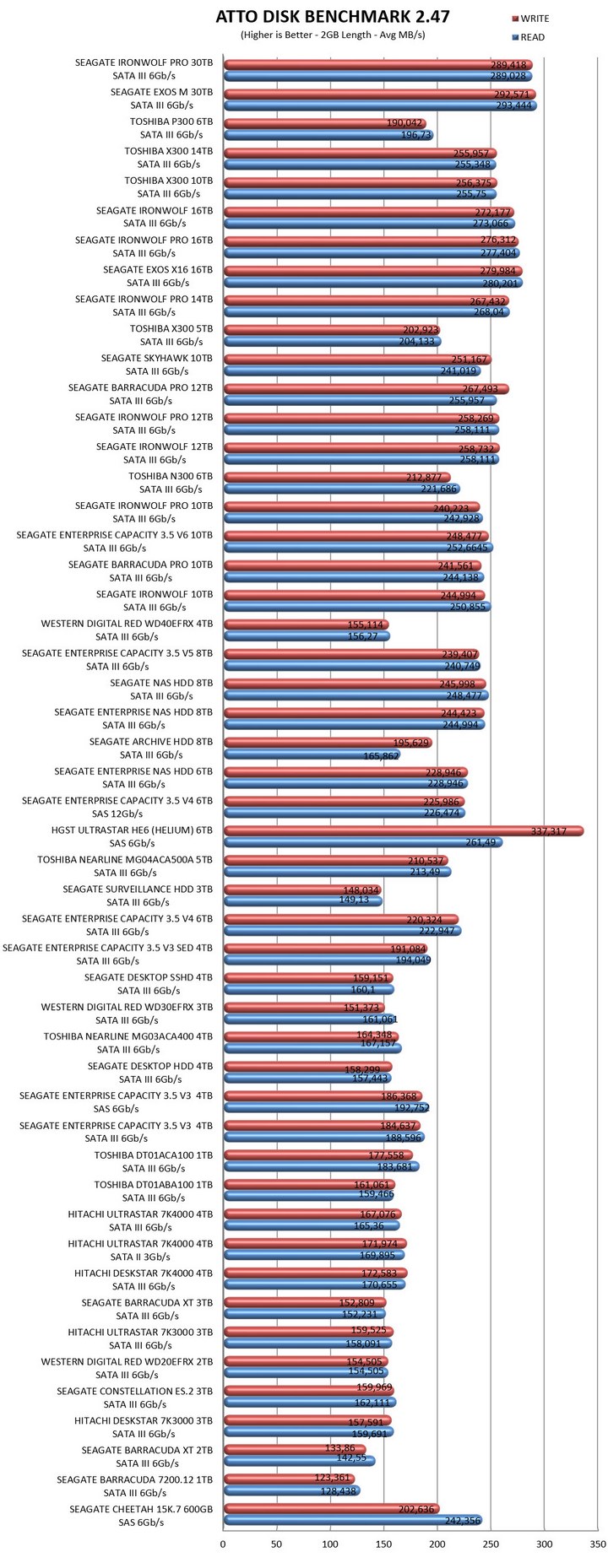
TEST RESULTS - AIDA64 / ATTO
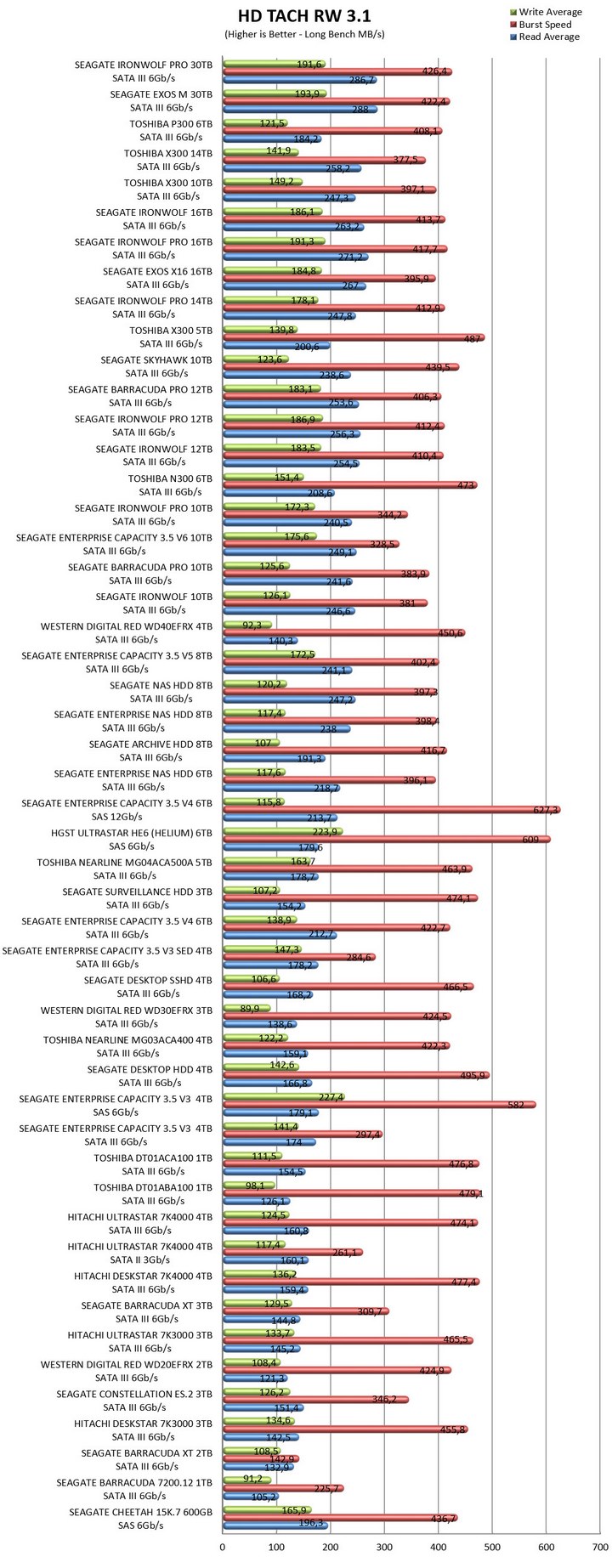
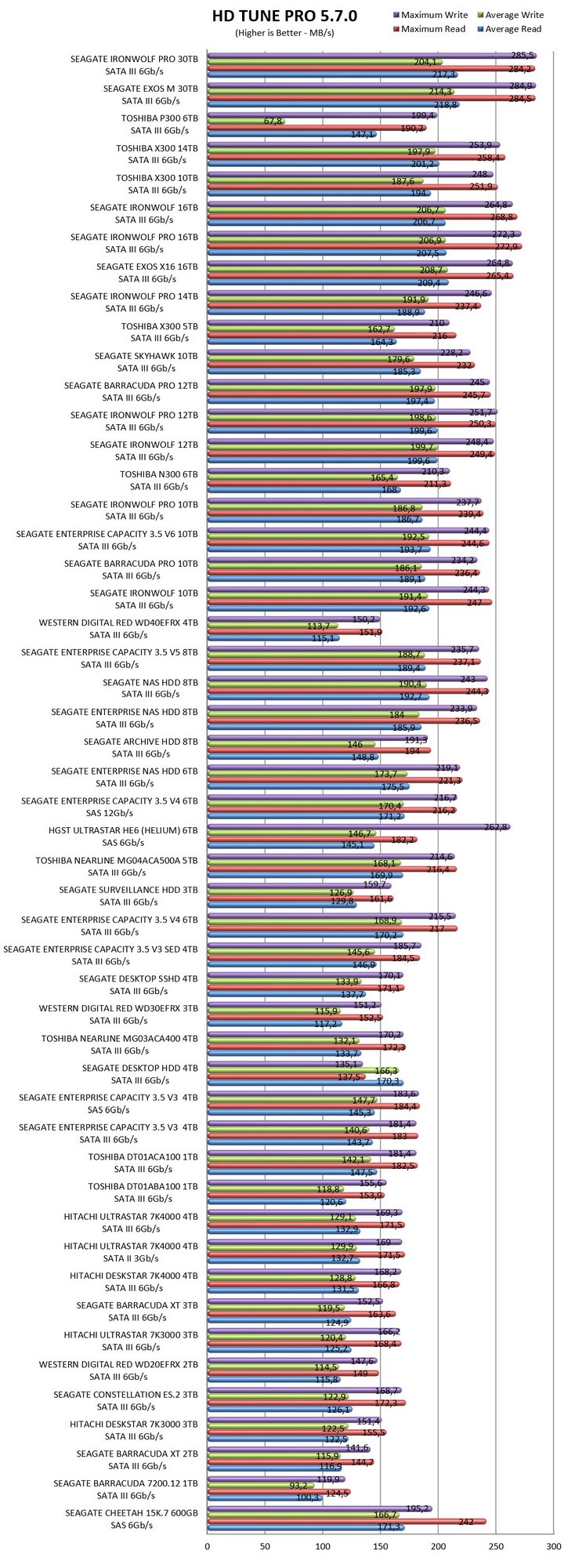
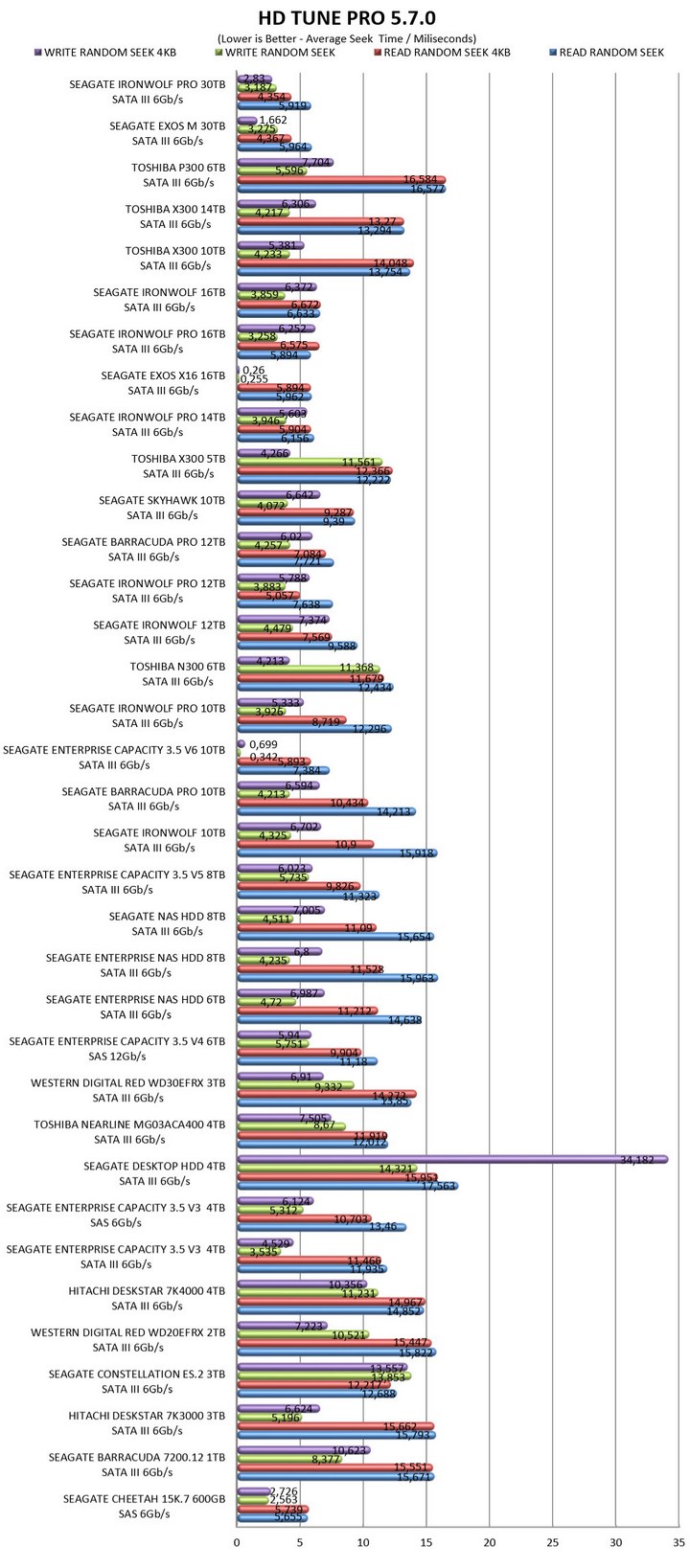
TEST RESULTS - HD TACH RW / HD TUNE PRO
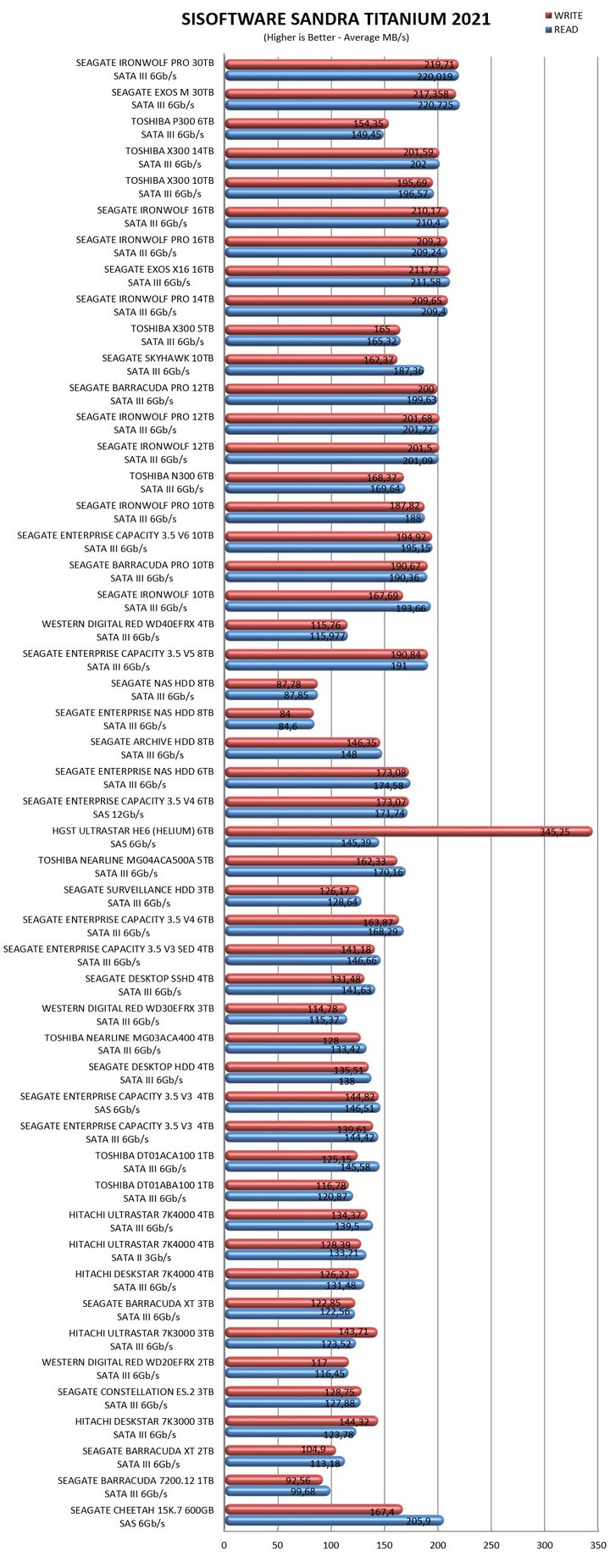
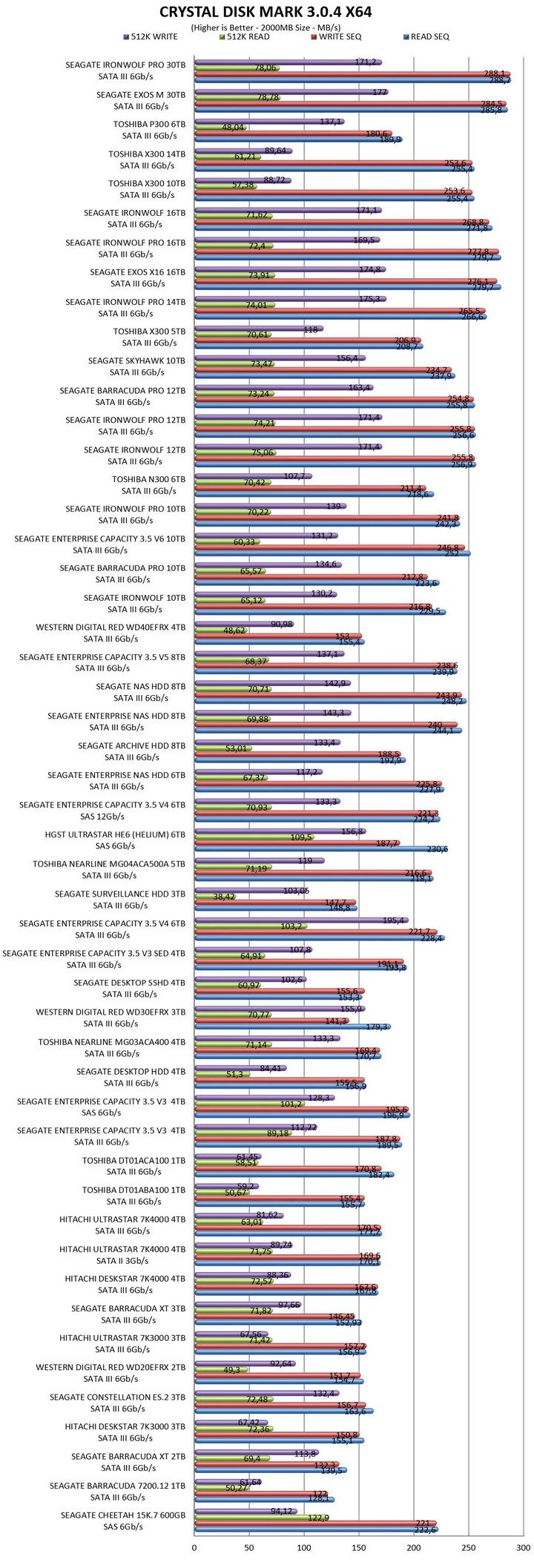
TEST RESULTS - SISOFTWARE SANDRA TITANIUM / CRYSTAL DISK MARK X64
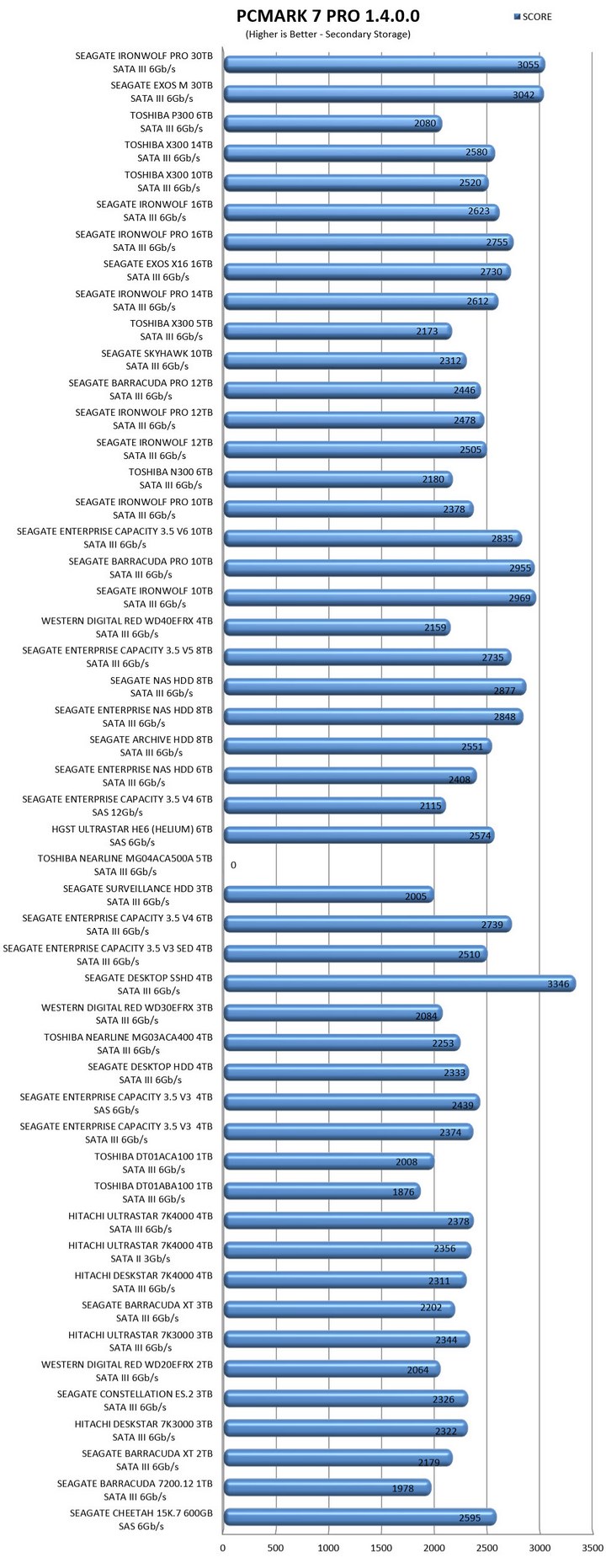
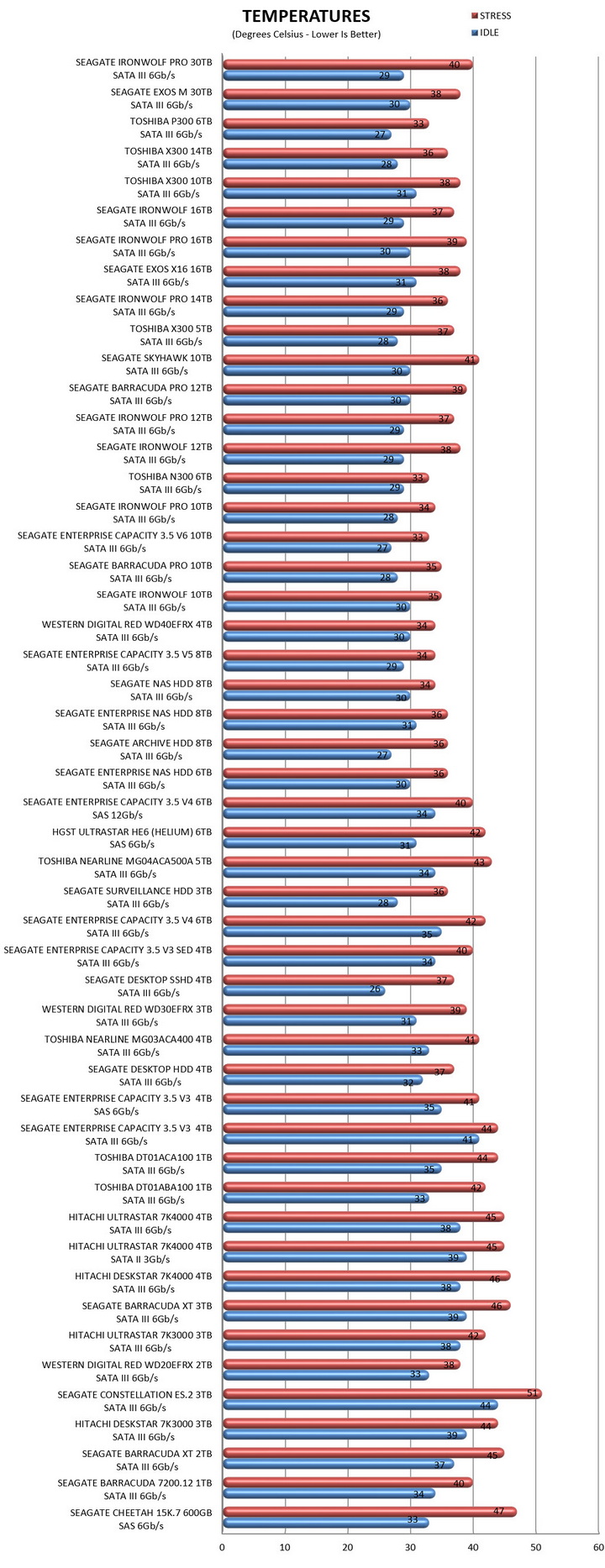
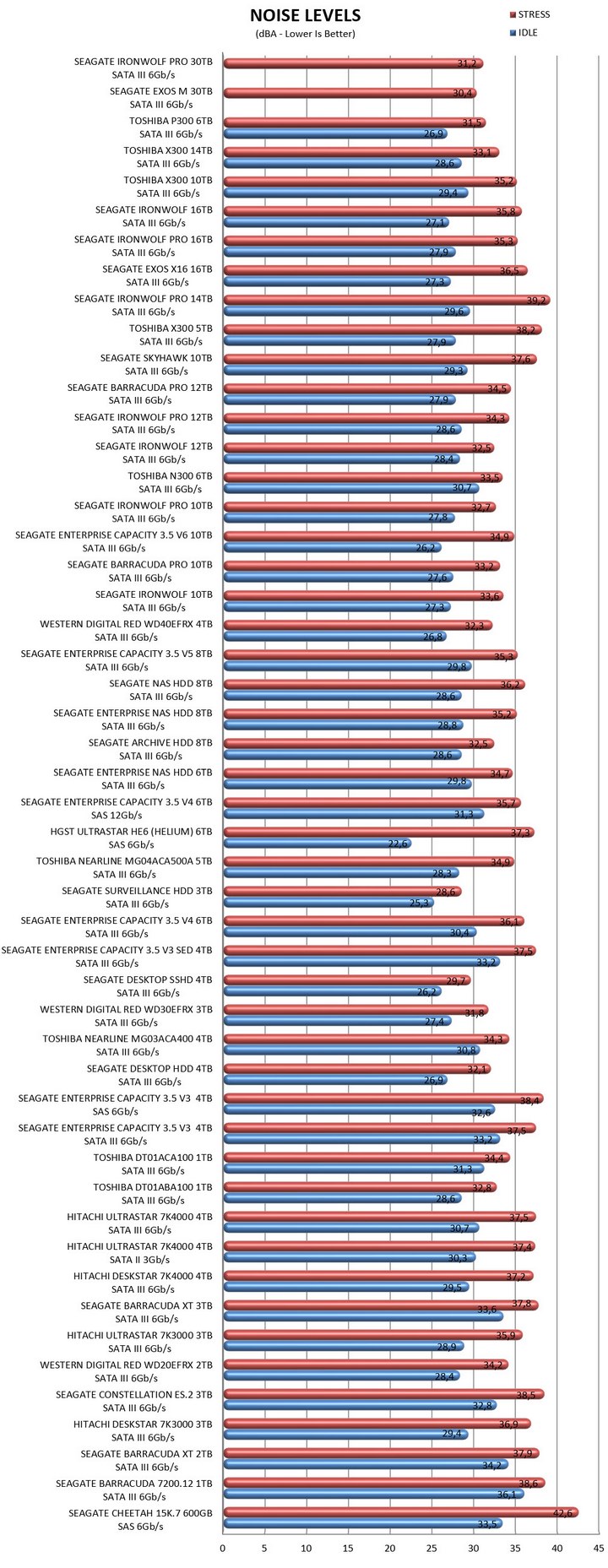
TEST RESULTS – PC MARK 7 PRO / TEMPERATURES / NOISE LEVELS
CONCLUSION
Although I’ve always favored the Exos HDD lineup by Seagate when it came to endurance the IronWolf Pro lineup has always felt slightly faster and the 30TB model doesn’t disappoint. For such drives however durability/endurance and capacity matter just as much if not more and well the IronWolf Pro does very well here as well and on par with the Exos M drive. Unfortunately, I don’t do power consumption tests but according to Seagate the IronWolf Pro is slightly less power hungry compared to the Exos M and on top of that features their IHM (IronWolf Health Management) and AgileArray technologies for increased reliability so those are more than enough for it to be recommended for NAS use (on the other hand both drives performed roughly the same when it comes to noise levels and temperatures).
Right now, the IronWolf Pro 30TB HDD by Seagate retails for USD599.99 inside the USA (Amazon.com – out of stock currently) and for 654.48Euros inside the EU (Amazon.de). Yes, these are not what most people would call affordable but as I pointed out in my Exos M review the fact that you can get an 30TB HDD for the price of an 8TB Gen4 M.2 NVMe SSD is already a great deal. Cost aside there are many reasons these drives are sold out in most places, they combine very good performance (for a mechanical drive at least) with ample capacity and impressive endurance numbers and so once again the Platinum Award is in order.
PROS
- Impressive Build Quality / Durability (2.5 Million Hours MTBF)
- Top Of The Charts Performance (SATA III)
- Technologies Used (Mozaic 3+ / AgileArray)
- 512MB Cache
- Massive 30TB Capacity (Up To 36TB)
- Temperatures / Noise Levels / Power Consumption
- Ideal For NAS Use (Power Consumption)
- 5 Year Limited Warranty & 3 Year Data Rescue Services
CONS
- Price (For Some)
- Current Availability