

INTRODUCTION
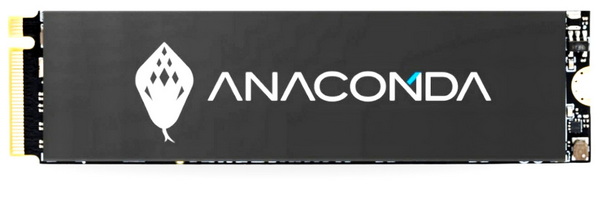
SSDs have reshaped the way we think about storage. Gone are the days of waiting for mechanical drives to spin up, solid state technology means instant access, smoother multitasking, and a noticeable boost in everyday performance. Whether you’re gaming, editing, or just browsing, an SSD can be the difference between sluggish and seamless. Earlier this year Anacomda released their first PCIe Gen5 SSD called the i5 and today with me I have the 1TB capacity.
The anaconda in our logo stands for the phenomenal speed and immense capacity of our products, as well as the connection between our products, global trends, and human development. ANACOMDA believes that data storage products should be technology encased in fine works of art. Our products are produced under strict manufacturing standards. In addition to various customer services, our brand also offer designs that are aesthetically pleasing. The original concept of ANACOMDA is to "turn memory into luxury" and offer customers a brand new electronic product experience. This led us to our ultimate brand concept: Luxury For Memory.
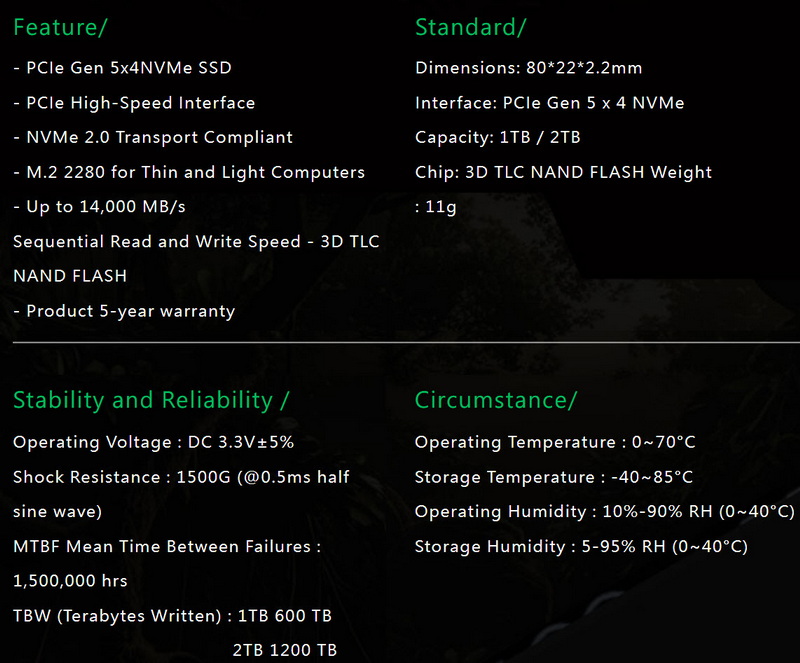
The Anacomda i5 (currently available in 1/2TB capacities - 4TB capacity in the near future) is a PCIe Gen5 x4 NVMe 2.0 M.2 2280 SSD aimed at pushing client performance into next‑gen territory, with rated sequential speeds up to 14000 MB/s read and 8000–10000 MB/s write, plus random performance up to 1950K read and 1750K write IOPS. It pairs Silicon Motions SM2508 NAND flash controller, 2GB 2133MHz LPDDR4 DRAM by Nanya and Micron's 232-layer (B58R) 3D TLC NAND flash. The Silicon Motion SM2508 NVMe 2.0 controller features an quad-core ARM Cortex R8 CPU with support for 4 PCIe lanes of 32Gb/s data transfer speed (Gen5 x4), 8 NAND channels with a speed of up to 3600MT/s per channel and packs various technologies including end to end data path protection, programmable firmware interface, SRAM ECC & CRC parity, Innovative LDPC ECC engine, embedded programmable RAID, real-time full-drive AES 128/256bit encryption, hardware SHA 256/384 and TRNG, secure boot for FW authentication, built-in smart clock-gating mechanism (highly efficient power consumption - under 7W at load), ONFI 5.0 and Toggle 5.0 support and TCG Opal 2.0 compliance. As for endurance Anacomda reports an MTBF (meantime between failures) of 1.5 million hours for both models, TBW of 600/1200TB for the 1/2TB capacities and covers both models with a 5-year limited warranty.
SPECIFICATIONS AND FEATURES
THE I5 1TB
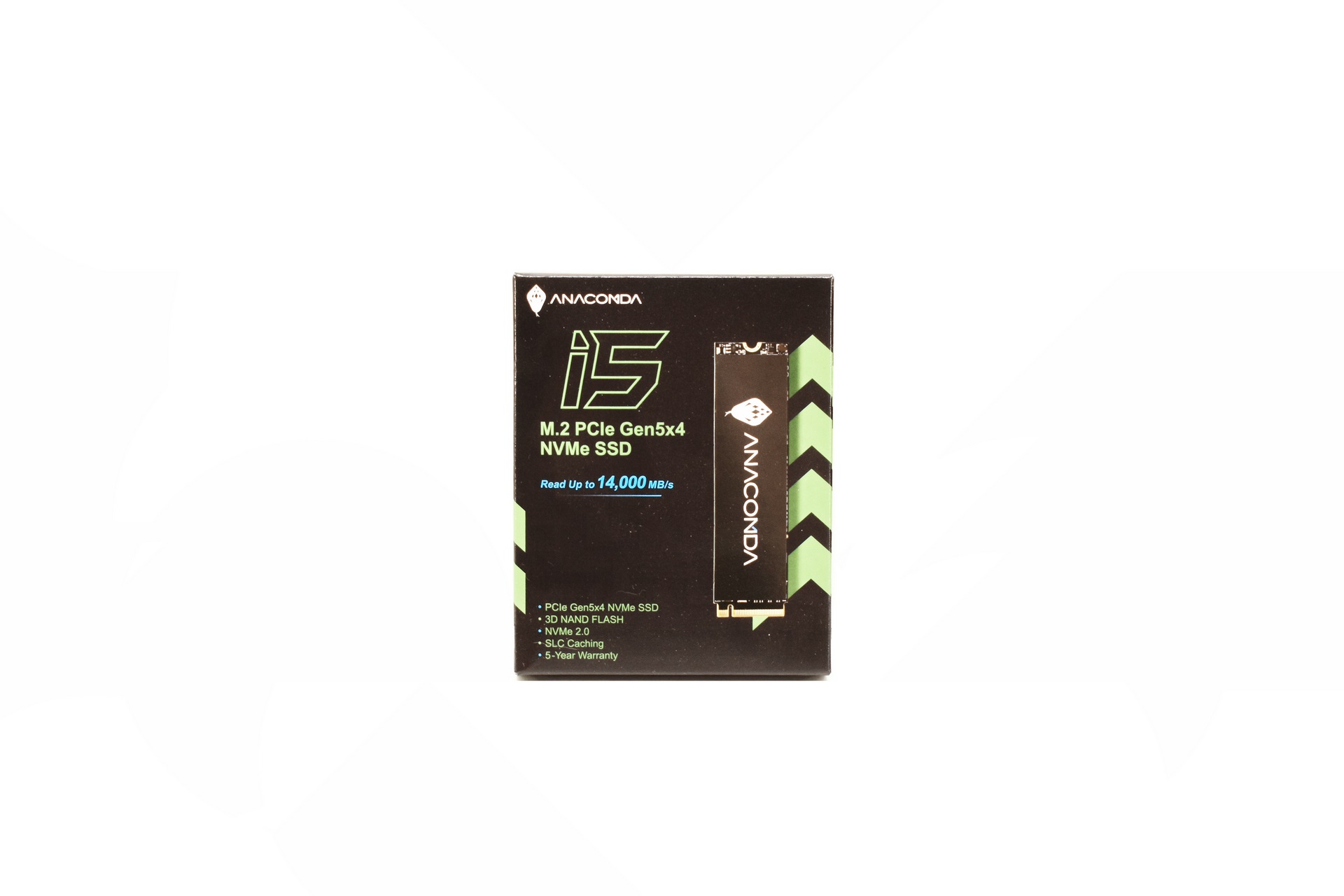
The i5 is packed inside a small black box that has a product picture at the front next to the company name and main features.
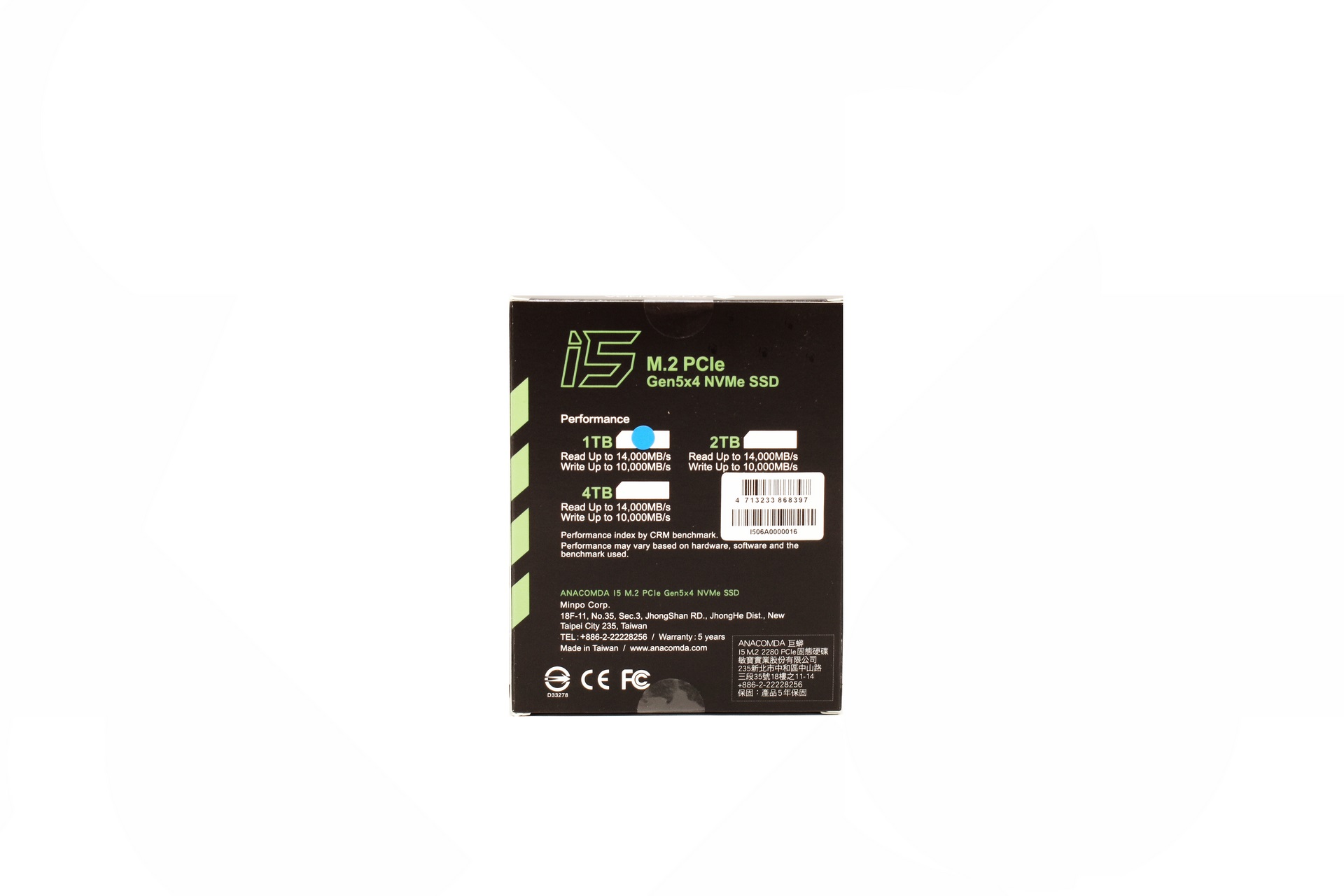
Capacity is listed at the rear of the box.
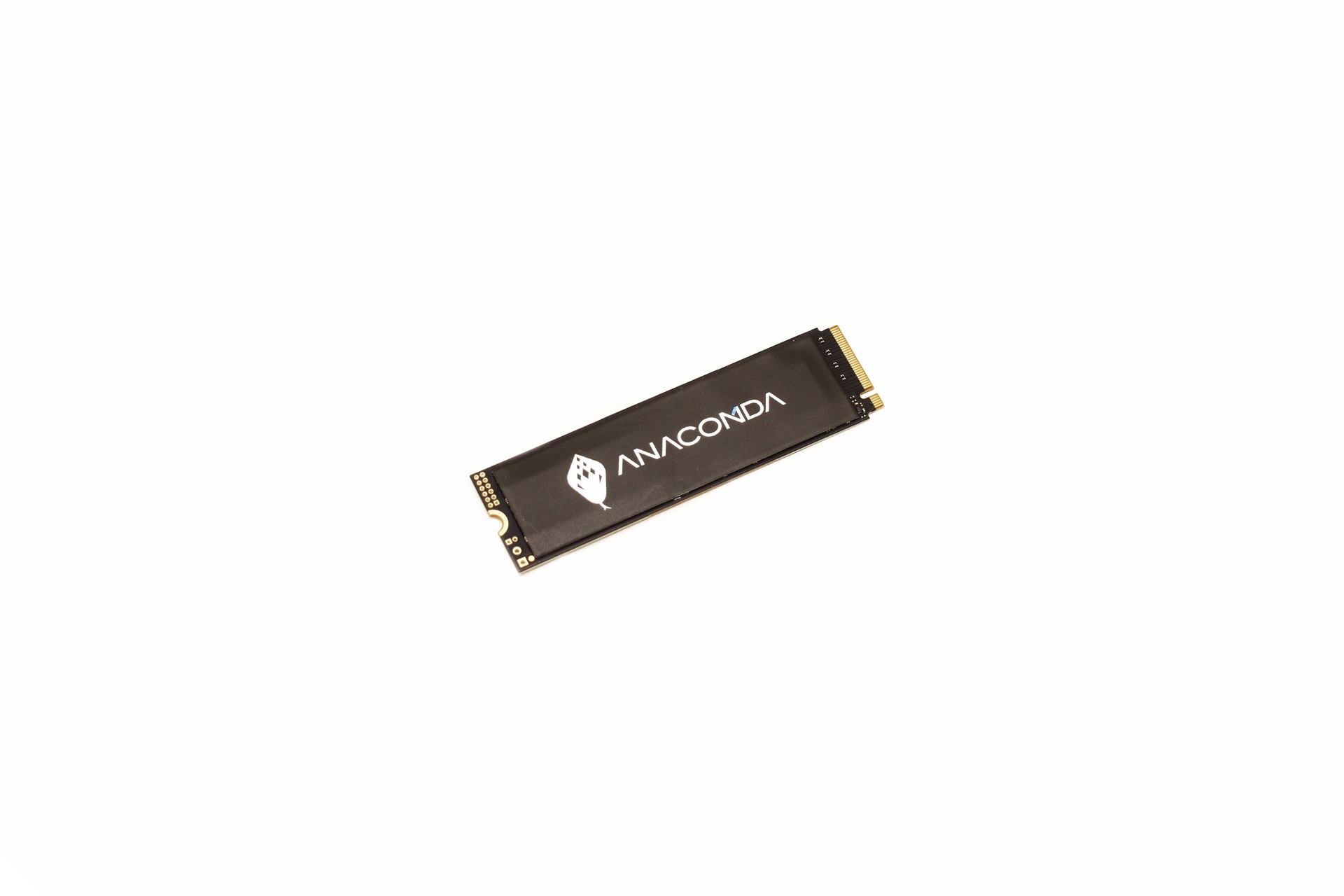
The i5 follows the typical 2280 form factor and has a sticker on top with the company name and logo.
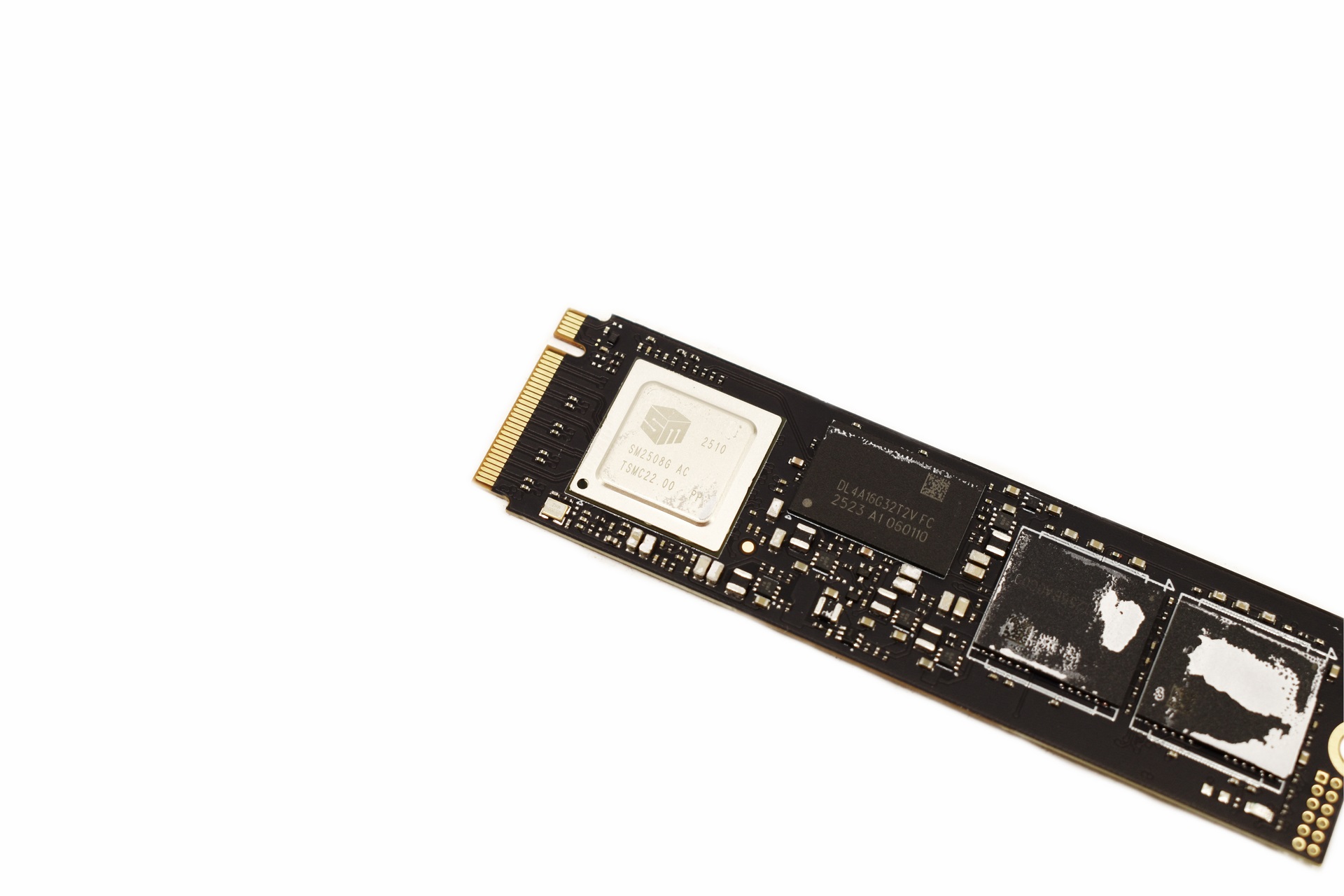
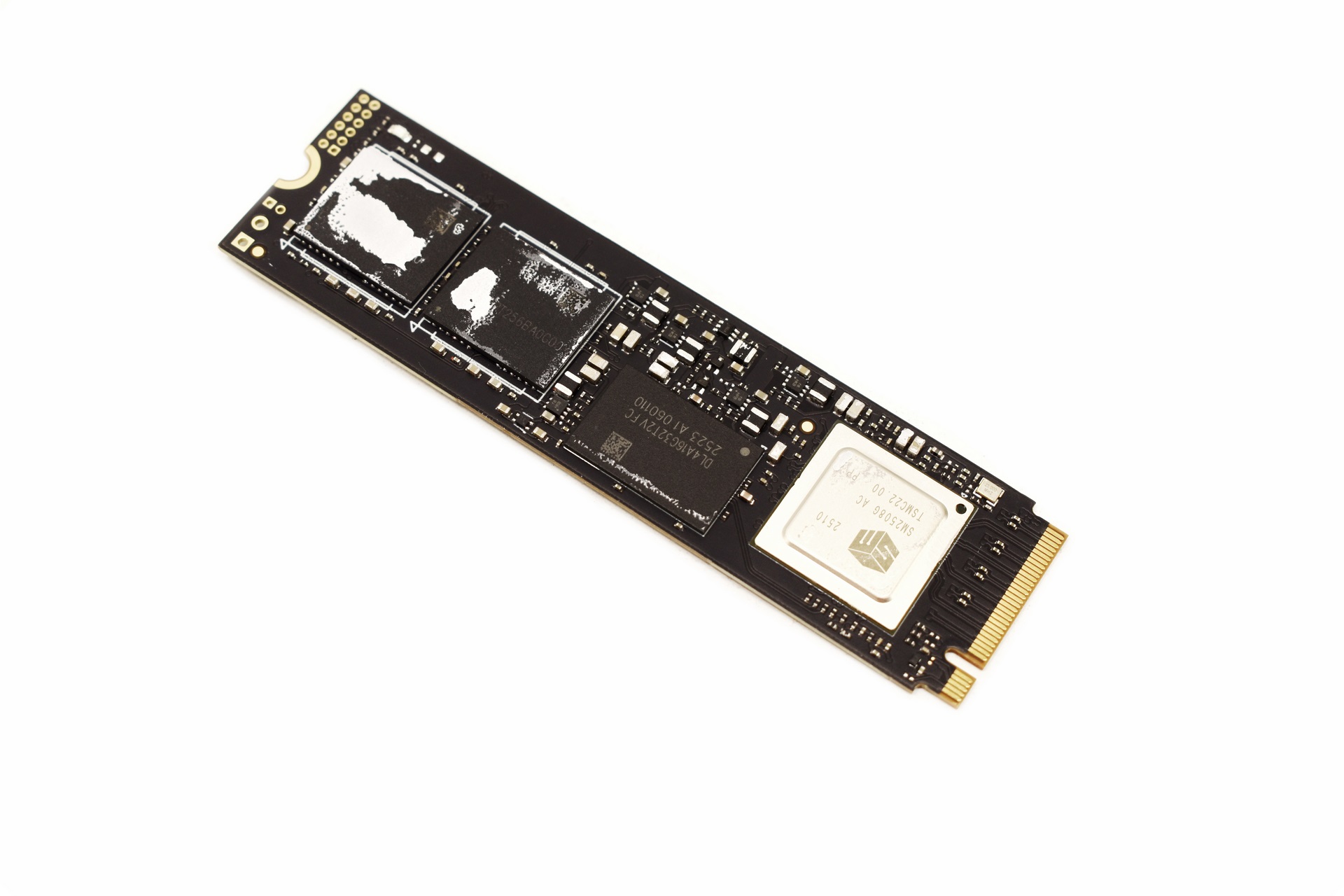
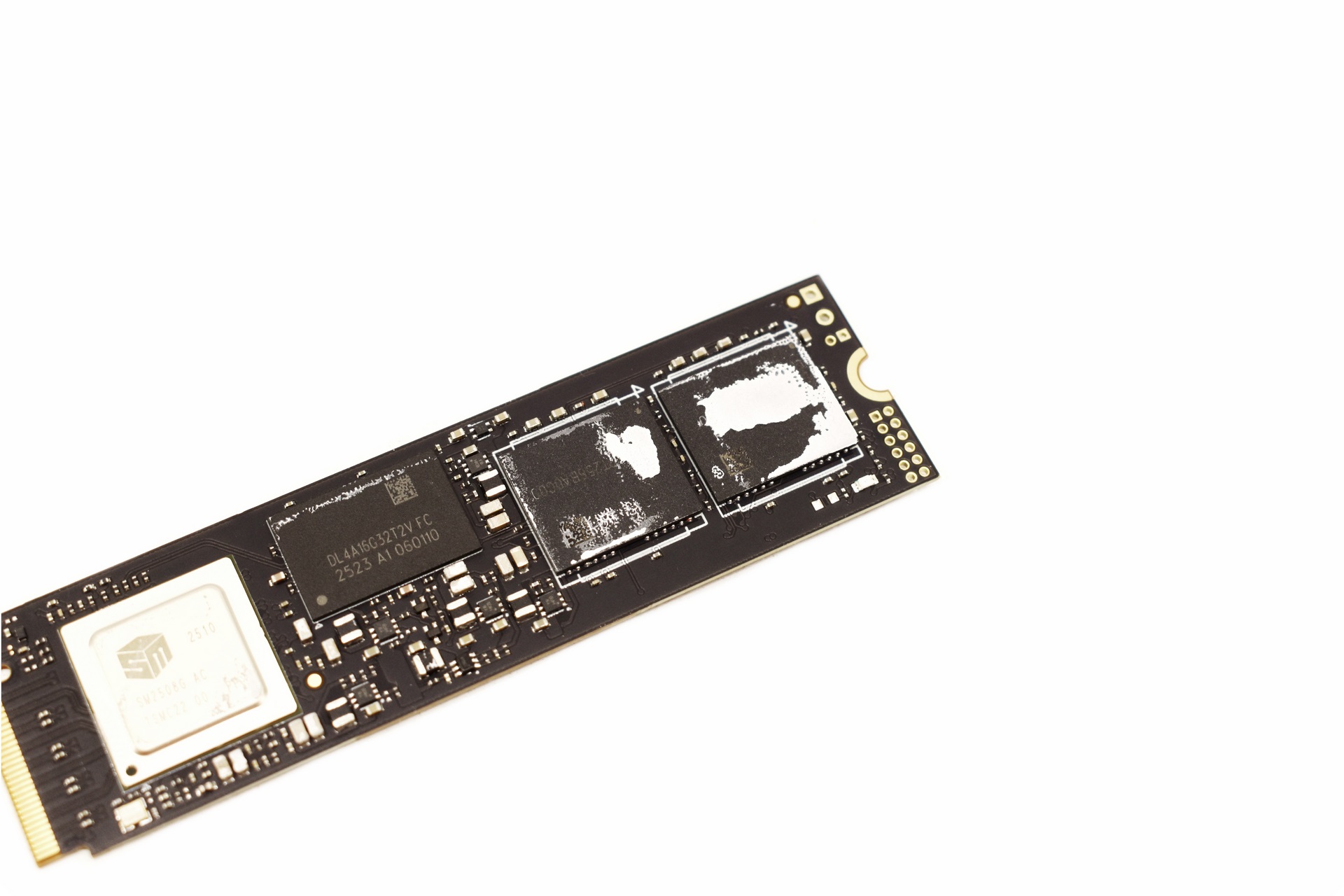
Under the sticker we find the Silicon Motion SM2508 NAND flash controller, Nanya 2GB LPDDR4 DRAM module and two Micron 232-layer 3D TLC NAND flash modules.
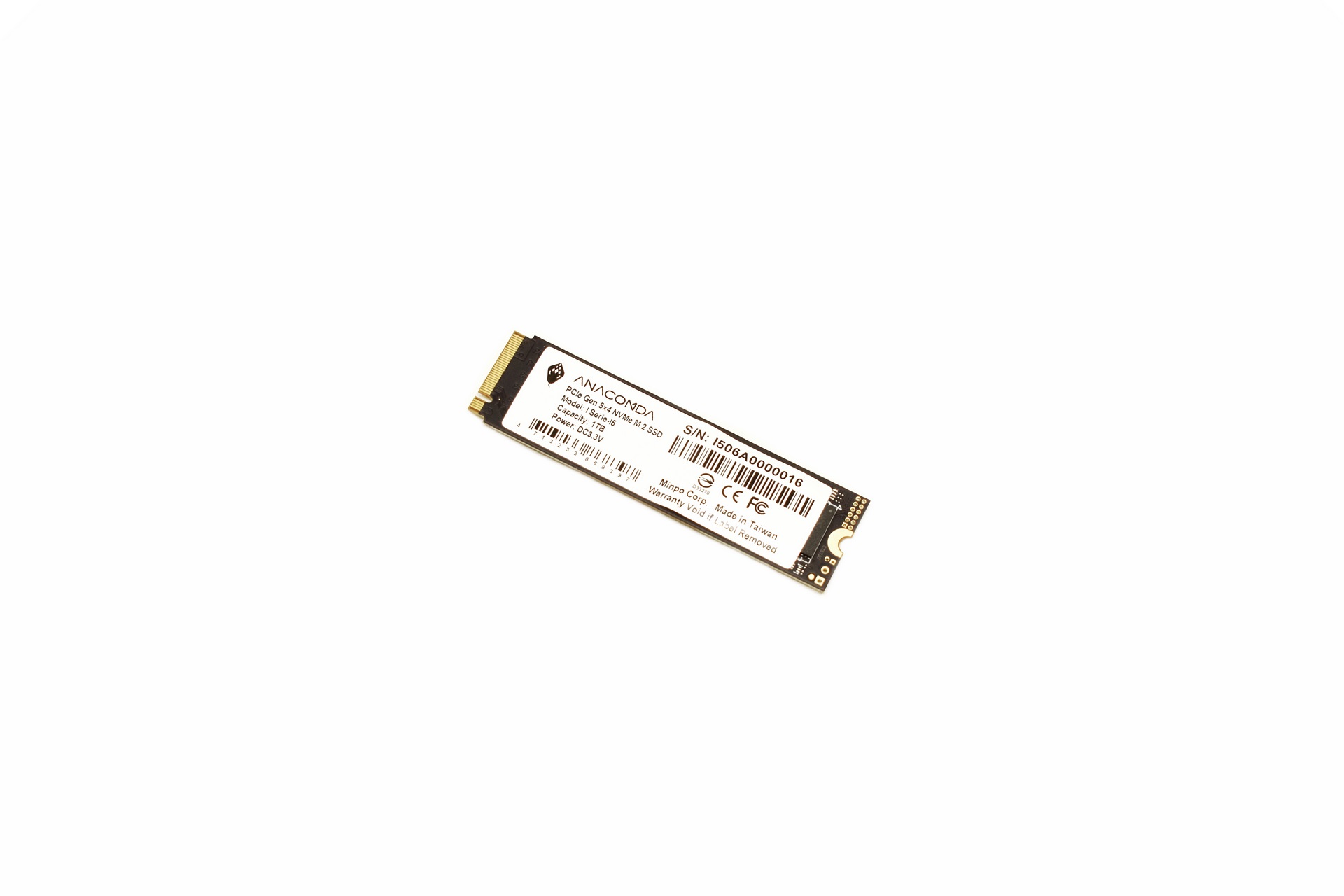
On the opposite side we find another sticker with the model name, capacity, power requirements, serial number and barcode.
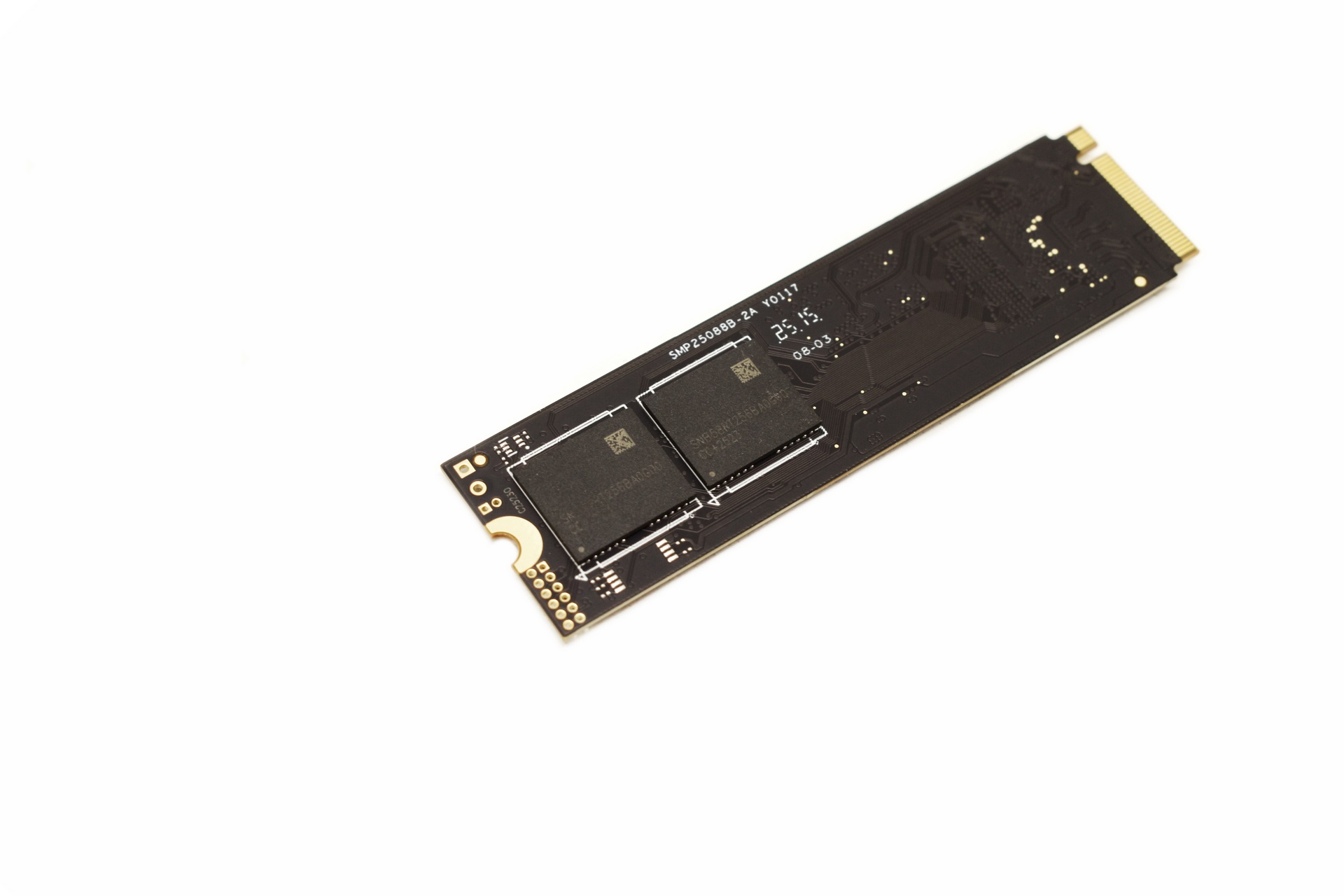
Under the sticker we find two more Micron 232-layer 3D TLC NAND flash modules.
TEST BED
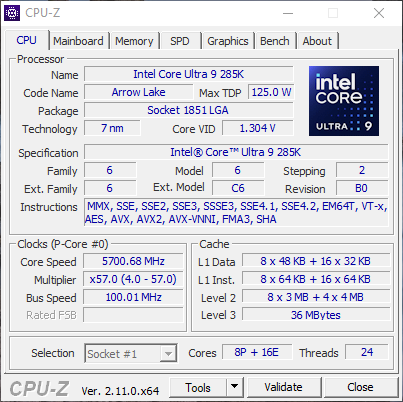

TESTING METHODOLOGY
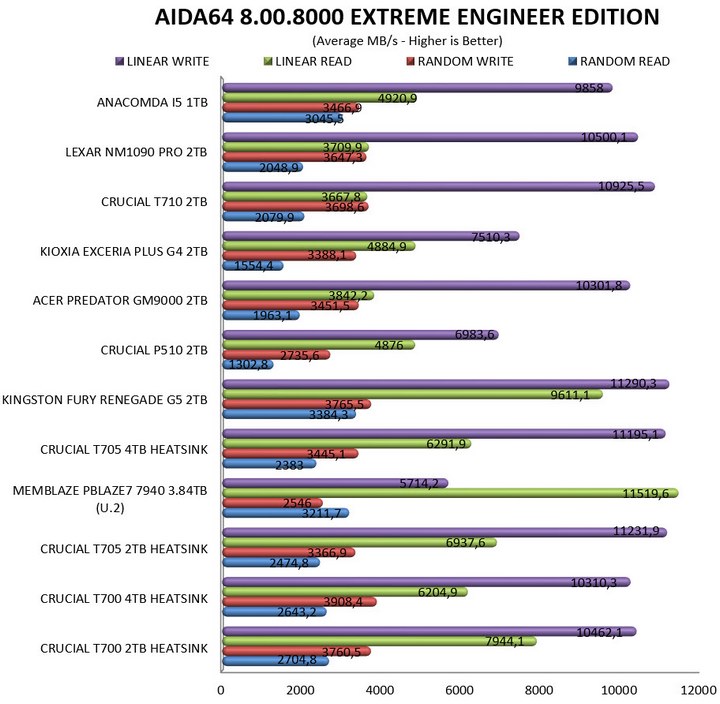
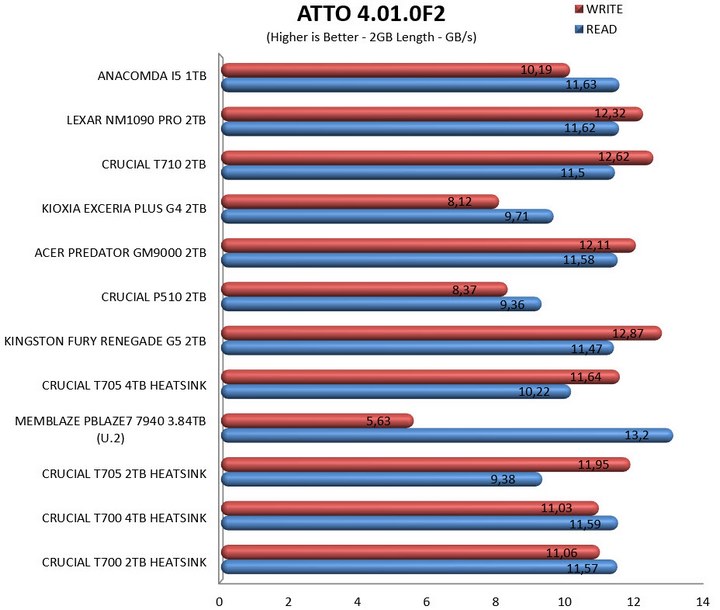
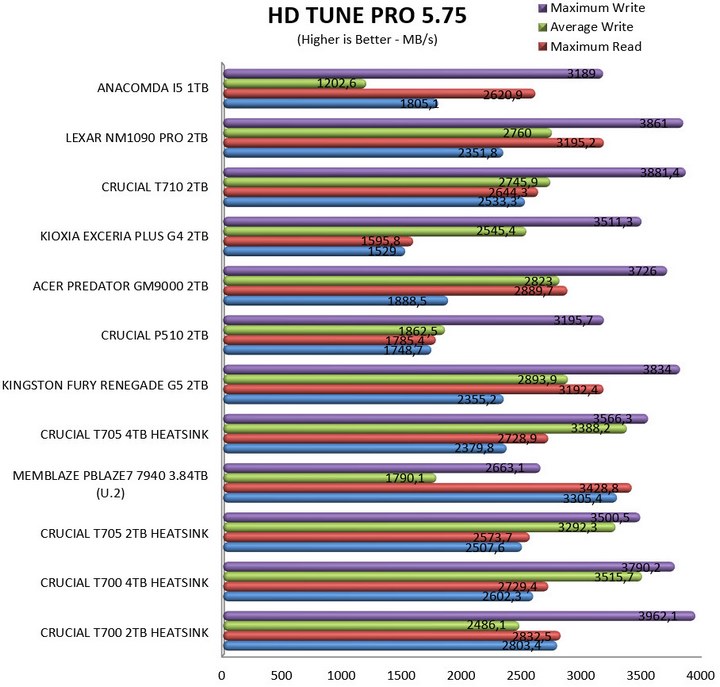
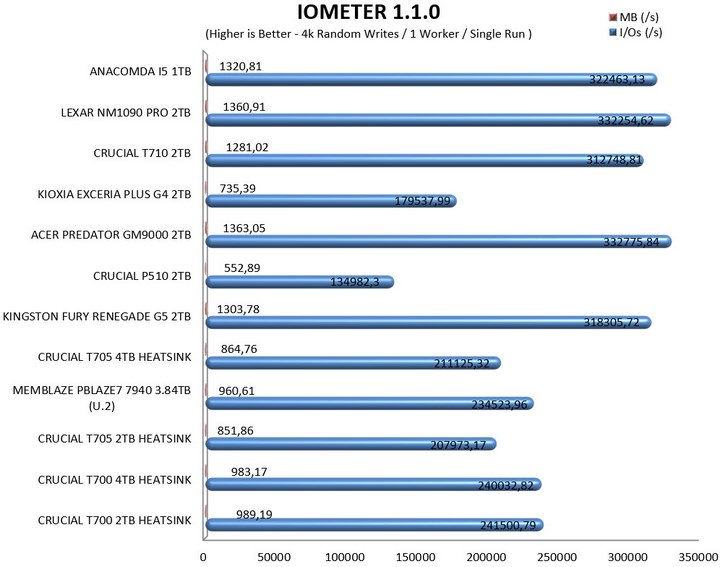
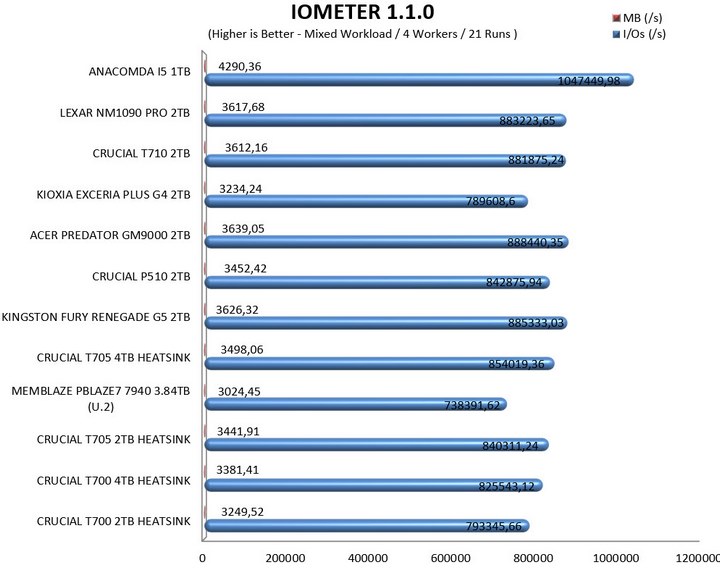
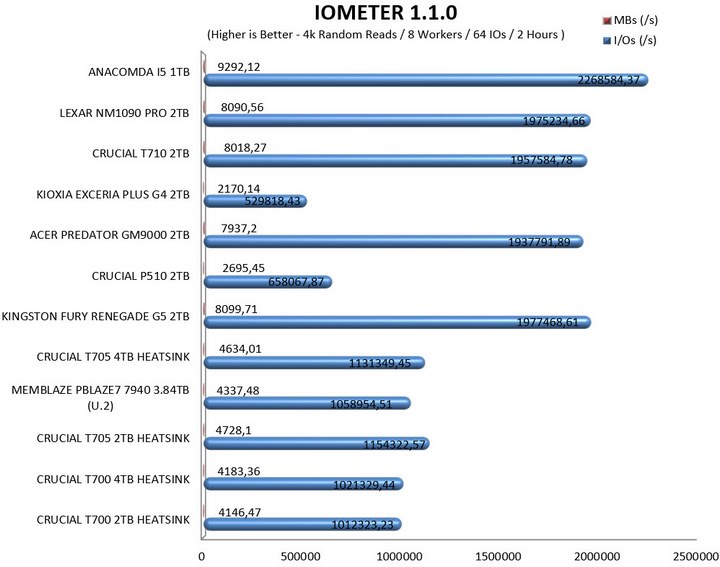
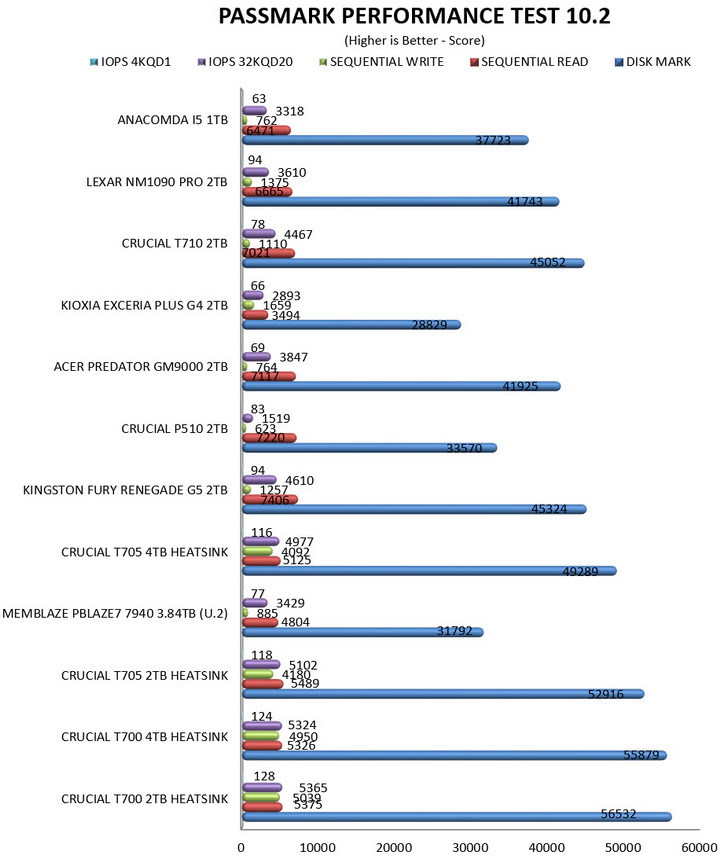
I've been using pretty much the same testing methodology for PCIe 3.0 Gen3 and PCIe 4.0 Gen4 SSDs for far too many years now, so I decided to "tweak" it for PCIe 5.0 Gen5 models. Needless to say, Gen5 M.2 NVMe SSDs will be tested using one of my latest test rigs (Intel Core Ultra 285K / ASRock Z890 Taichi Lite) and unlike with both Gen3 and Gen4 SSDs I will not be using the SNIA (Storage Networking Industry Association) 12 hour IOMeter benchmark since it proved to be rather heavy for early Gen5 SSDs (temperature issues). Instead, I decided to use the latest versions of 3D Mark, AIDA64, AS SSD, ATTO, Crystal Disk Mark, HD Tune Pro, HD Tach RW, Performance Test, IOMeter (4k Random Writes / 4k Random Reads – since September 2024 / SNIA Mixed) and Sandra Titanium for performance measuring and ForSpoken for all of you who might be wondering just how well Gen5 SSDs do in regard to Microsoft's DirectStorage API/Technology. Each test will be run a total of 5 times after which the average number will be recorded in each chart.
TEST RESULTS - AIDA64 / ATTO
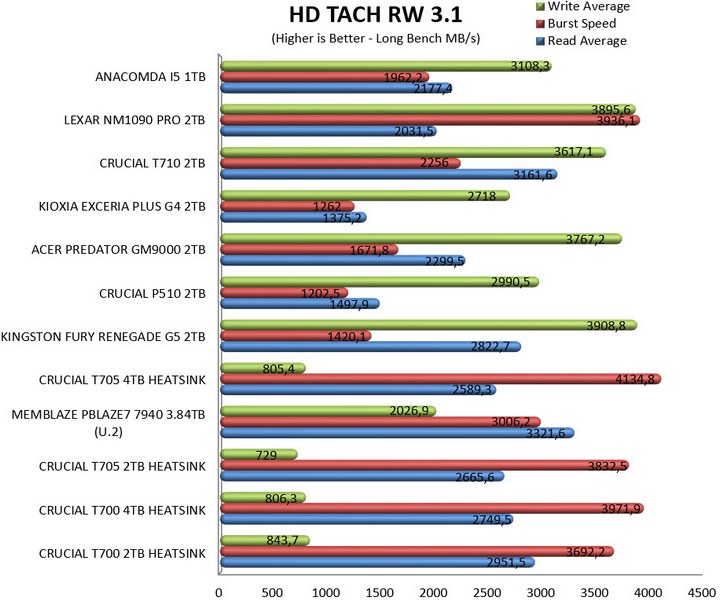
TEST RESULTS - HD TUNE PRO / HD TACH RW
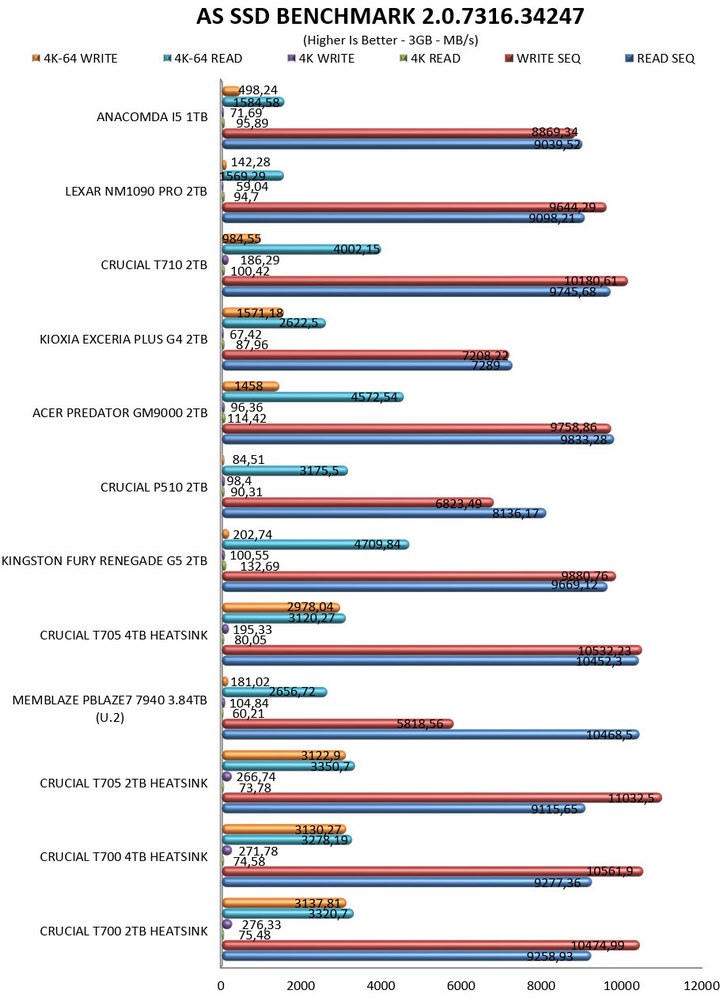
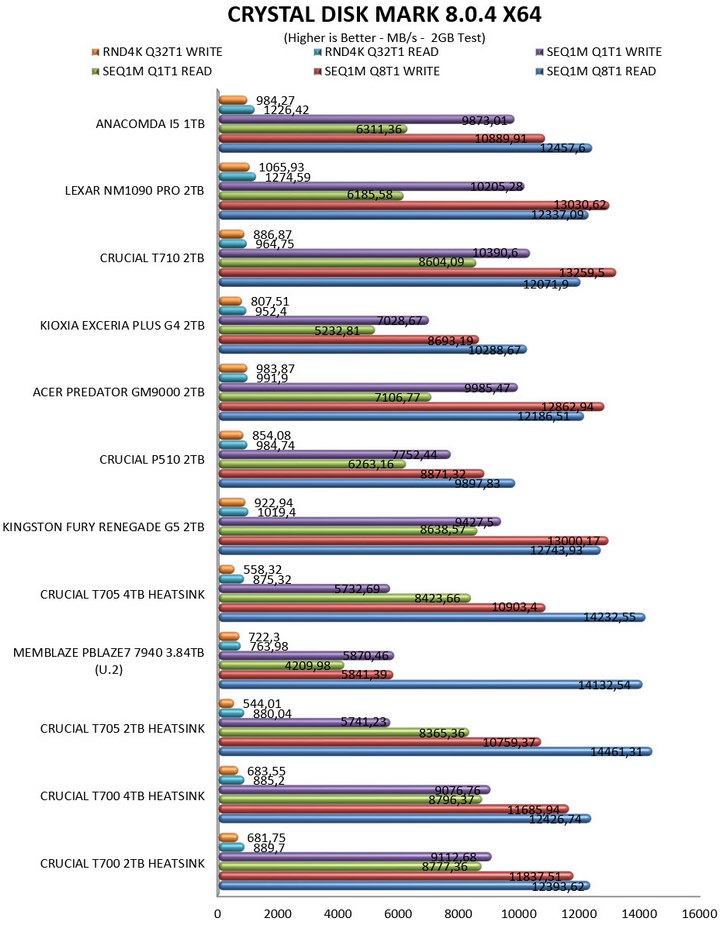
TEST RESULTS - AS SSD / CRYSTAL DISK MARK
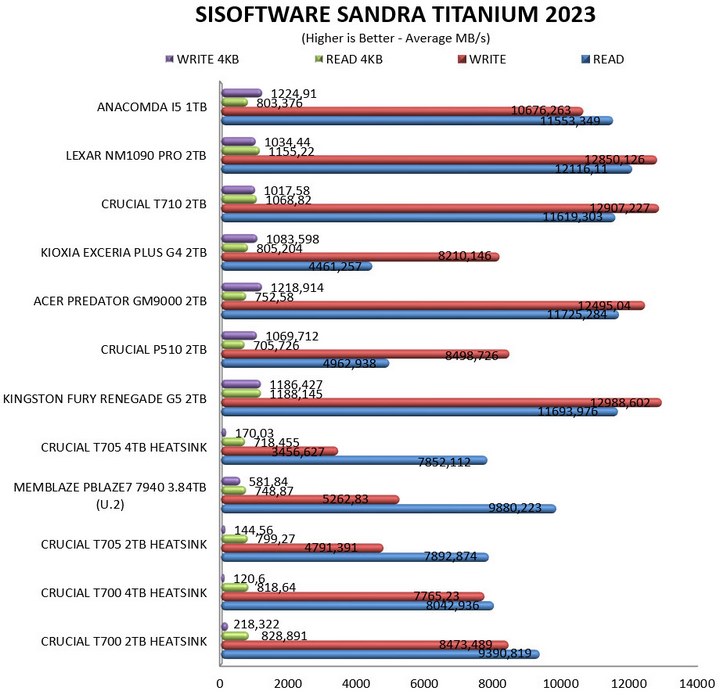
TEST RESULTS - SANDRA TITANIUM / IOMETER
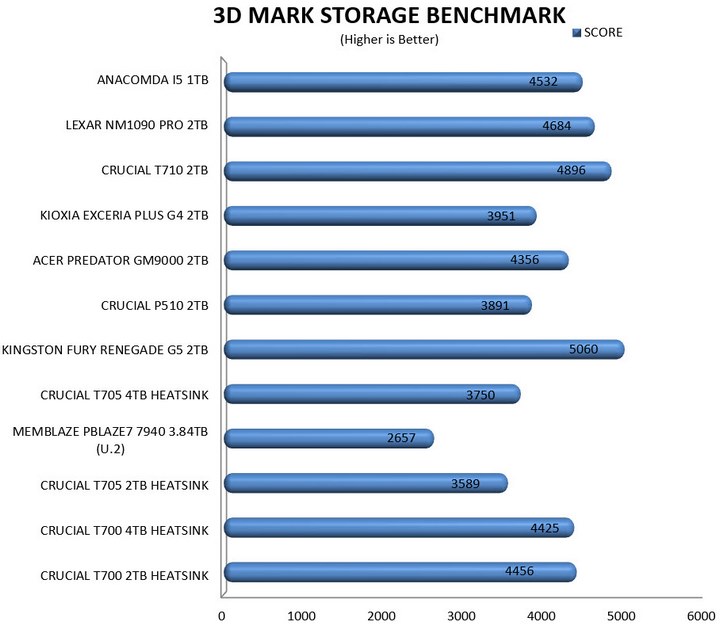
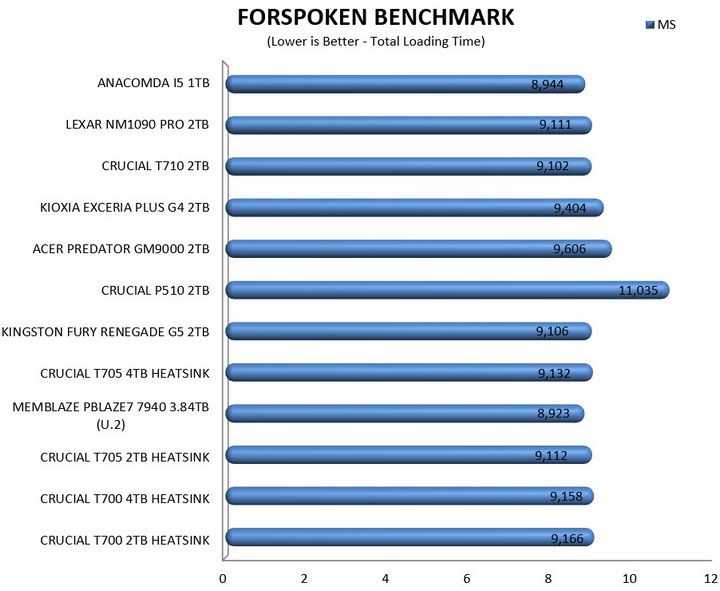
TEST RESULTS - PERFORMANCE TEST / 3D MARK / FORSPOKEN
CONCLUSION
Although the i5 Gen5 SSD sample I received was of the lowest available capacity (1TB models are typically slower compared to their higher capacity brothers) it performed better than expected. It even surpassed all Gen5 SSD models in my charts, at least in some of the tests and so I can’t complain about its read and write performance (besides, the SM2508 controller by Silicon Motion has proven its worth time and again). Durability is alright, 600TBW may not seem great but that’s the number of many other 1TB models in the market so nothing new here. My sole issue with the i5 line is the same as with most SSD lines out there, lack of high capacity models. Even if there’s an 4TB capacity scheduled for release it will still not be large enough for some consumers and professionals.
The bigger issue than available capacities is current global availability and well, I was only able to find the i5 1TB Gen5 M.2 SSD by Anacomda inside Taiwan for around USD120/106Euros. I honestly don’t know what’s taking Anacomda so long to send the i5 Gen5 SSD line to their suppliers (perhaps it's due to everything revolving around datacenters lately) but whatever the reason what matters is that most people can’t get their hands on it. Thanks to its performance across the board the i5 Gen5 SSD is certainly worth of the Golden Award, now all that’s left is for Anacomda to get it out there.

PROS
- Quality
- Top Performance (Over 14000MB/s)
- Endurance (1.5 Million Hours MTBF / 600TBW)
- 5 Year Limited Warranty
CONS
- Current Available Capacities (Only 1/2TB)
- Current Availability