


INTRODUCTION
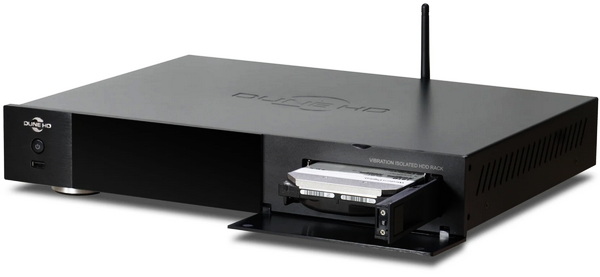
Media players have evolved into essential components of any serious home‑theater setup, handling the heavy lifting behind smooth playback and accurate picture quality. High‑bitrate files, advanced codecs, and network‑based libraries require hardware that can decode efficiently and maintain stability. The Max 8K Dolby Vision & HDR10+ Media Player by Dune HD enters this space as a flagship option built for enthusiasts who want reliable, high‑fidelity local playback.
Dune HD is recognized as a global leader in high-performance digital media players. We received more awards than any other company in the category for delivering the very best in networked digital media devices. Dune HD products support the widest number of digital media formats in use today.
The Dune HD Max 8K is features an OS based on both Android TV v11 and Linux and is powered by the Amlogic S928X‑K/J processor (single Arm Cortex-A76 core, four Arm Cortex-A55 cores and Arm Mali-G57 MC2 3D GPU), a high‑performance chipset designed for demanding formats such as 8K output, AV1 decoding, Dolby Vision (VS10), HDR10+, and advanced HD audio. Its audio subsystem incorporates a Hi‑Fi digital output built around an XMOS processor, a manufacturer known for precision USB audio and low‑latency DSP handling. The full‑size chassis includes a 3.5″ HDD bay, a linear power supply with a toroidal transformer, and a TCXO ultra‑low‑noise clock to stabilize both audio and video timing. Cooling is handled by a Noctua NF‑S12A PWM fan, a premium model recognized for quiet operation and long‑term reliability. Connectivity covers Gigabit Ethernet, Wi‑Fi 6, Bluetooth v5.2, HDMI v2.1a, four USB ports (3xUSB 3.0 / 1xUSB 2.0), optical and coaxial S/PDIF, plus dedicated Hi‑Fi digital outputs depending on the configuration. With 8GB of RAM and 64GB of internal storage, the Max 8K by Dune HD is engineered for enthusiasts who want robust hardware, wide codec support, and flexible integration into high‑end home‑theater systems.
SPECIFICATIONS AND FEATURES

PACKAGING AND CONTENTS
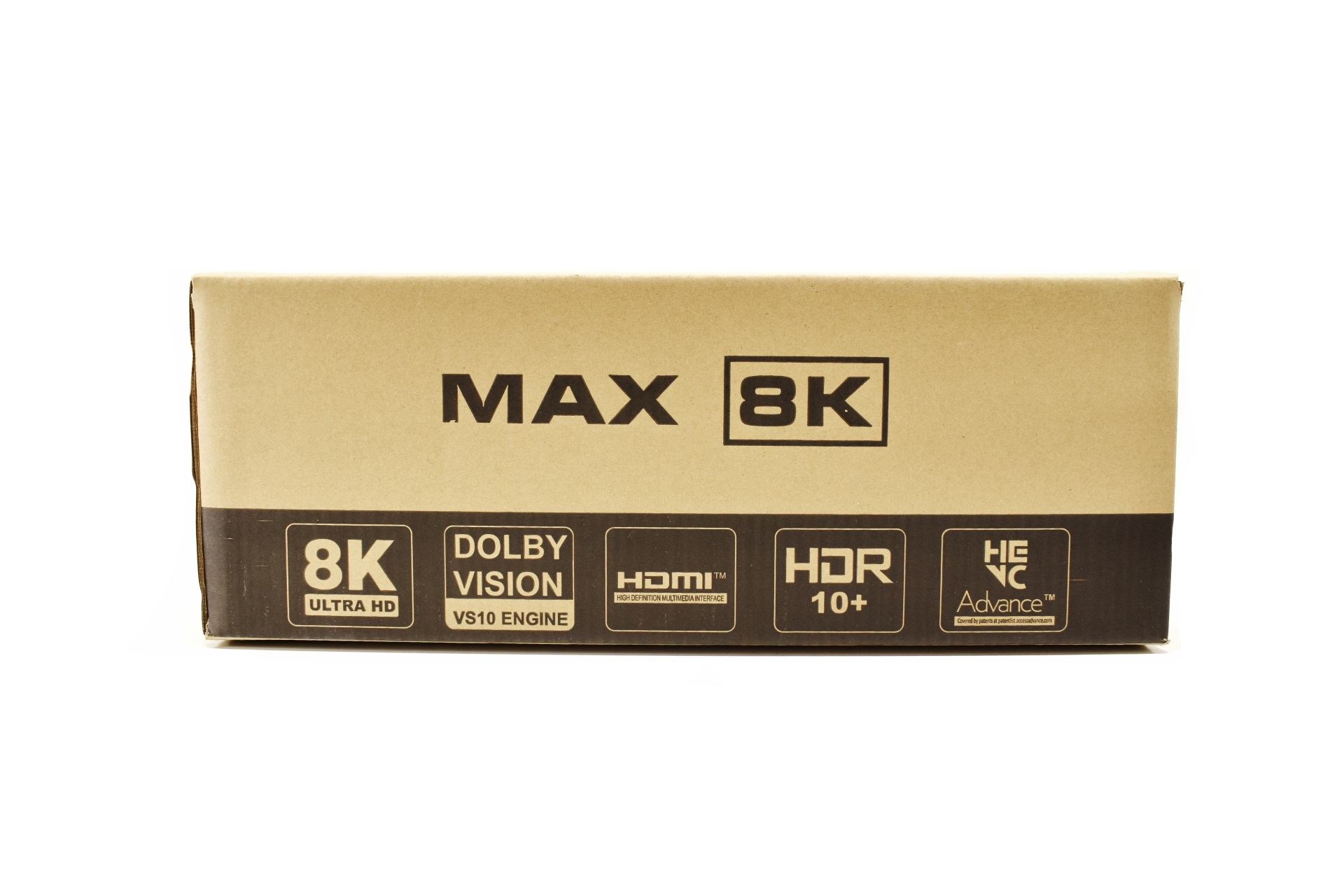
The player is packed inside a cardboard box the front of which has the model name and main product features.
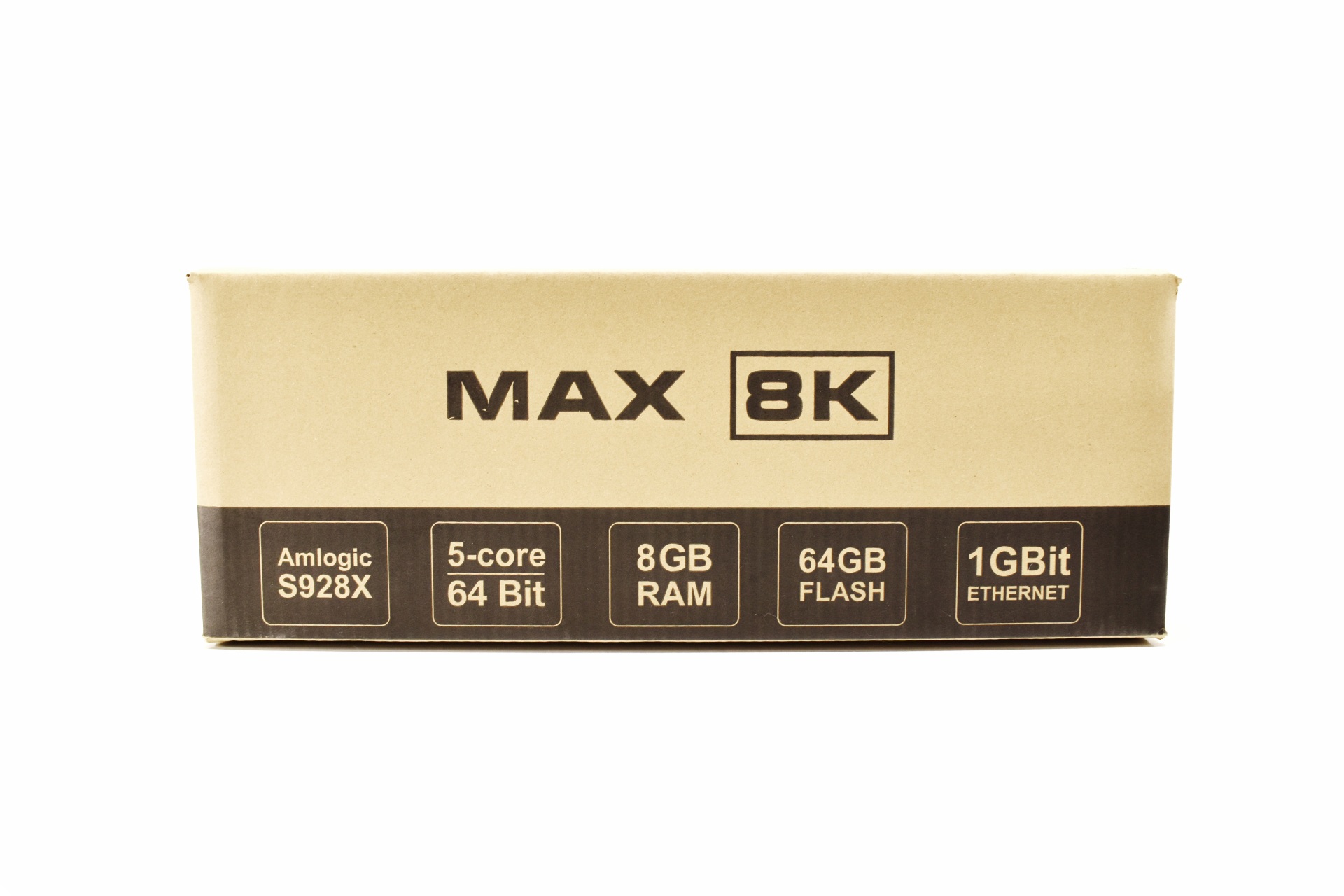
At the rear we find the model name once again, this time however over the main product specifications.
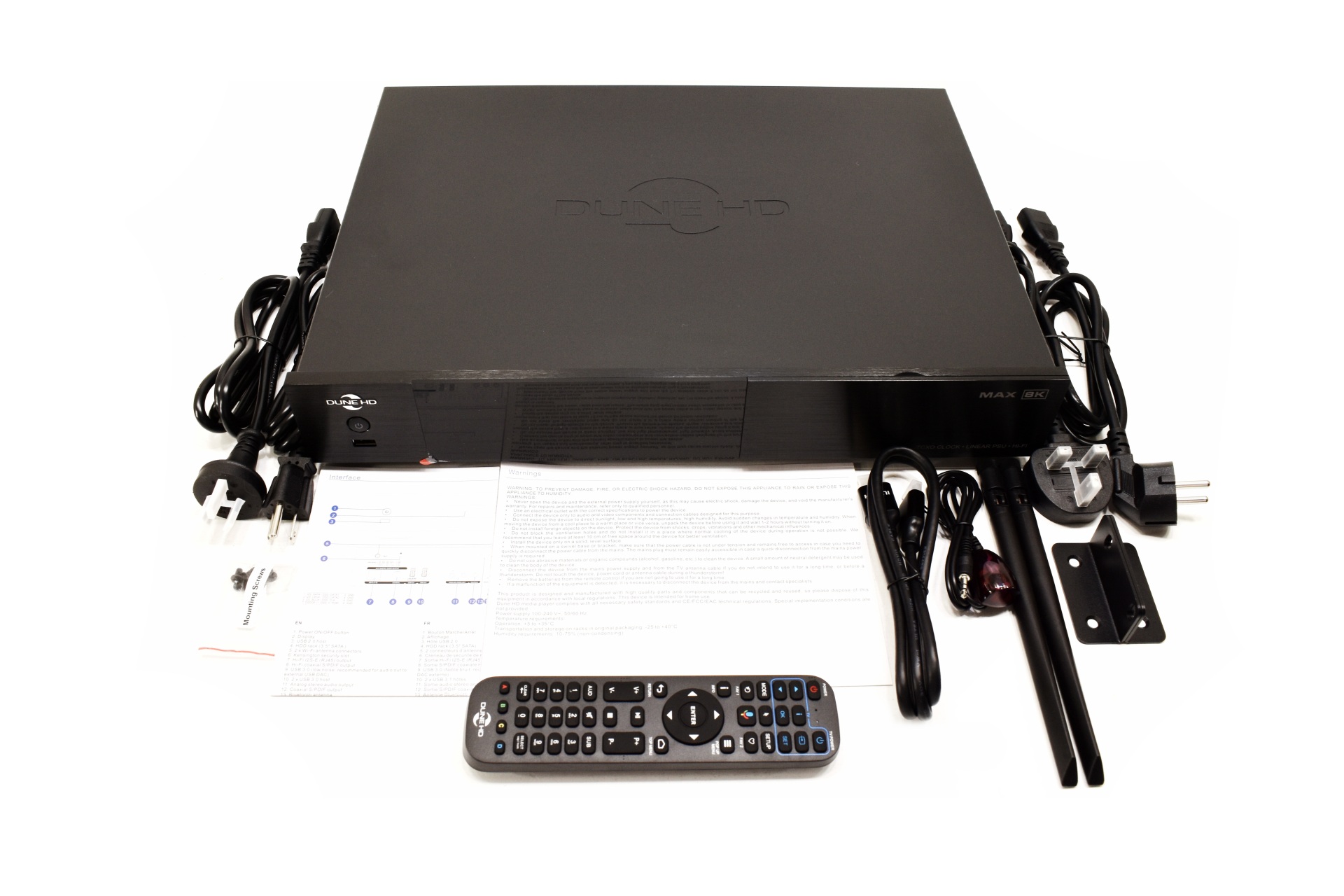
Along with the Max 8K media player and its power cords (EU, UK, US, Australia) inside the box we also find a remote control (Bluetooth with built-in microphone), 2 Antennas, IR extension cable with receiver, HDMI cable, two wall mounts, mounting screws, interface paper and a warnings paper.
THE MAX 8K
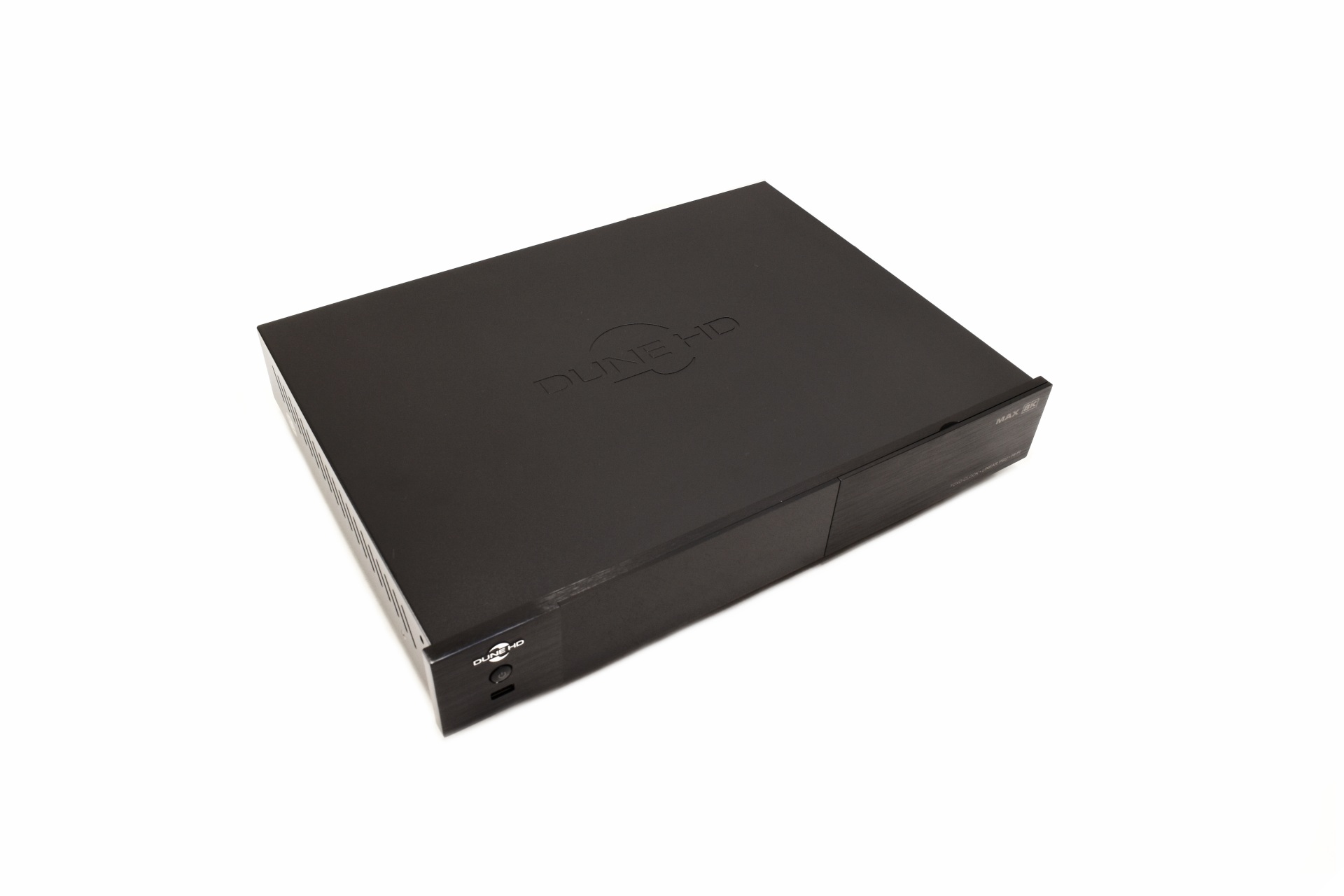
Just like with previous premium models by Dune HD the Max 8K is a large media player measuring 430mm in length, 324mm in width and 79mm in thickness.
The company logo is placed on top of the player as seen above.
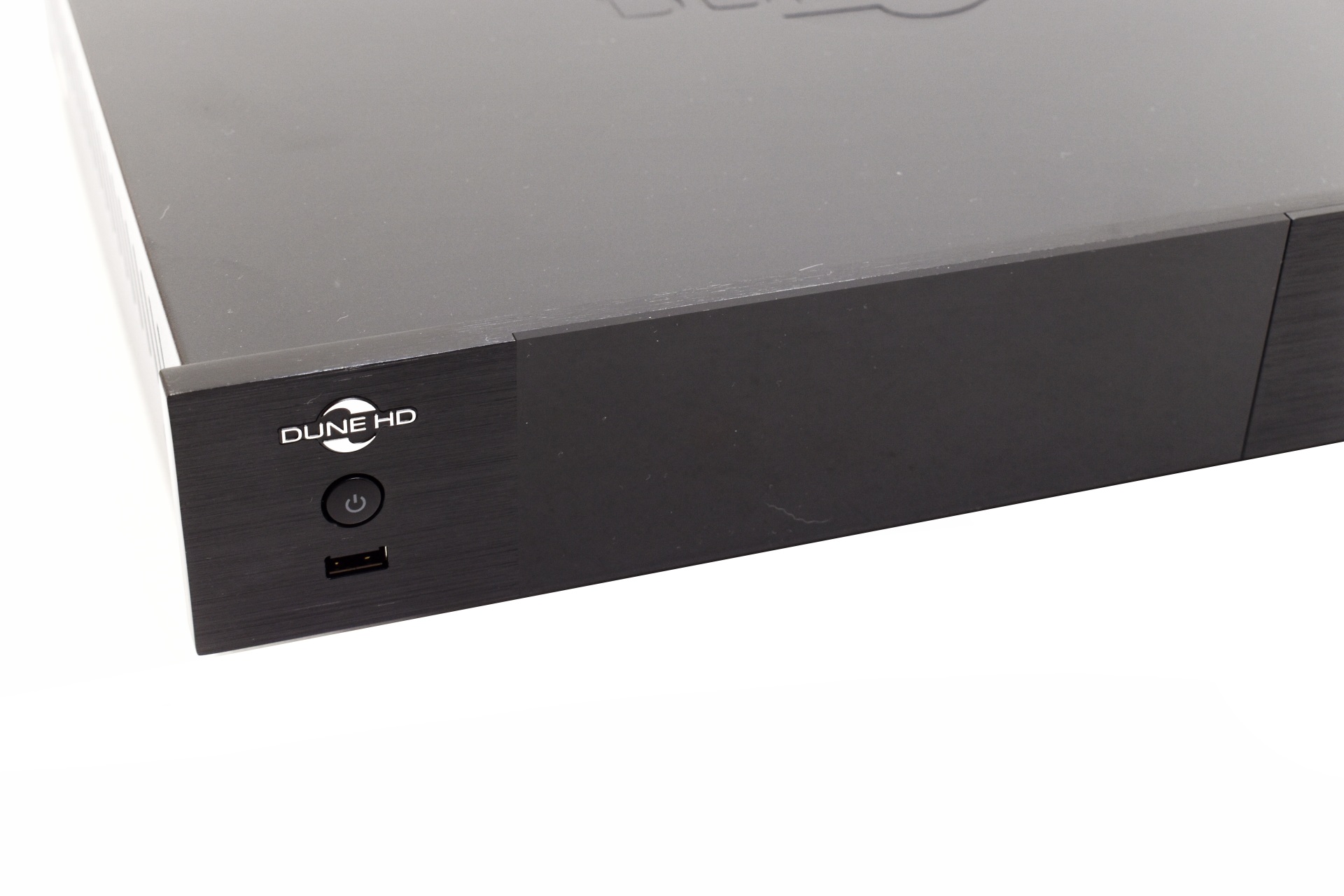
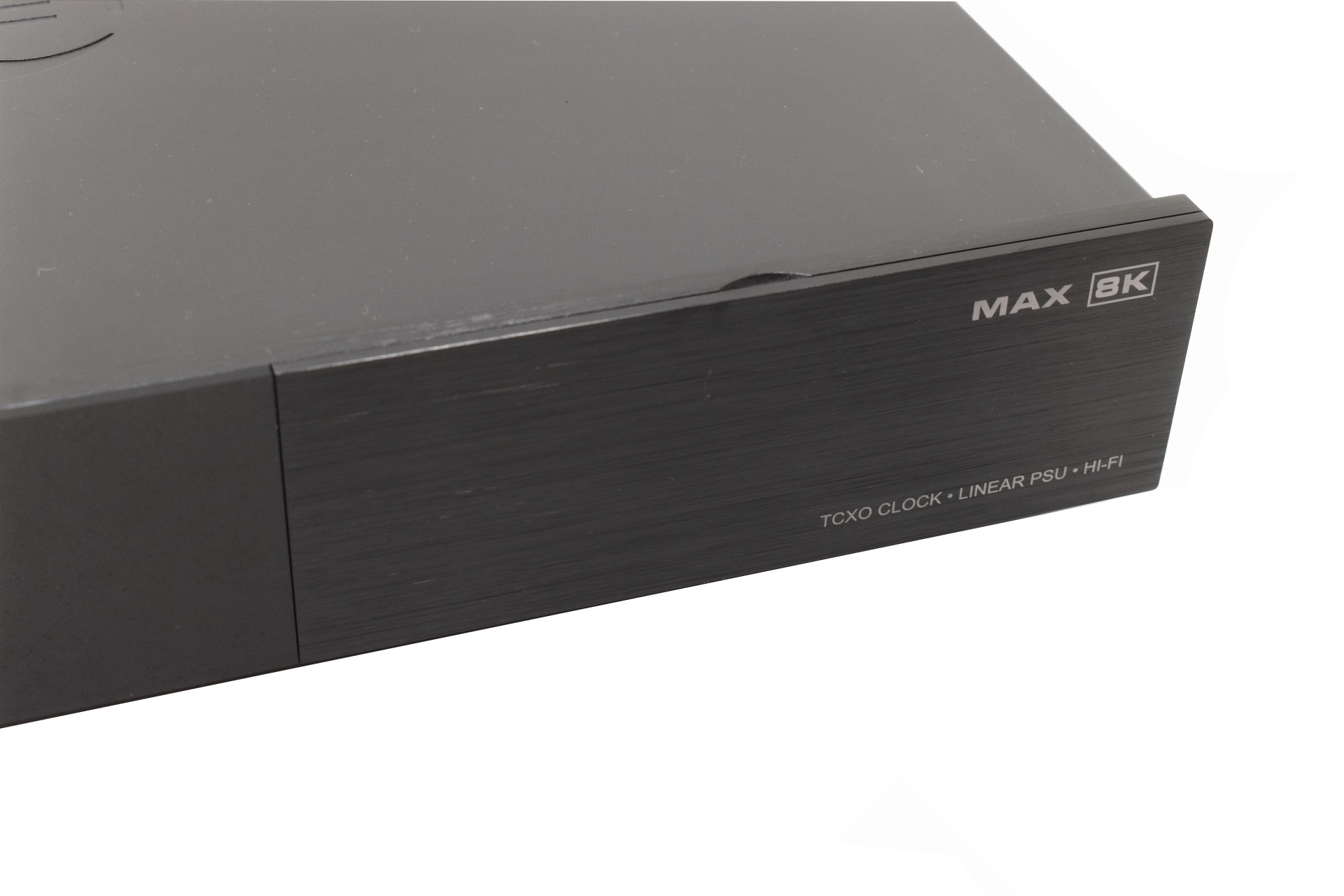
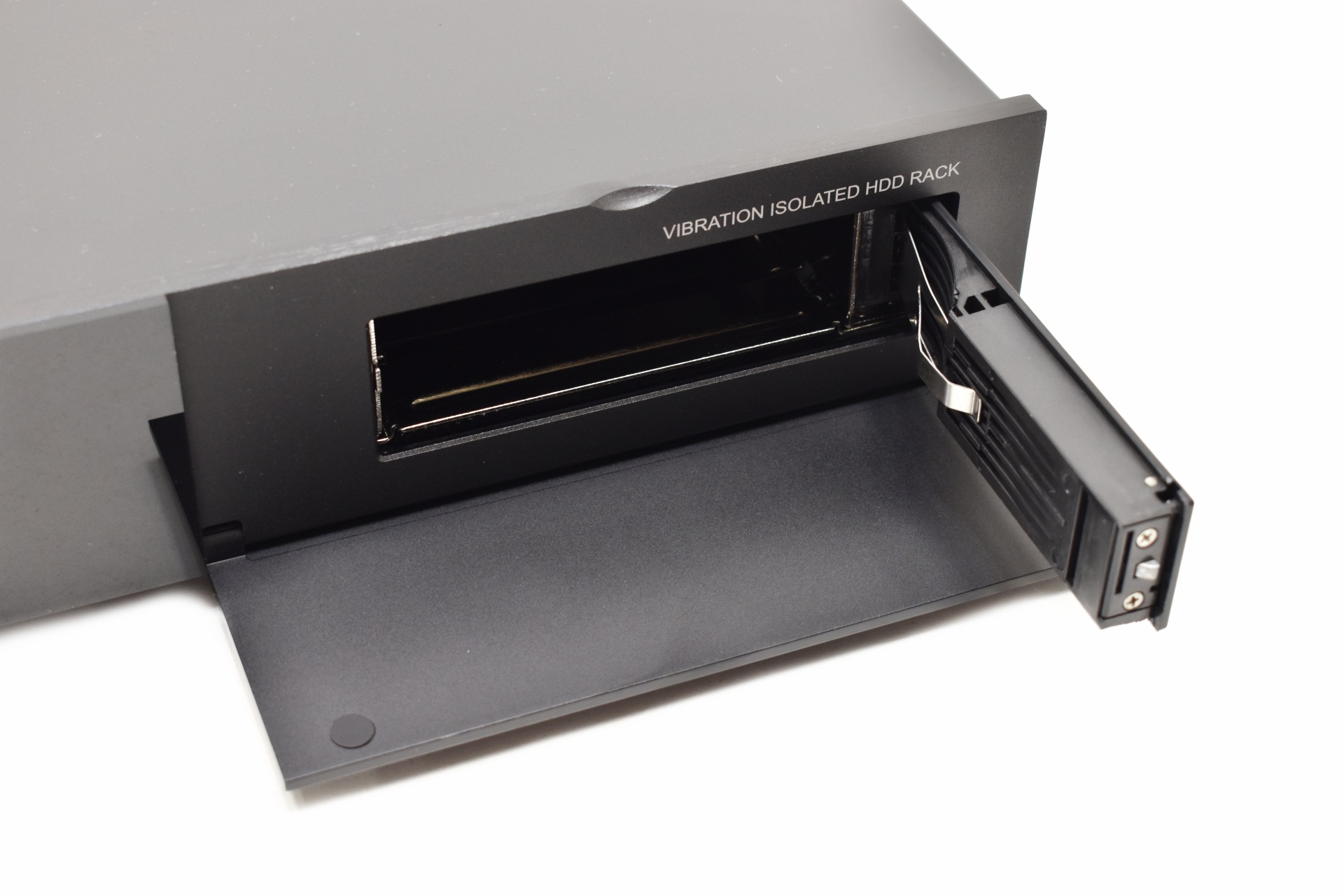 At the front we find the on/off power button, USB 2.0 port, LED display, and a vibration isolated HDD rack.
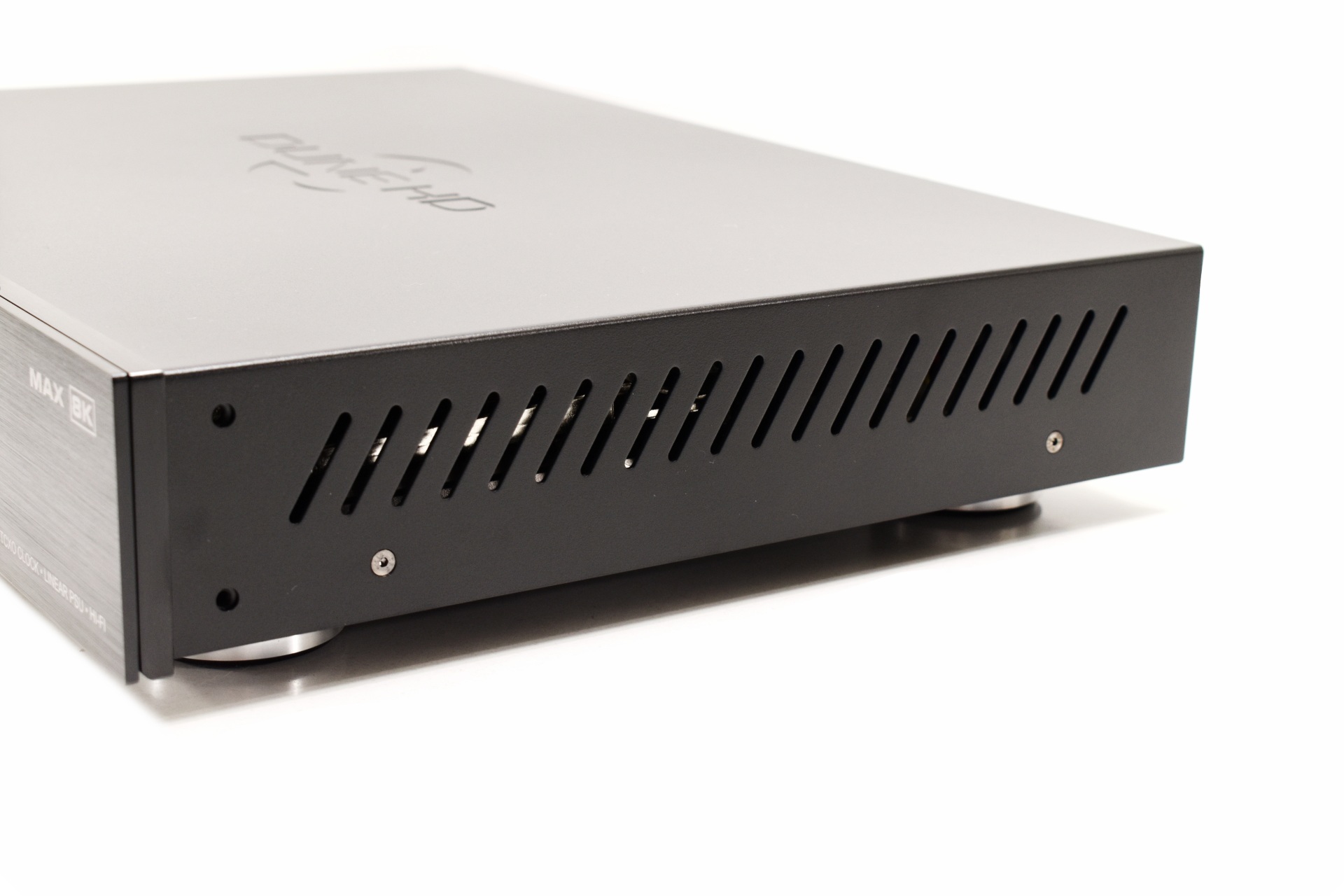
Both sides of the player are perforated.
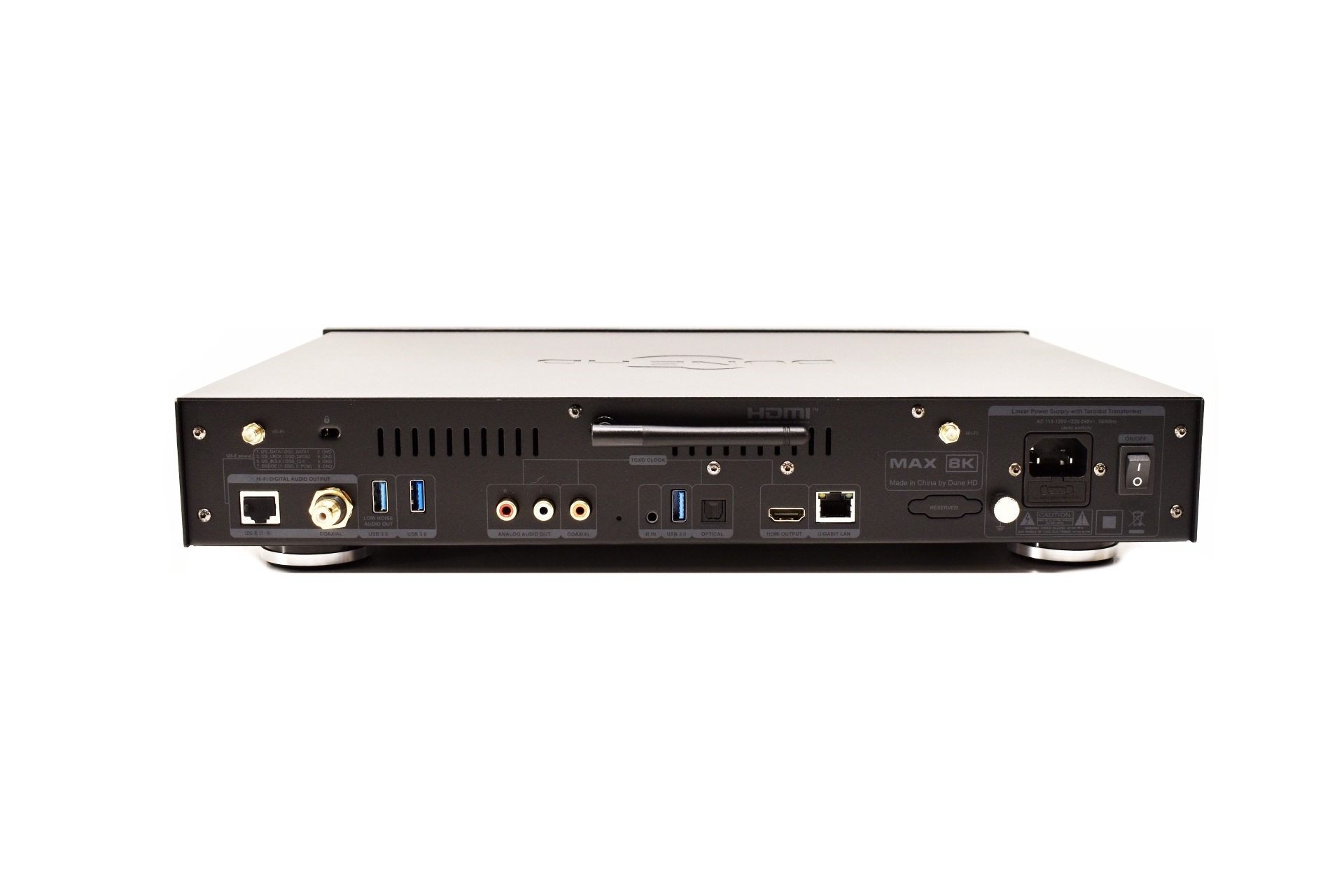
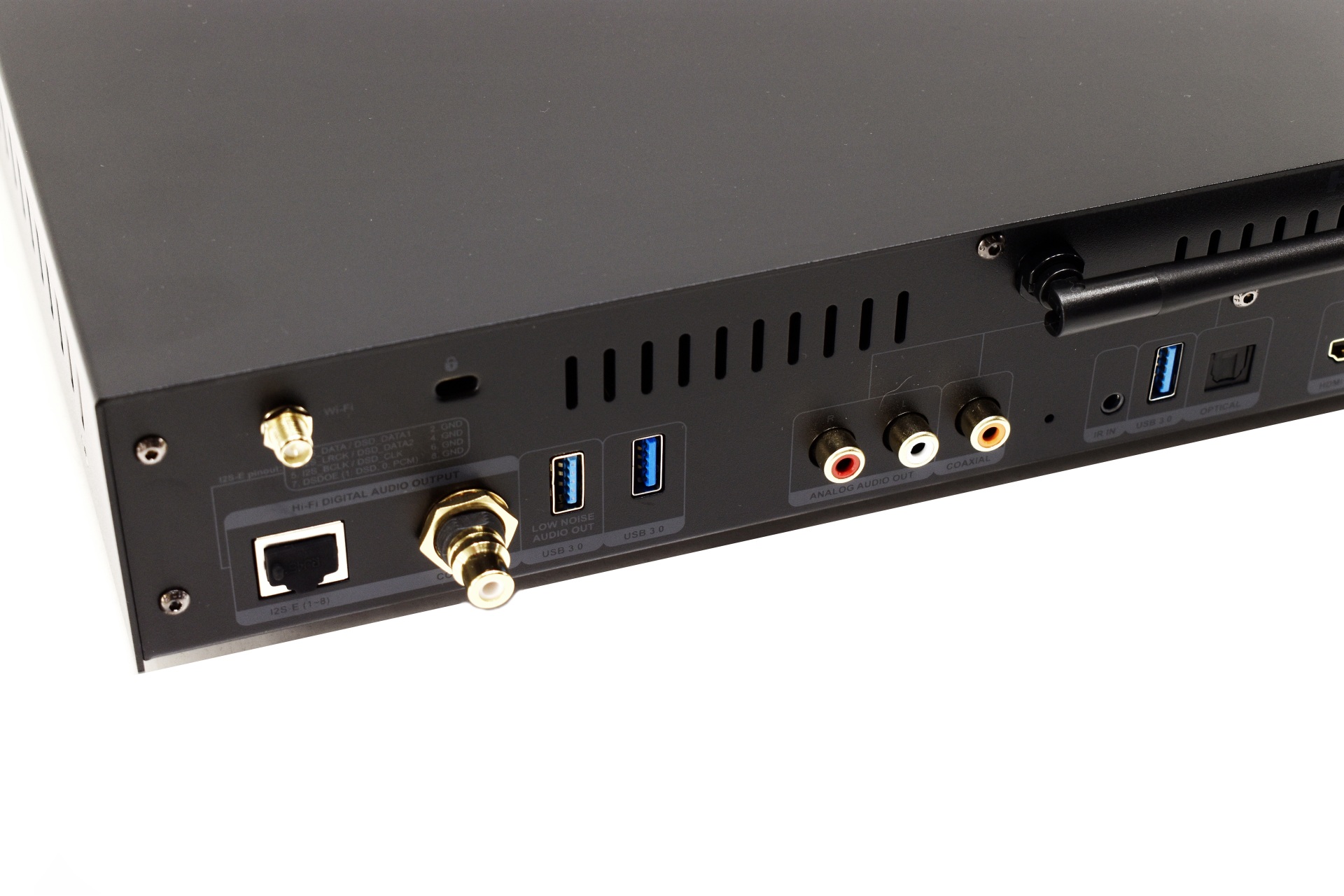
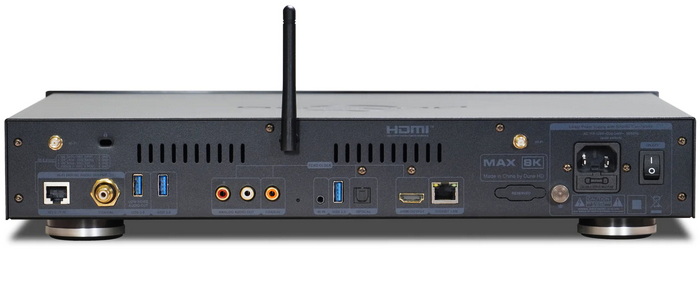
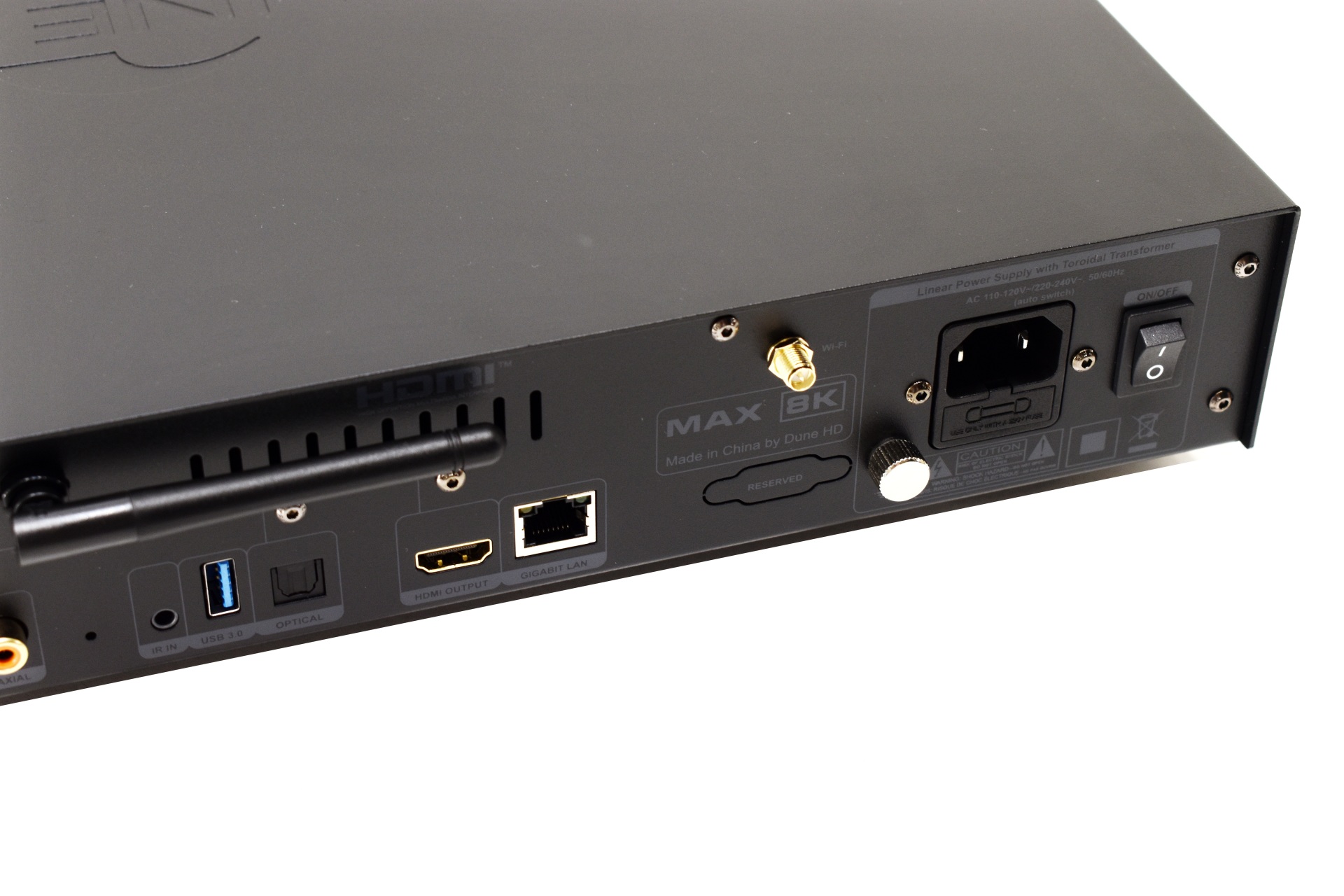 Moving at the rear we find 2 antenna ports, I2S-E RJ45 Hi-Fi out, coaxial connector, three USB 3.0 ports (one also doubles as low noise audio out), stereo RCA audio outputs, coaxial video output, IR extension input, Bluetooth Antenna, S/PDIF optical out, HDMI 2.1a out, RJ45 Gigabit ethernet port, power port with fuse and the on/off power button.
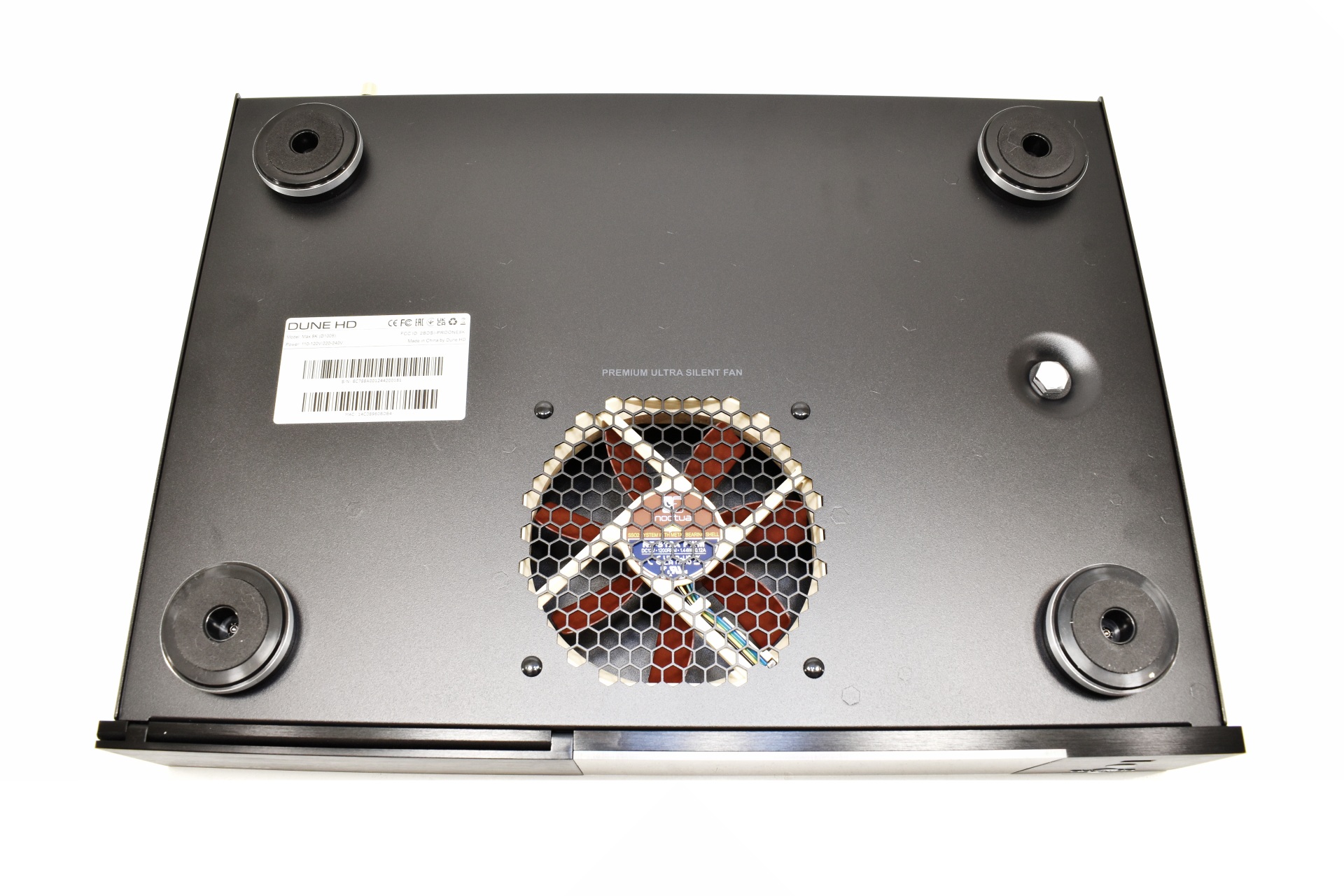
Turning the player over we find 4 large round feet and an 129mm exhaust fan.
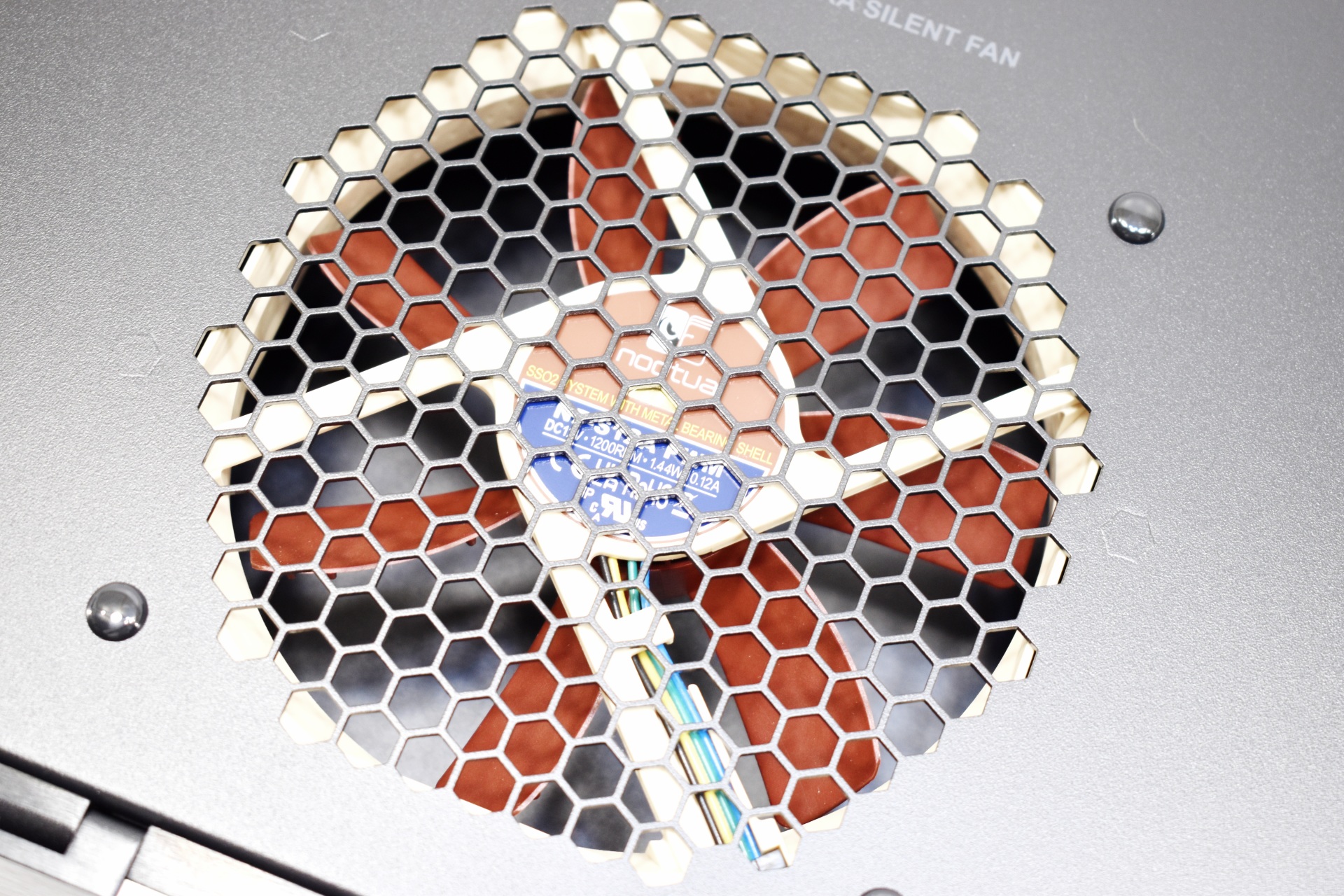
This fan is the NF-S12A PWM model by Noctua (1200RPM/63.27CFM/1.19mmH2O/17.8dBA).
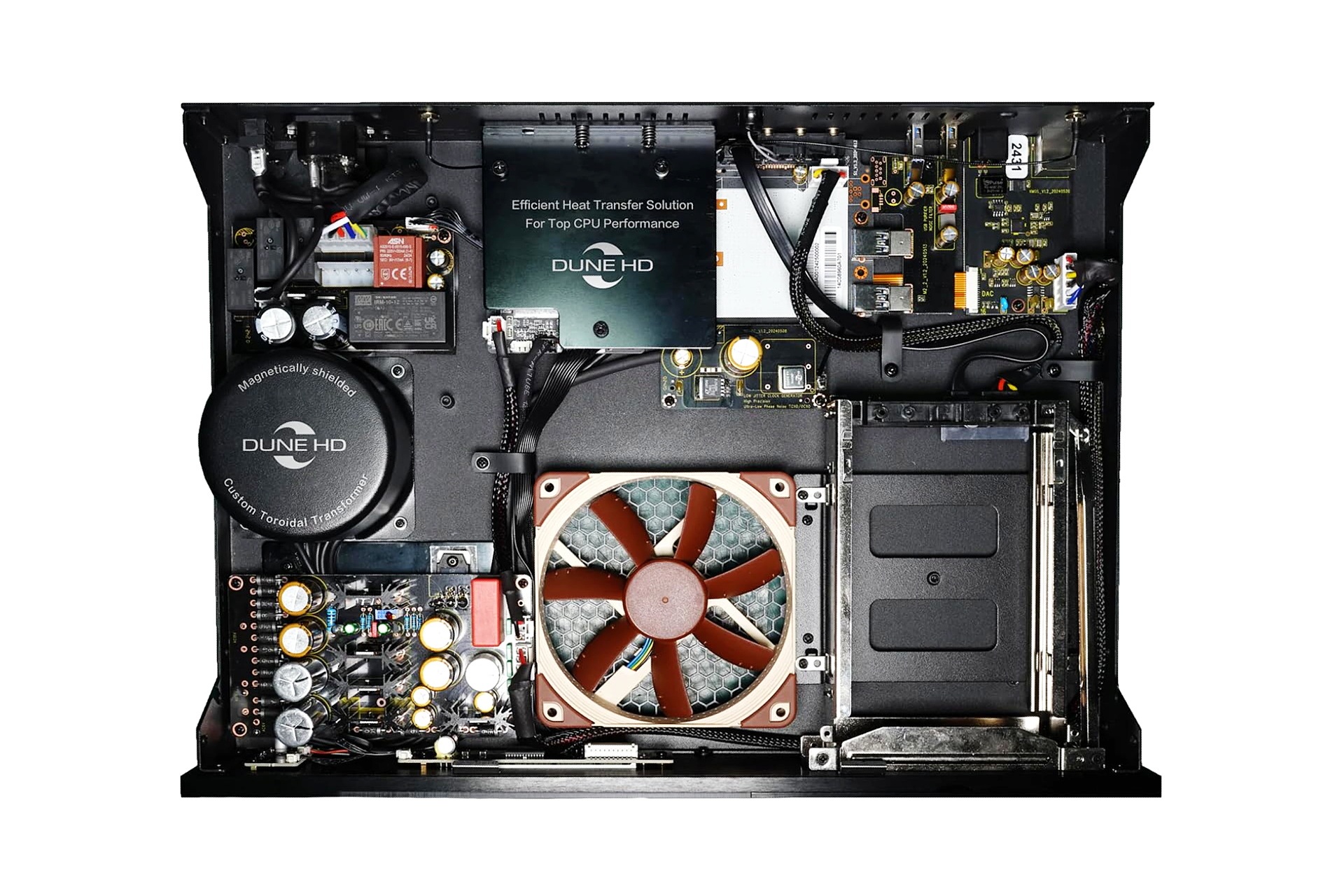
Above you can see a picture of the Max 8K interior (marketing material).
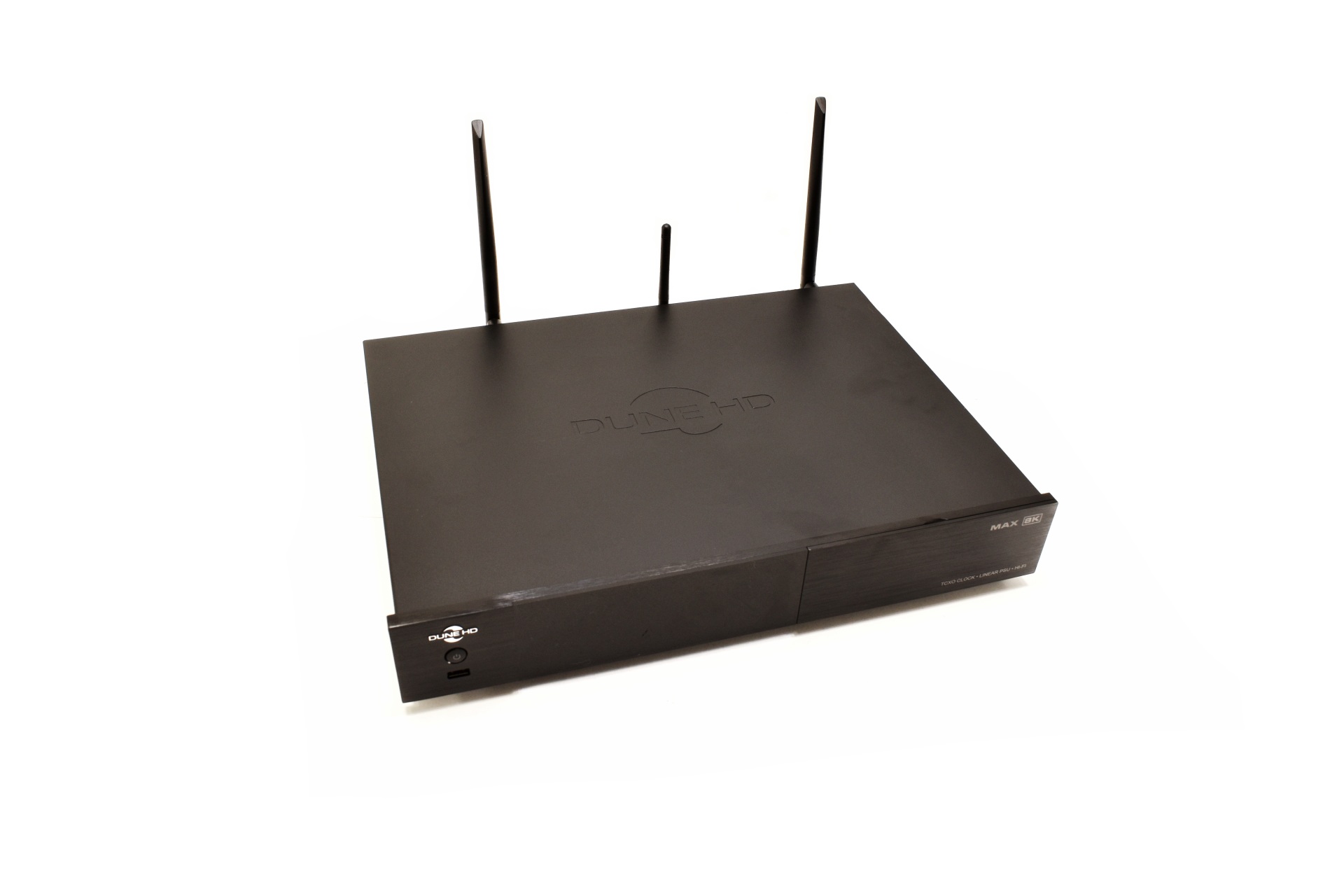
Once again, the two large Antennas take care of the Wi-Fi 6 end of the Max 8K whereas the small one is responsible for Bluetooth connectivity.
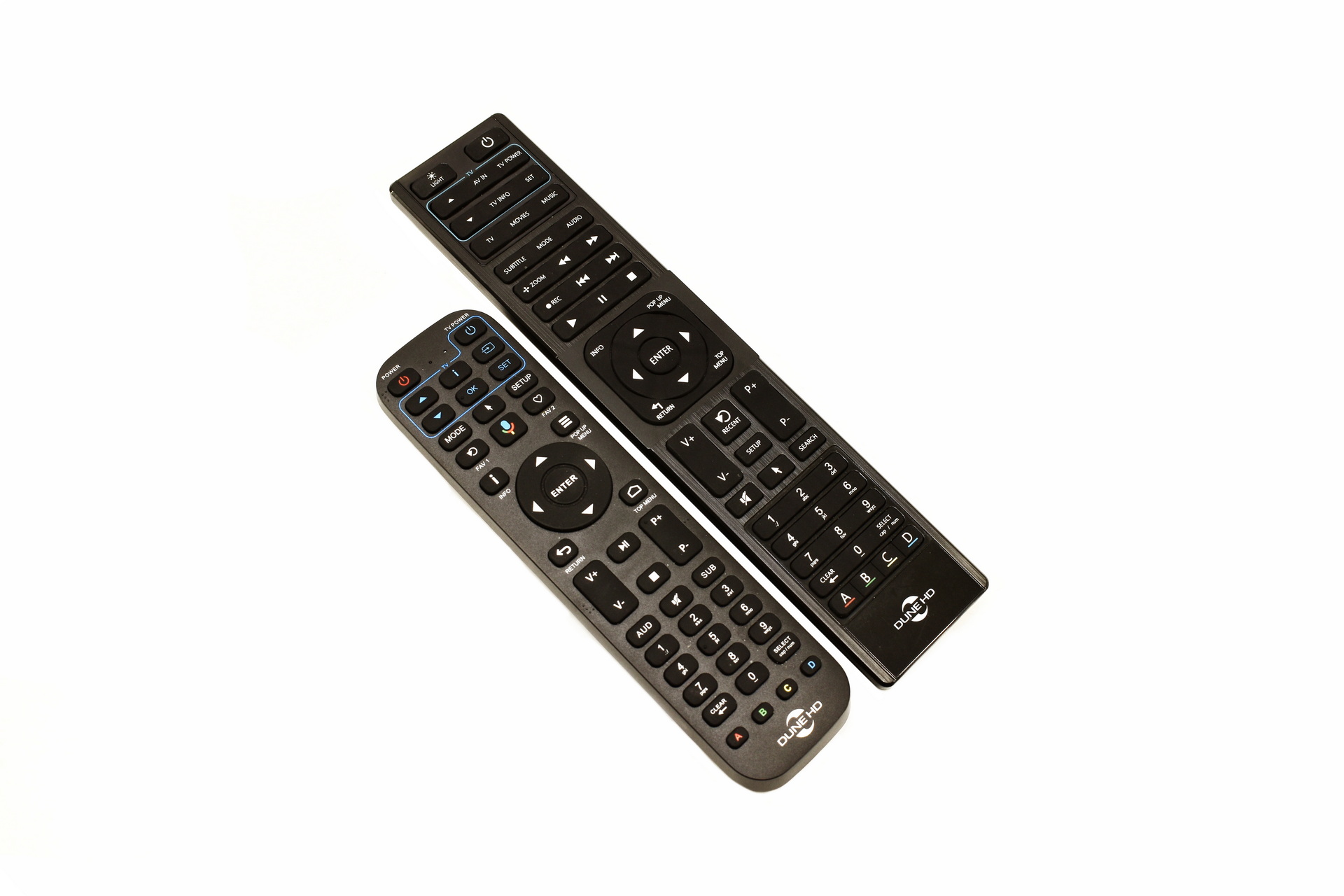
The bluetooth remote to me feels like a downgrade compared to previous ones (right), at least in design since this time it’s bluetooth based (so no need for direct line of sight).
MAX 8K OS
Dune HD has been using the same base OS for at least a decade now and well if it isn’t broken don't fix it.
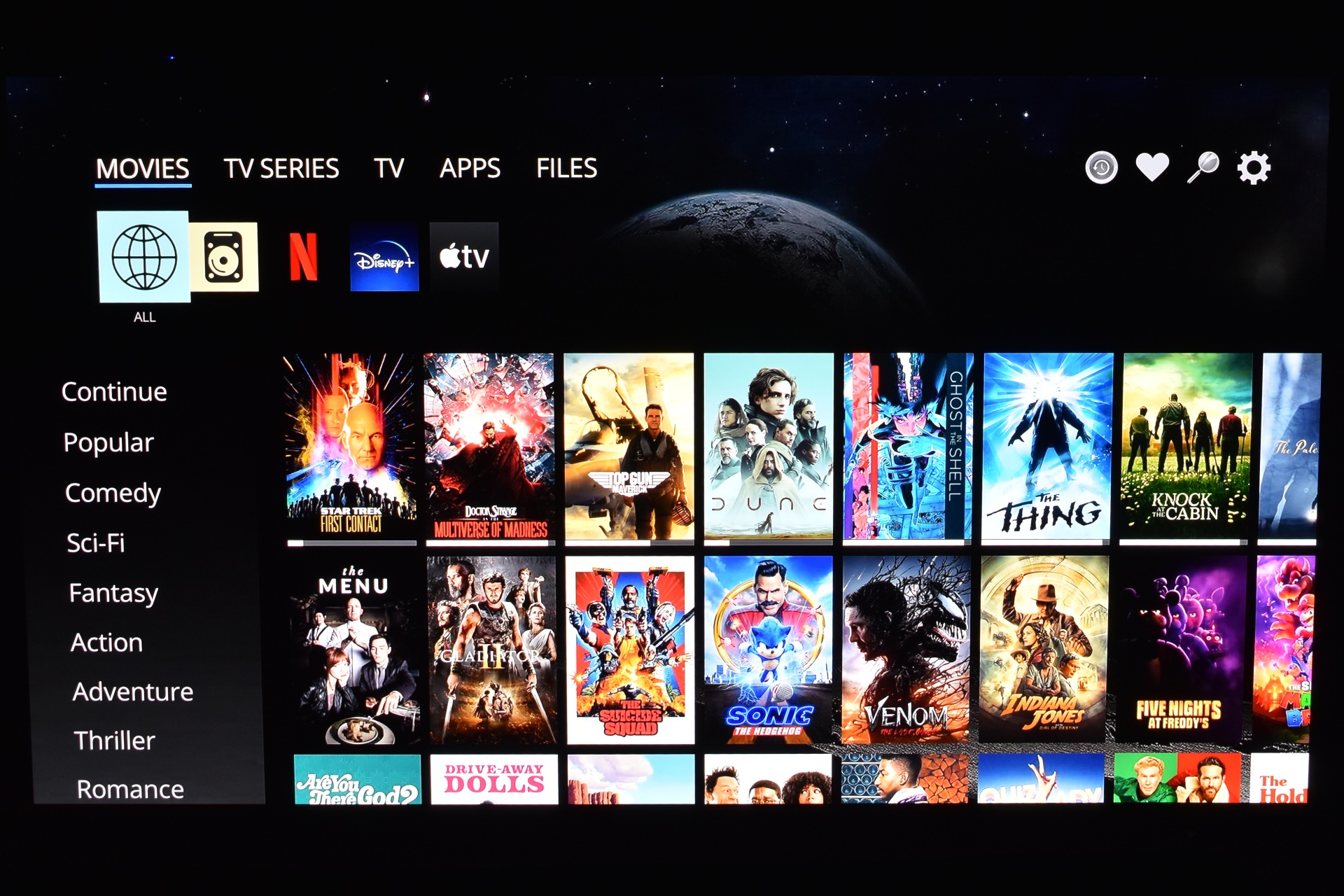
Initial tab lists several available movies both from streaming services and available in your local collection (same goes with the TV series tab - for some reason Dune HD removed the screenshot feature so I had to use my camera for this).
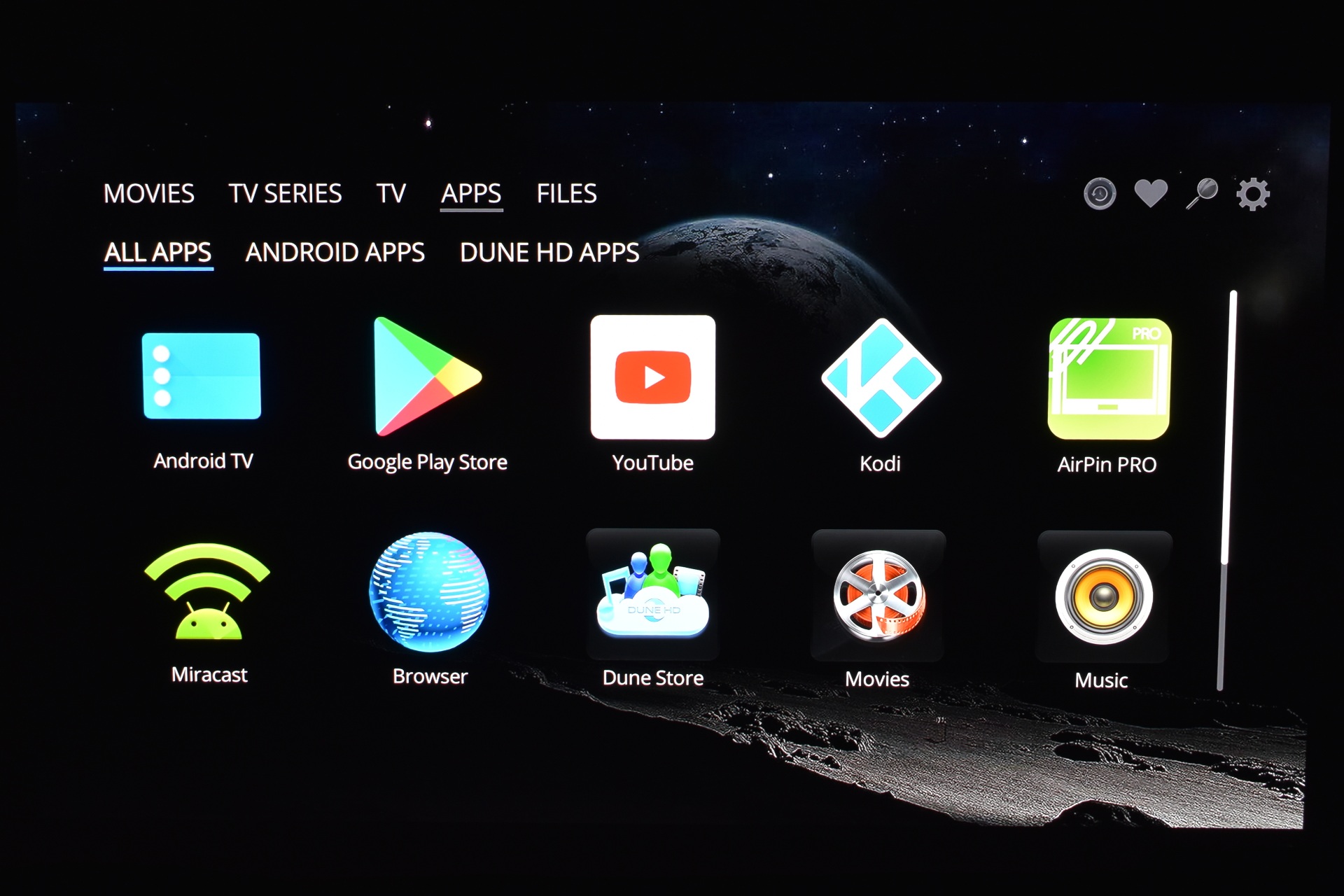
Since I don't use the Dune HD to watch TV online next tab is the apps one from where you can see all installed ones, both Android and Dune HD (and add more).
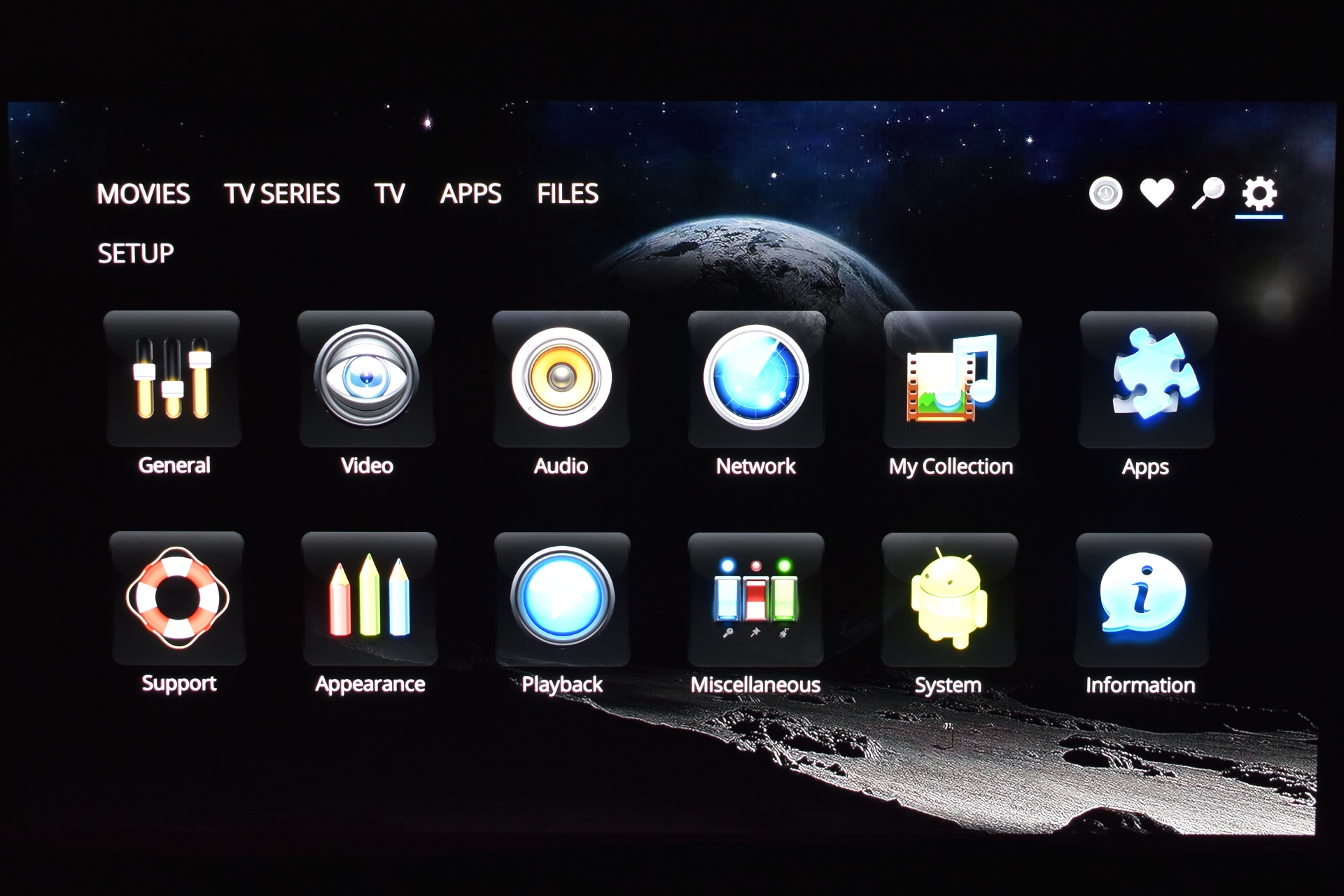
The settings/setup tab is the one I always care about most and so from here you can adjust pretty much everything.
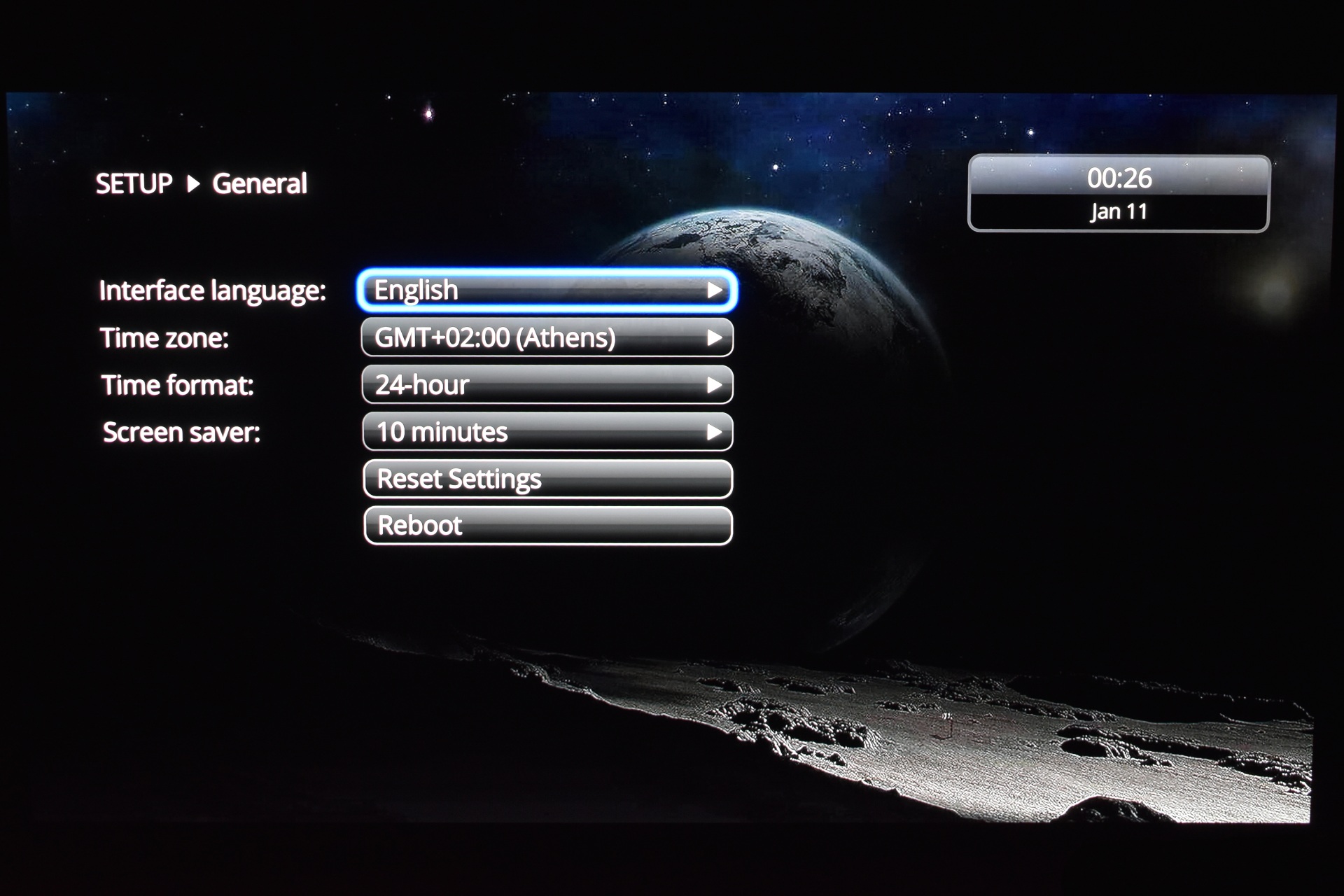
The general tab allows you to change language, time zone, time format, and enable the screensaver function.
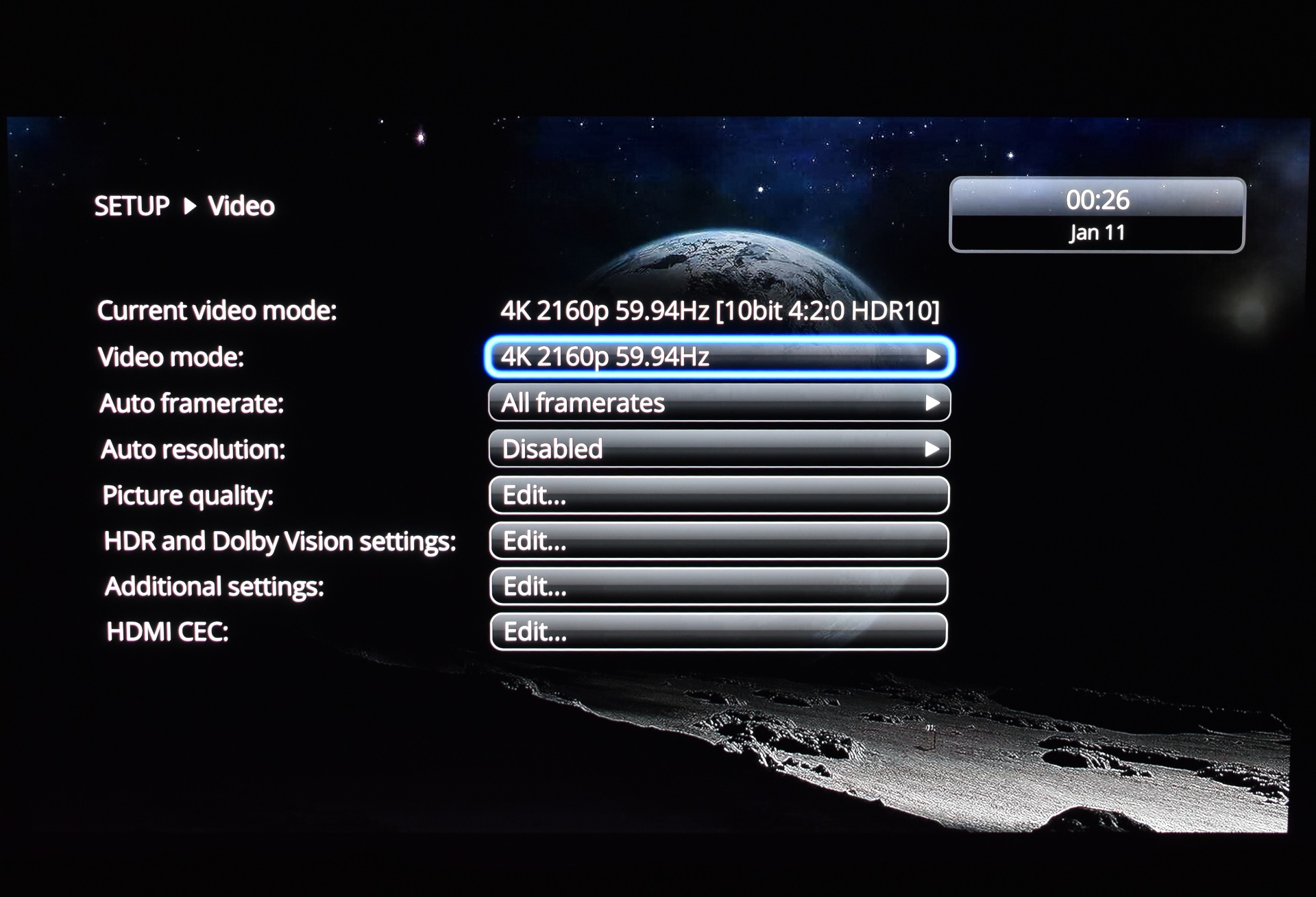
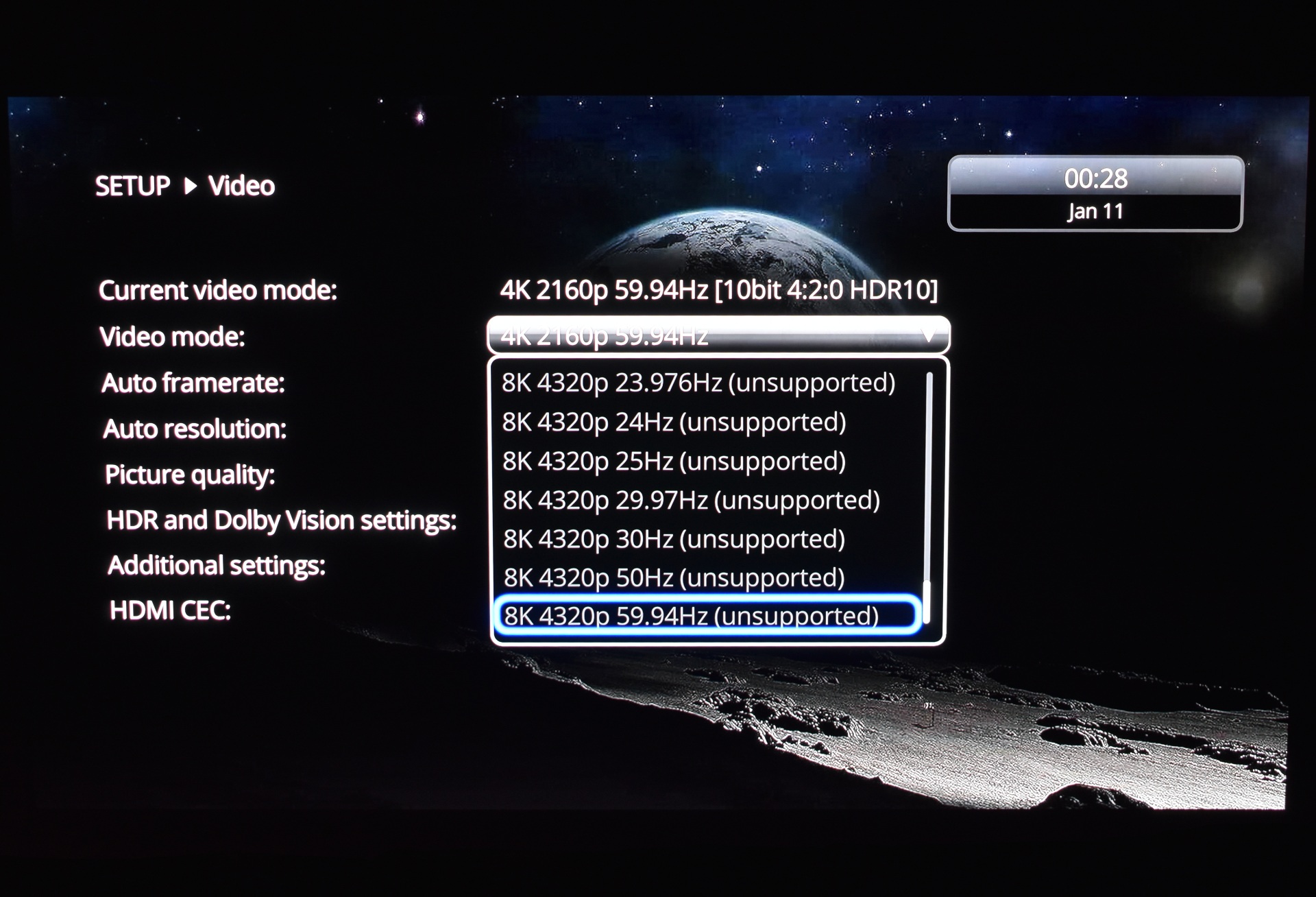
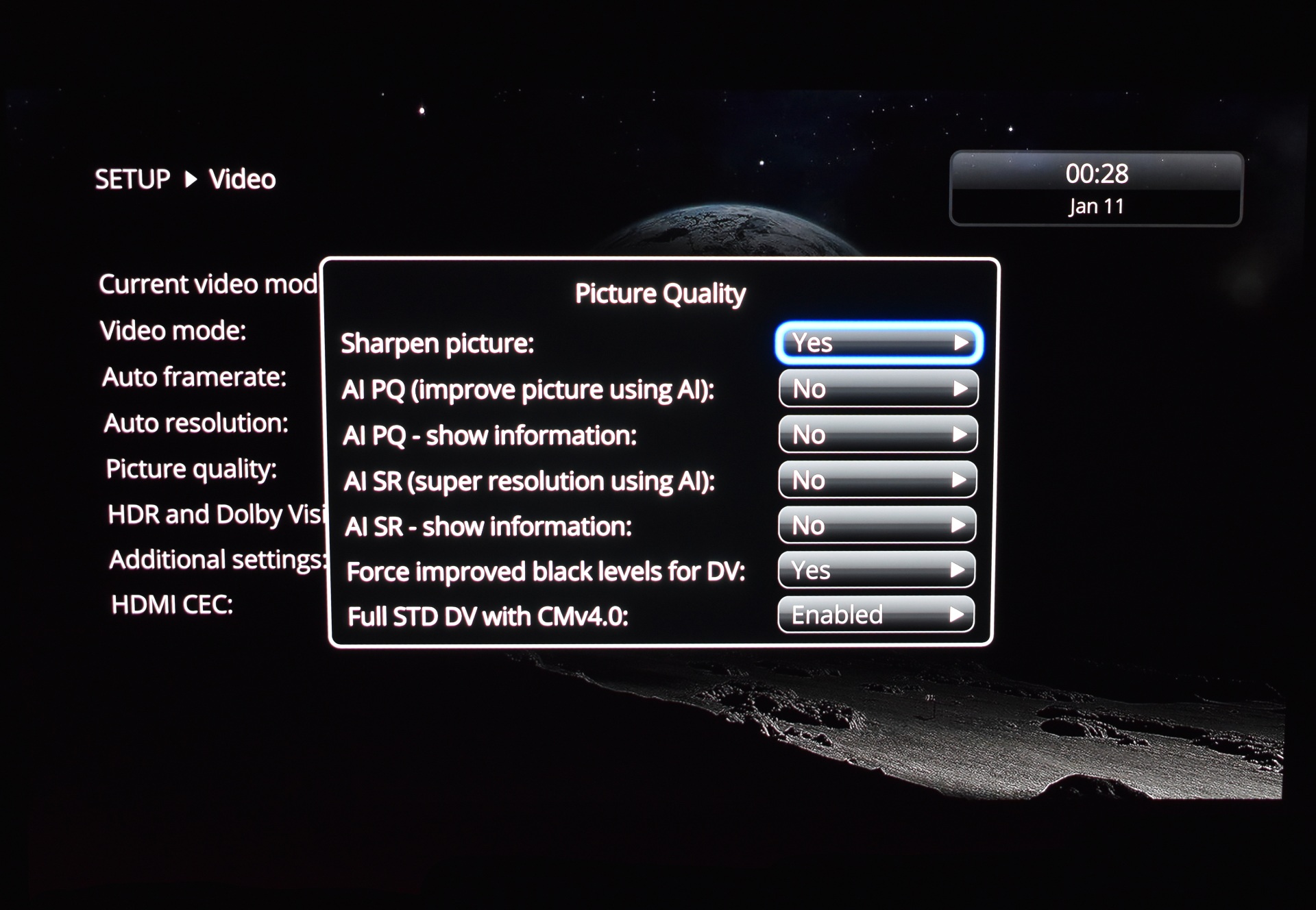
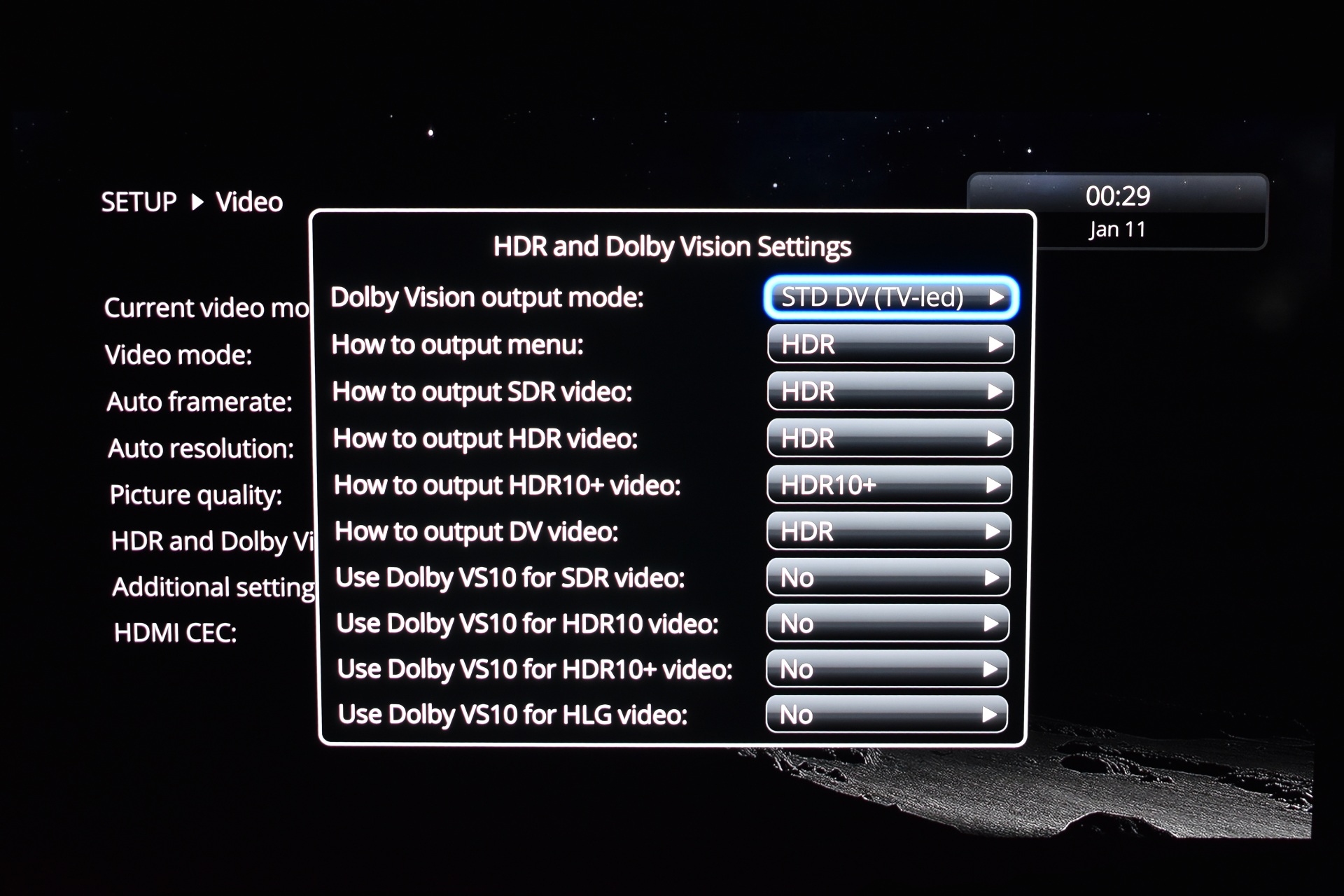
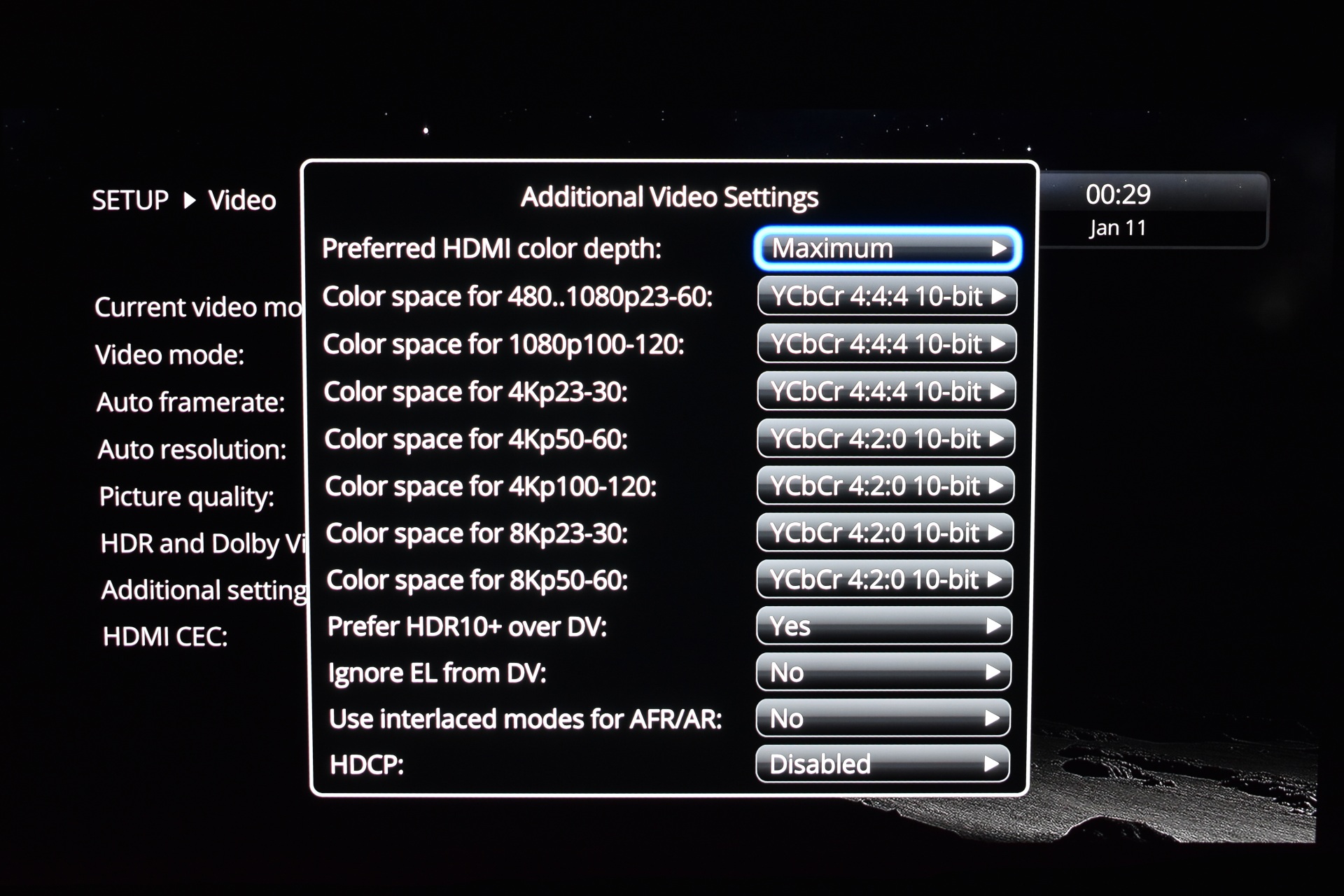
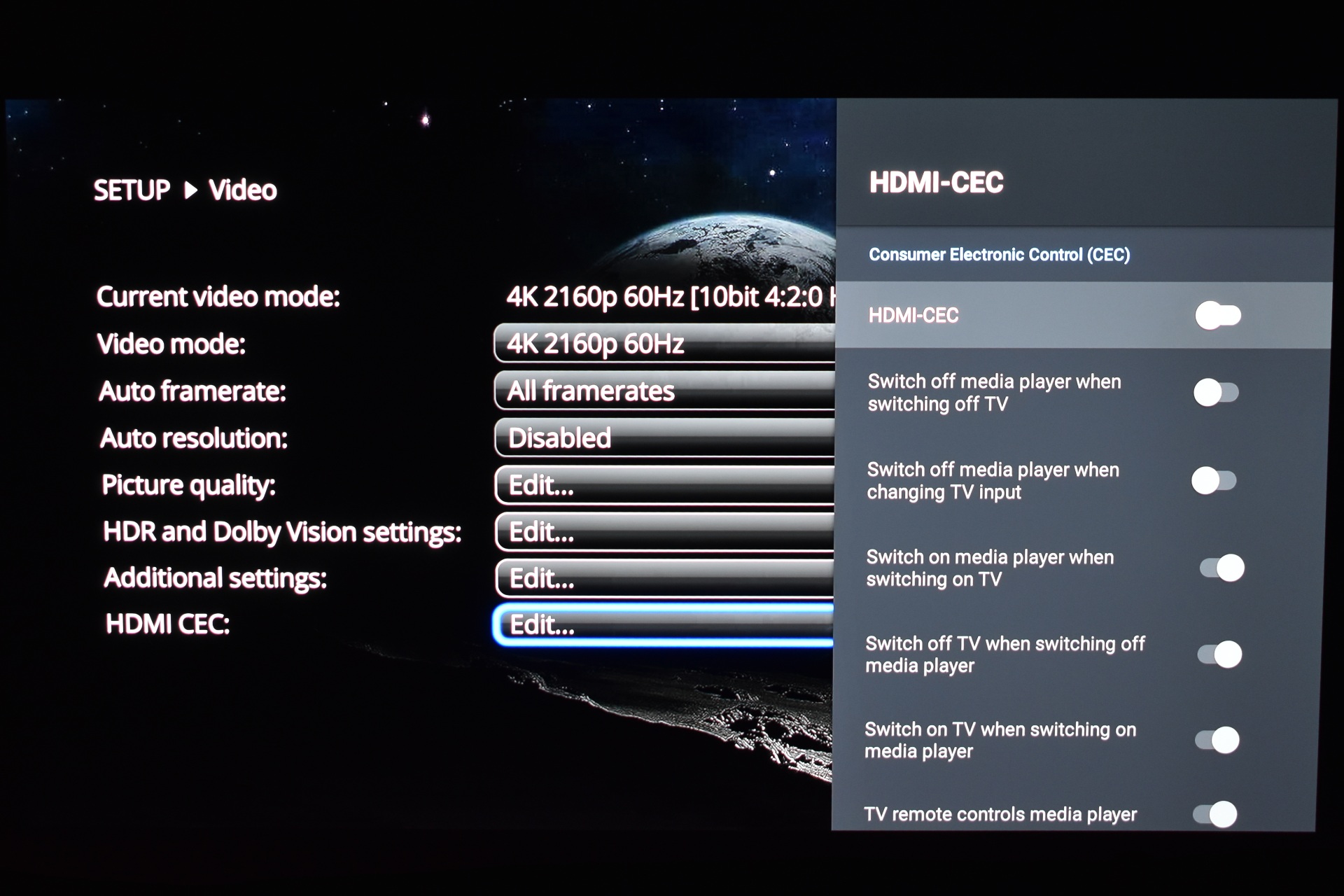
From the video tab you can change the resolution (up to 8K60), adjust framerate, enable auto resolution, use picture quality options (you'll need to test these to find the best result for your TV/Projector), adjust the HDR and DV settings (my Samsung 65" OLED uses HDR10+ so I had to change some of these), use additional video settings (color space related) and access the HDMI CEC android tab.
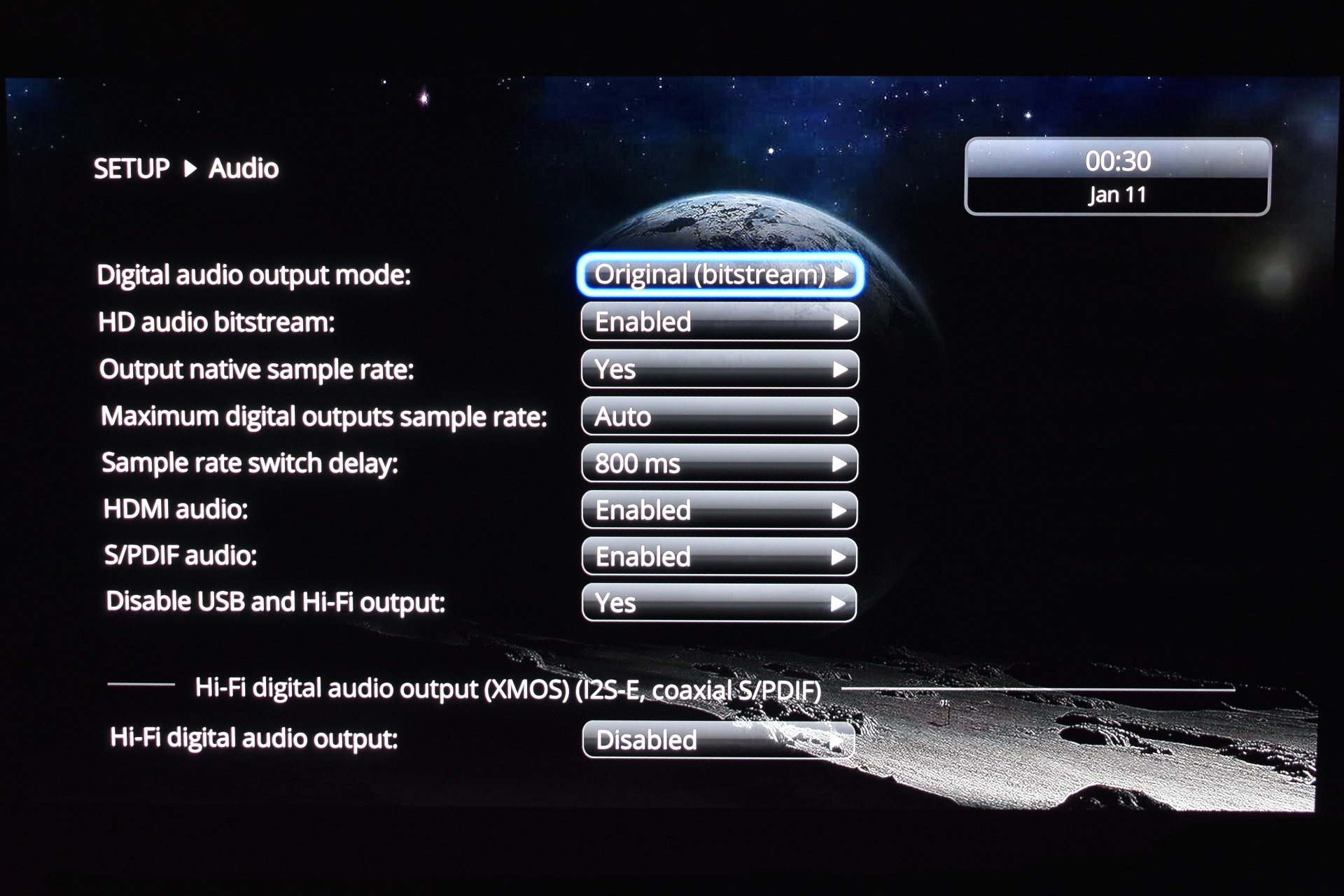
Inside the audio tab you have options like digital output (original bitstream or PCM), sampling rate, HDMI and S/PDIF audio out and of course the Hi-Fi audio out.
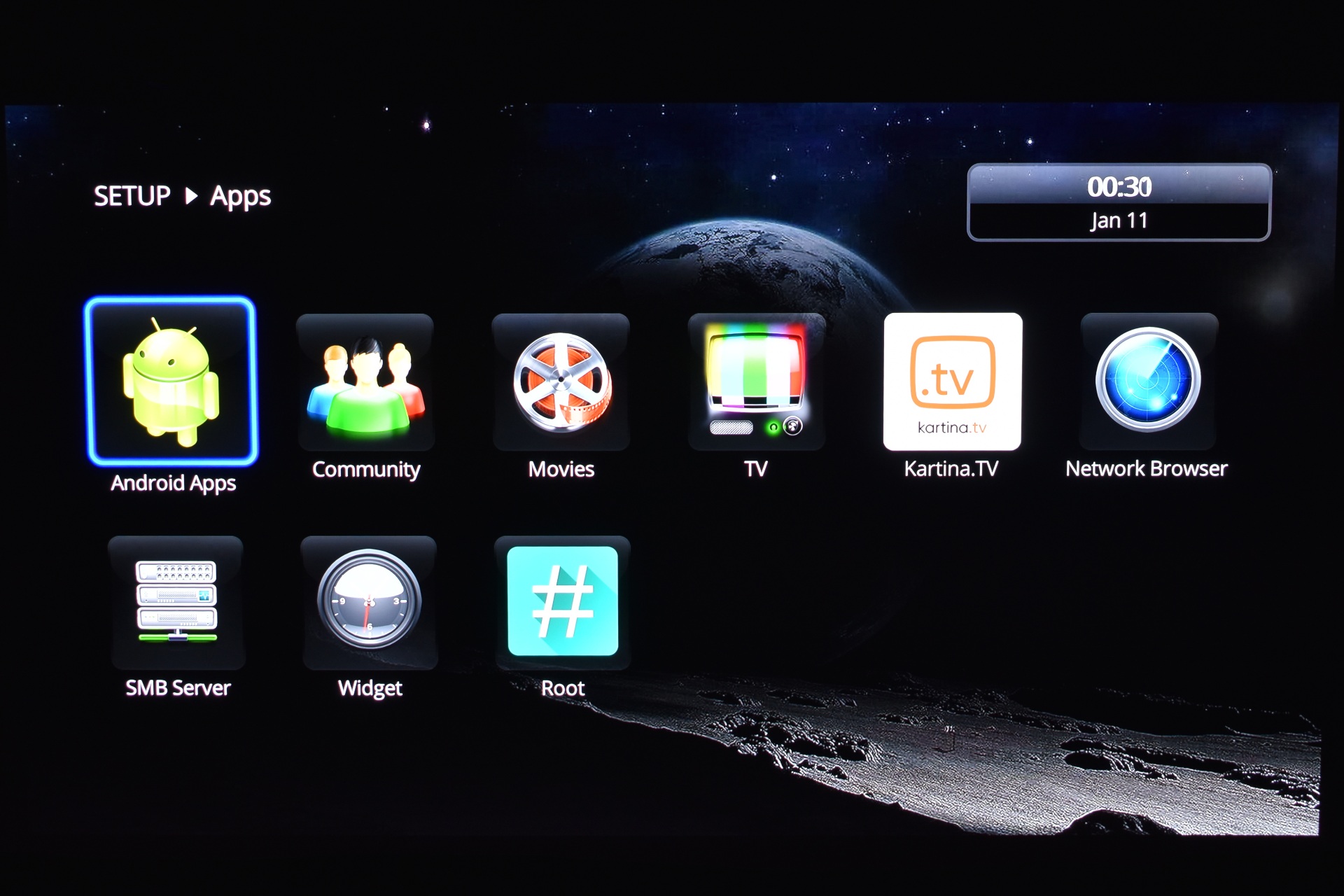
You can also install and run more apps from the setup tab as seen above.
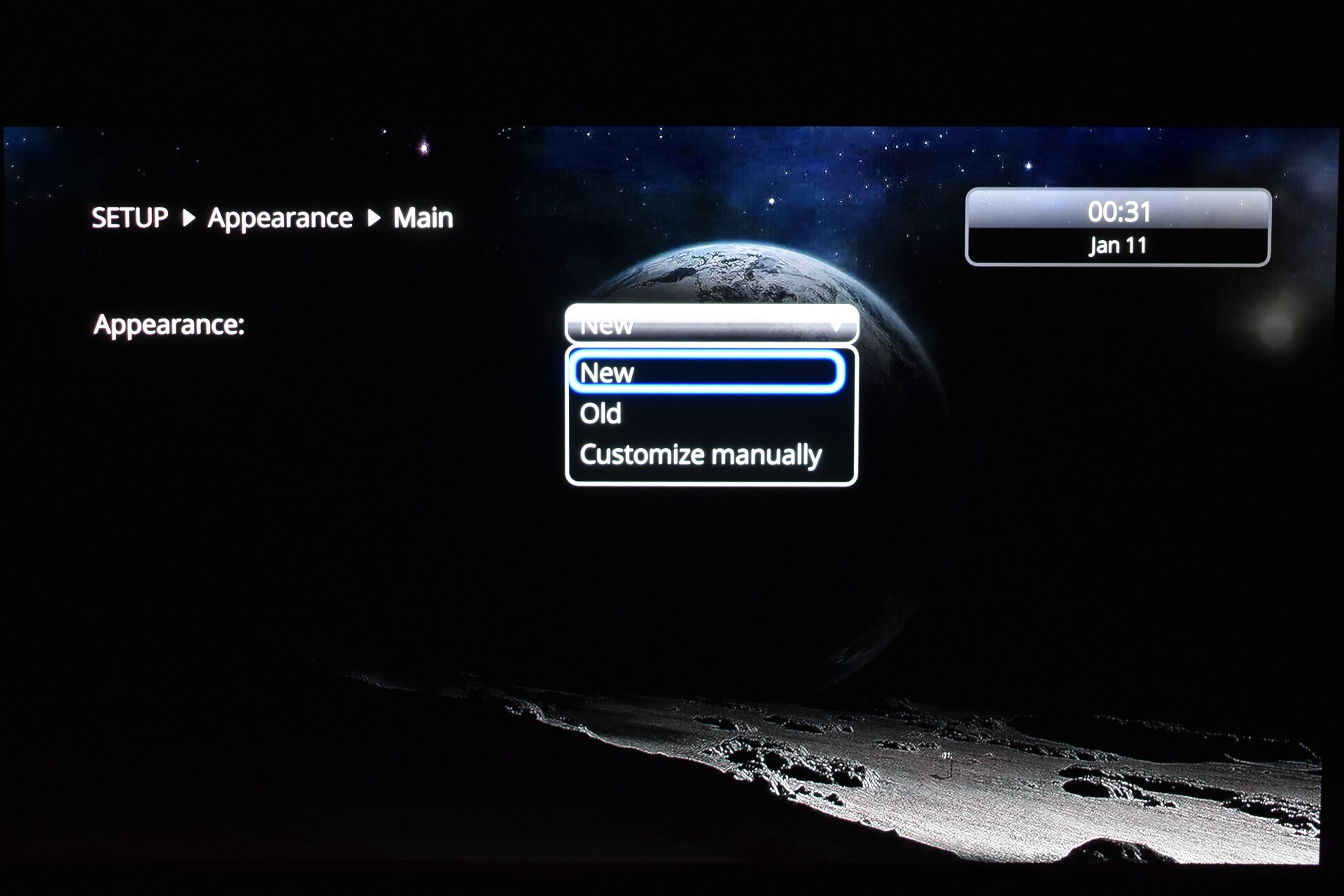
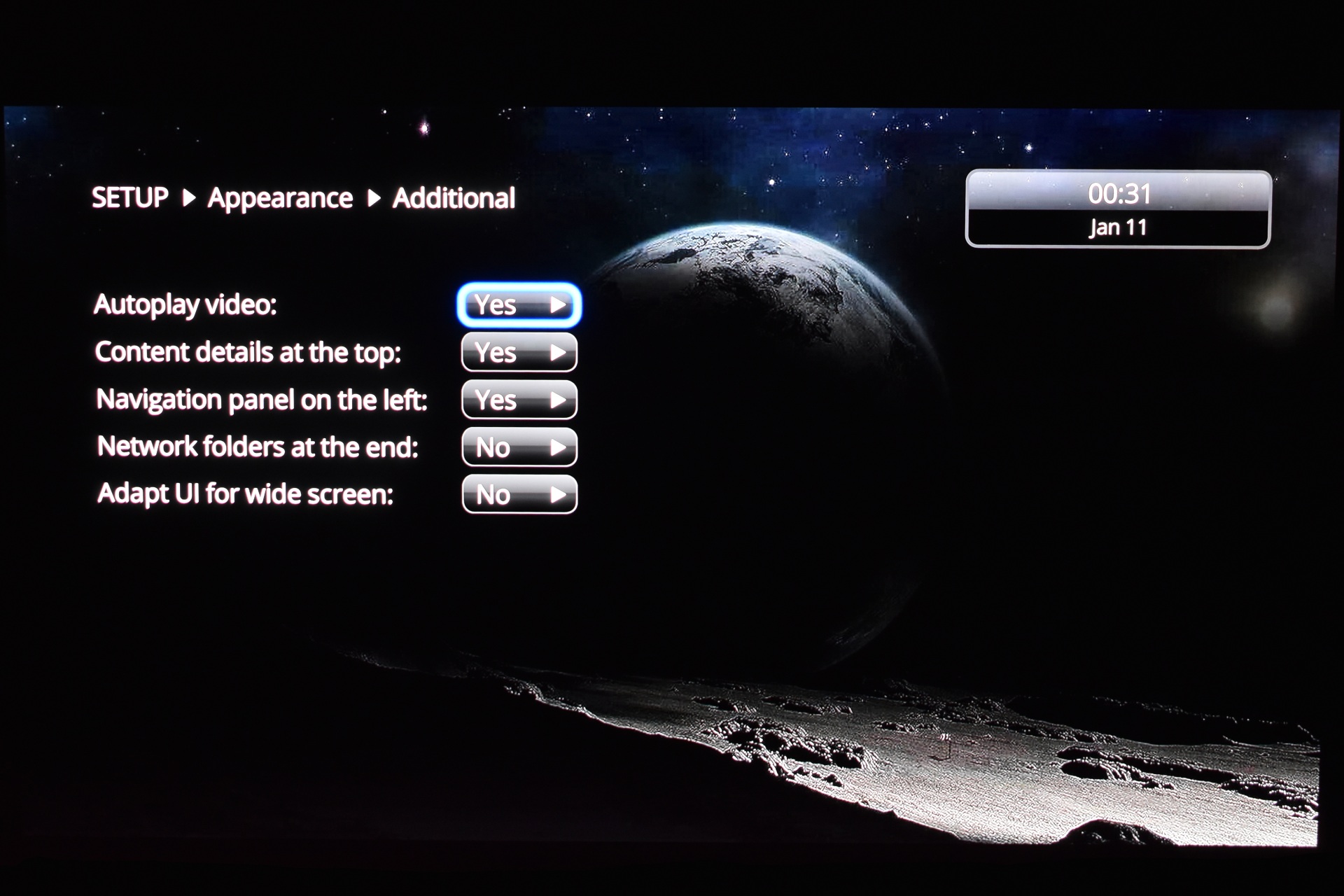
Dune HD allows the end user to switch between the old and new OS styles and change some of their properties.
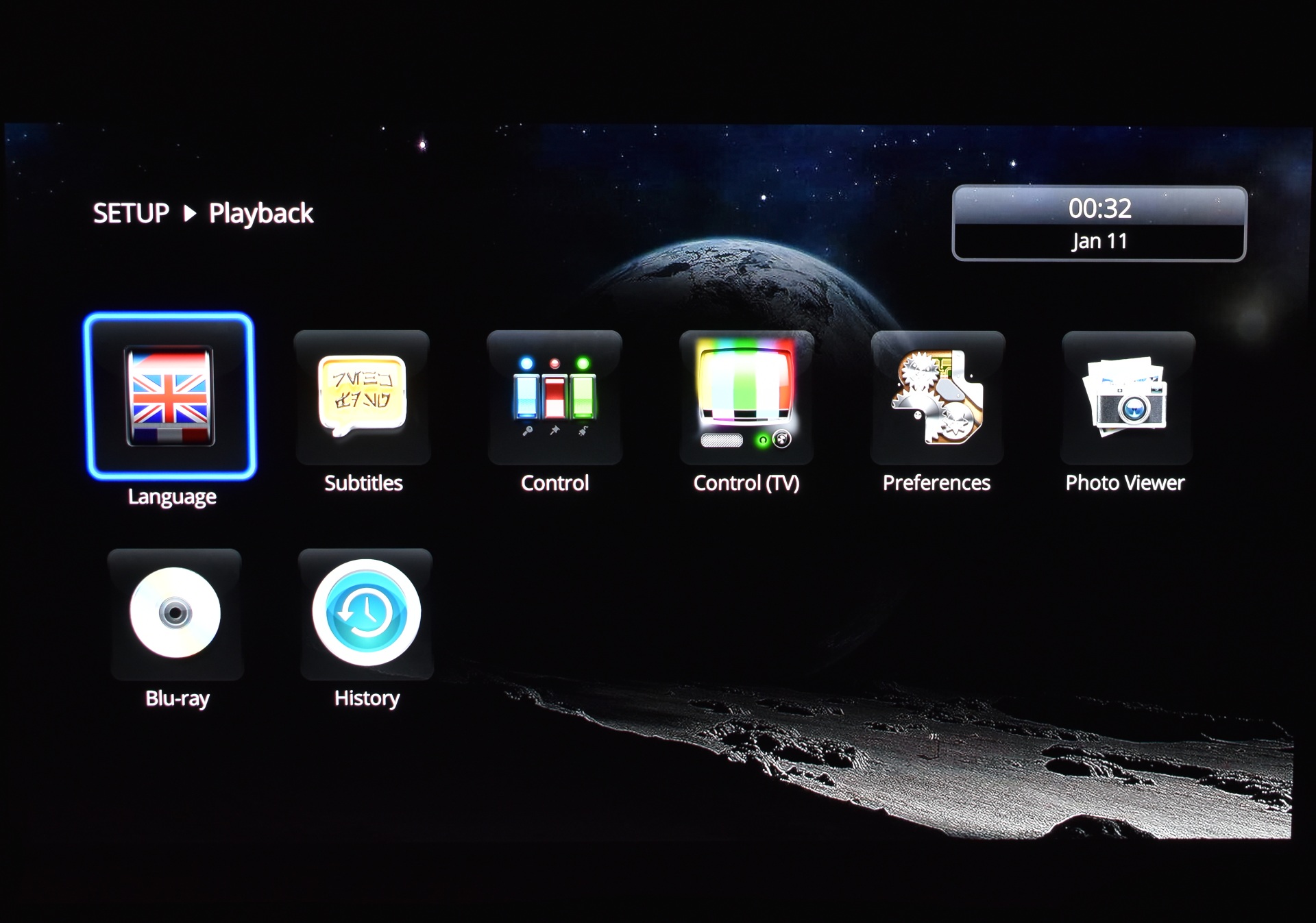
Language, subtitles, TV controls, and photo and Blu-Ray functions can also be adjusted from here.
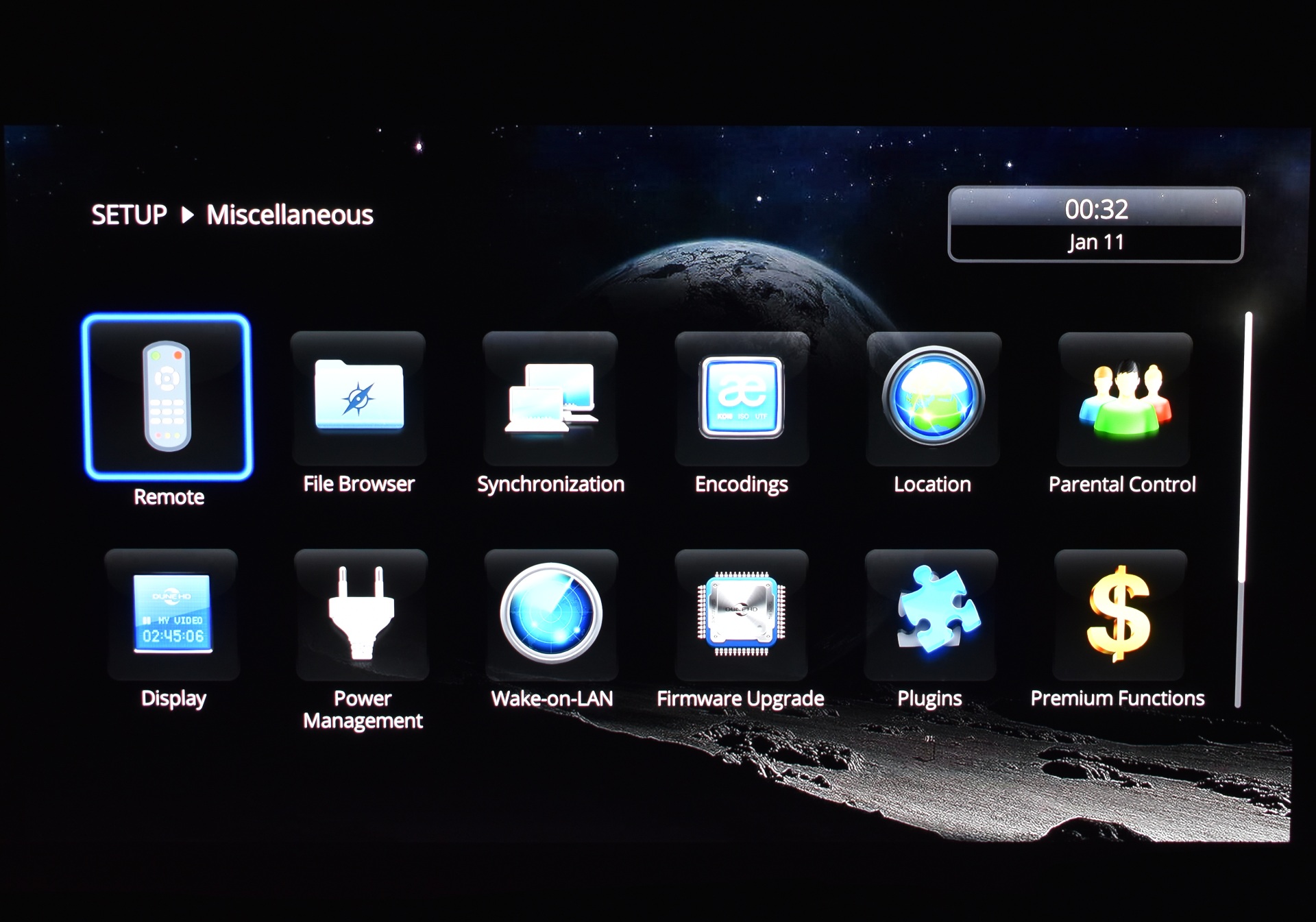
Miscellaneous options related to the remote control, file browsing, synchronization between devices, encodings, location, parental controls, LED display, power, wake-on-lan, firmware updates plugins and more are available from this tab.
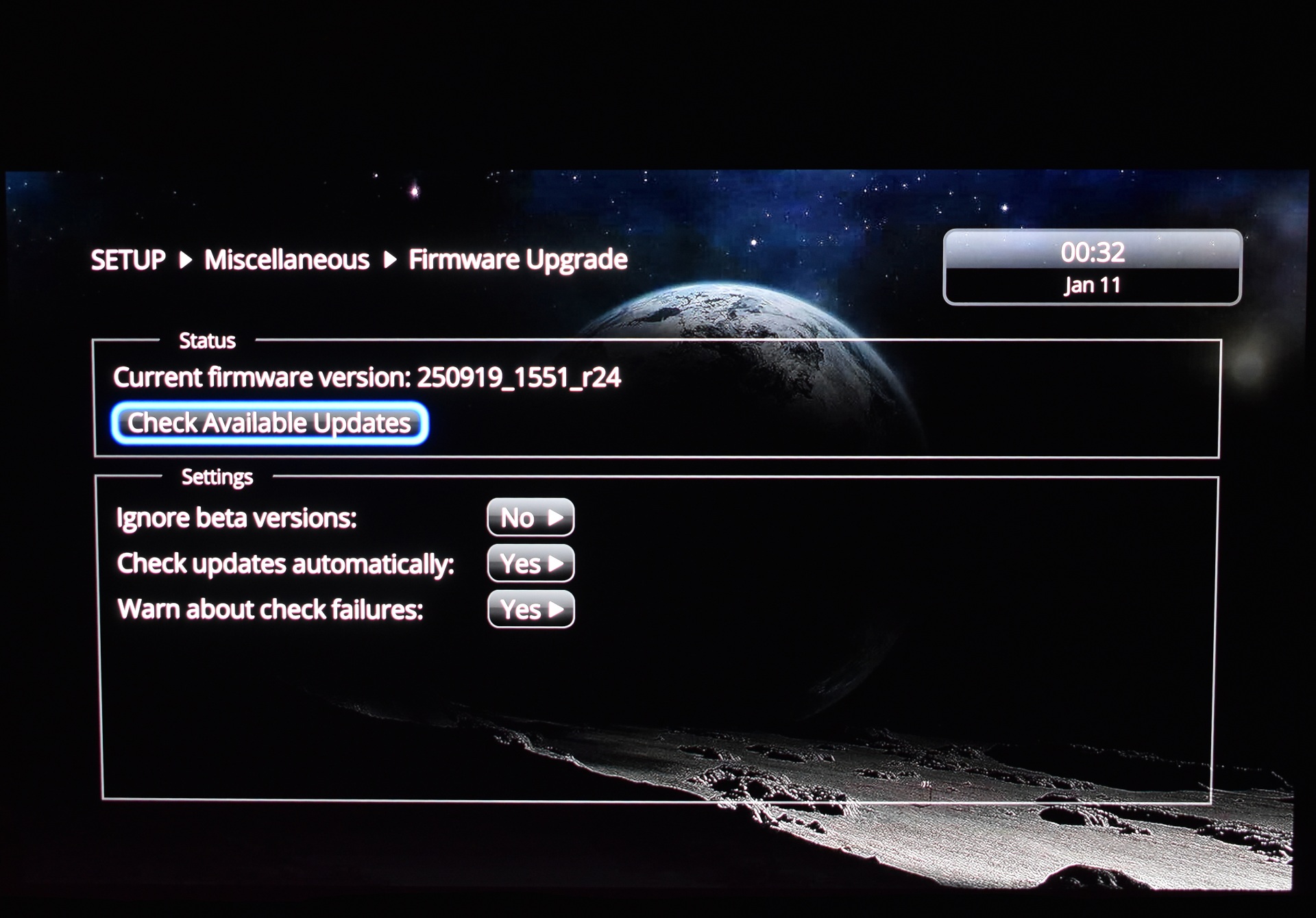
For this review I used the latest available update (250919_1551_r24).
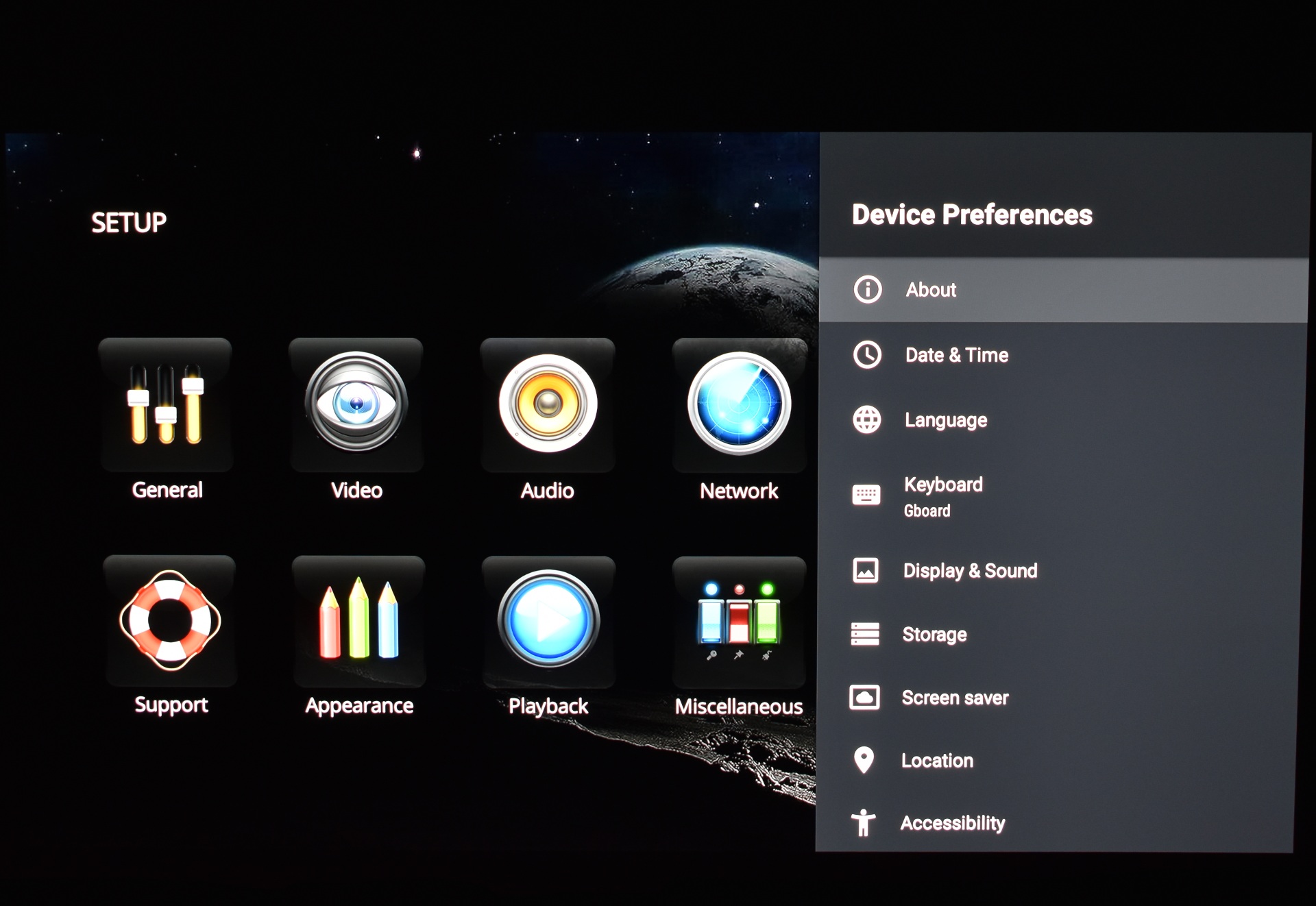
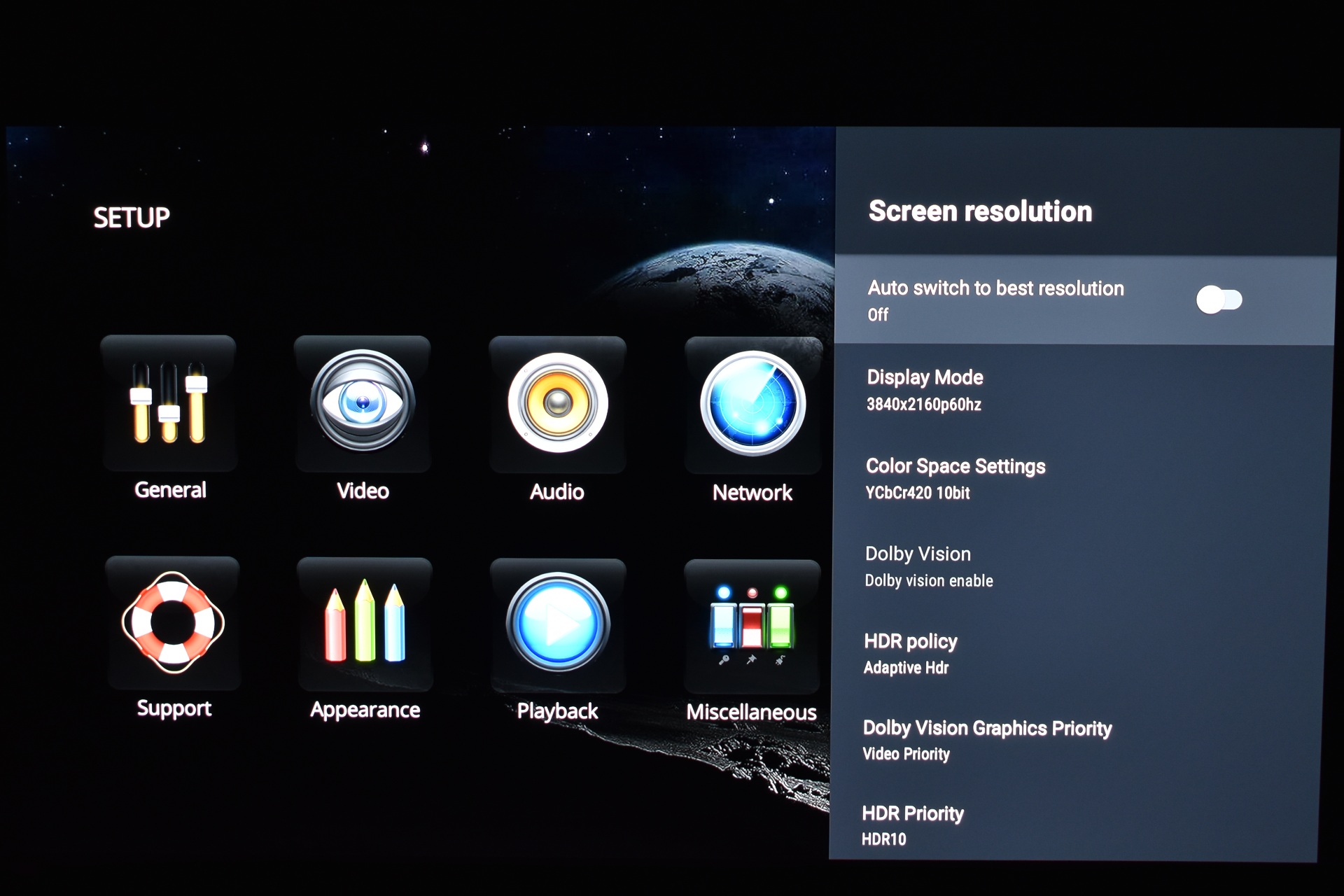
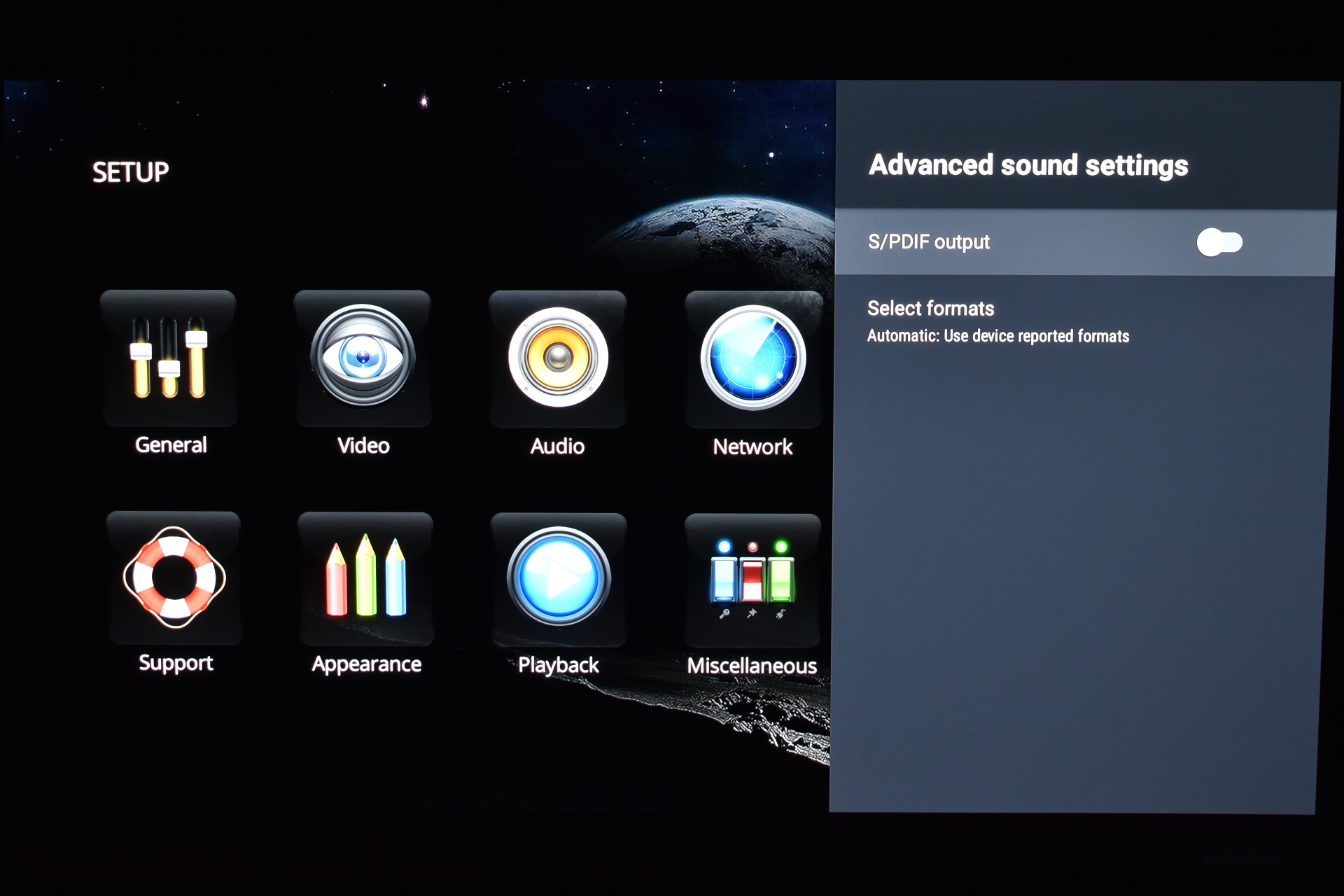
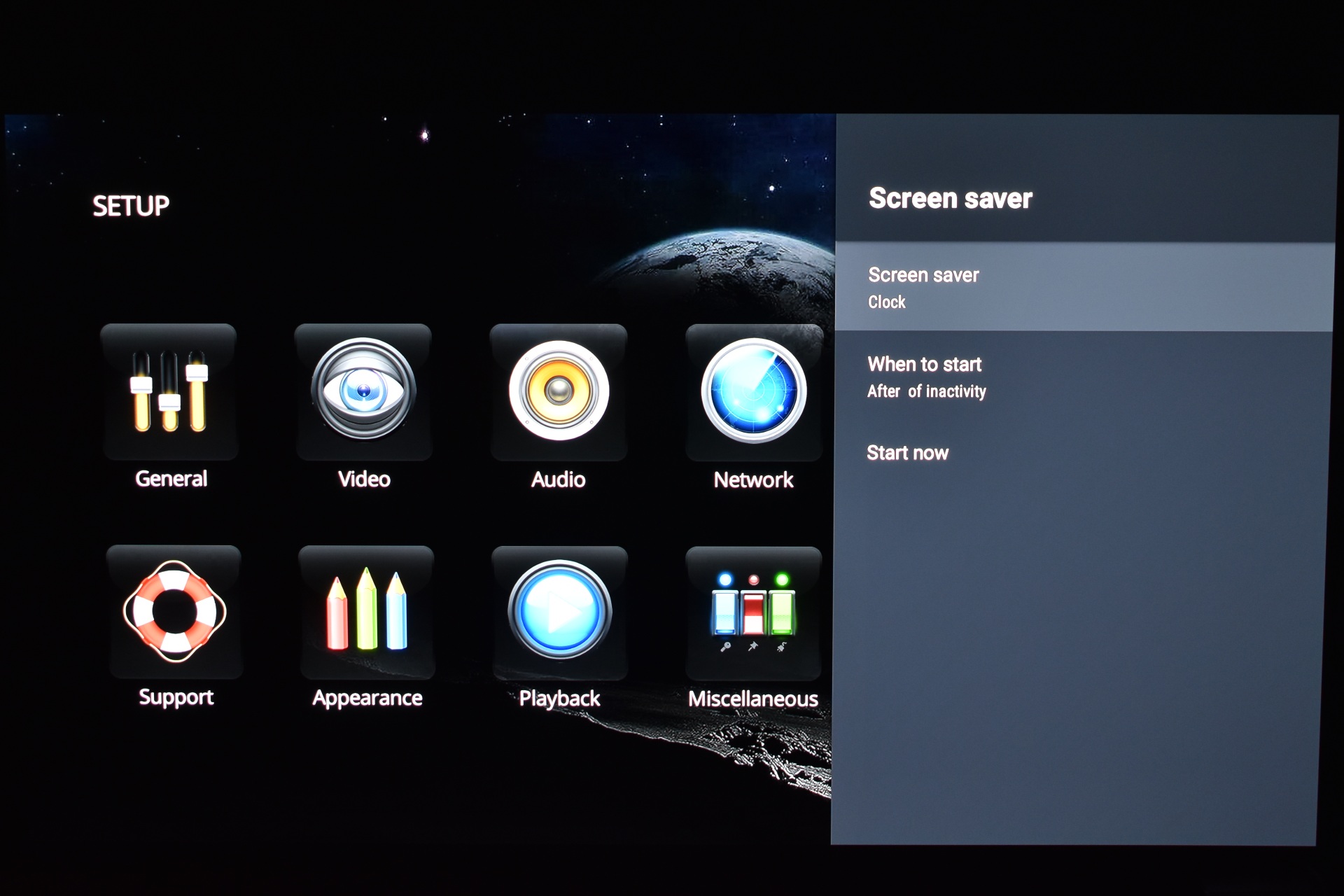
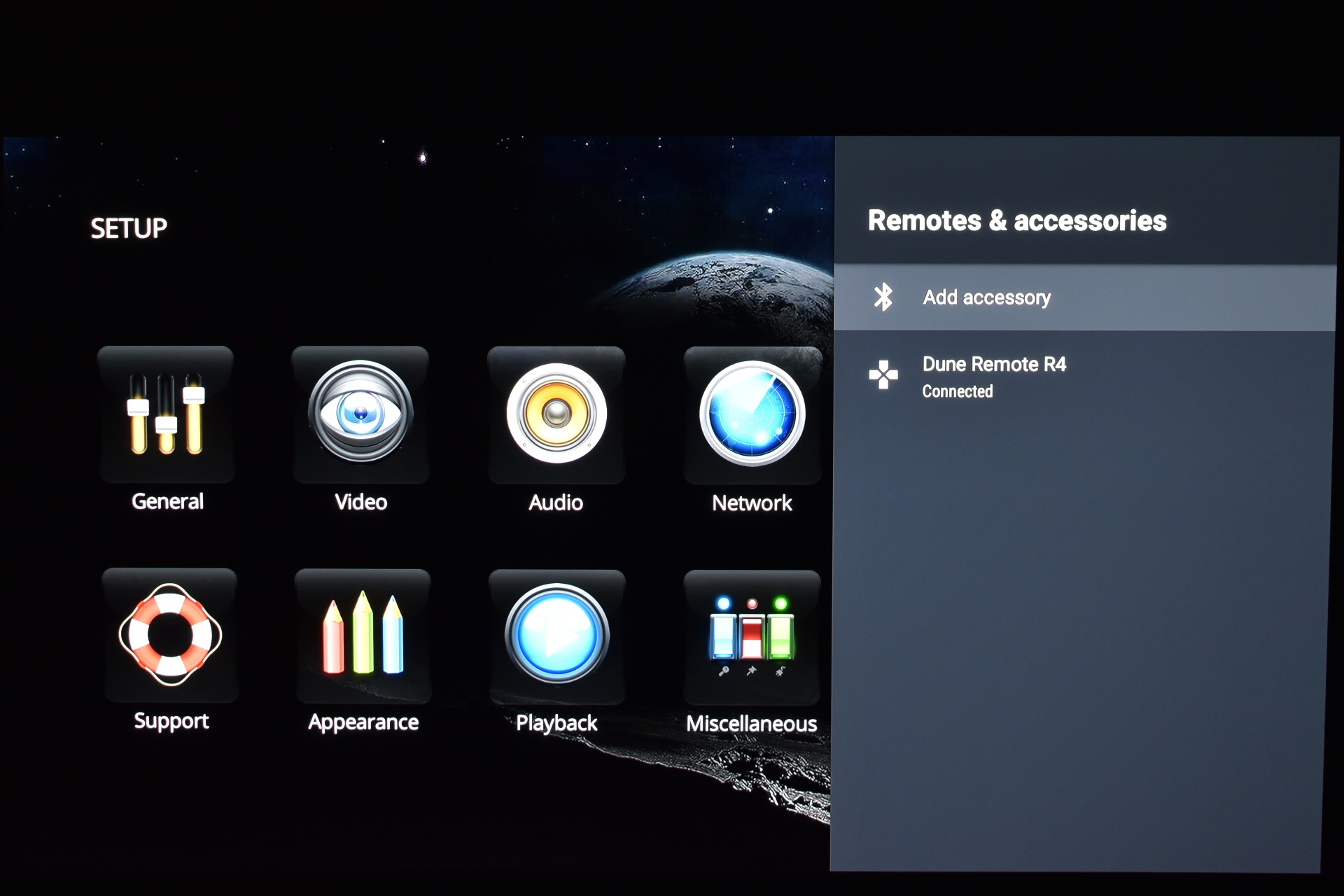
Since the Dune HD OS is based on Android 11 you can also access its settings regarding video, audio, screensaver and connected devices.
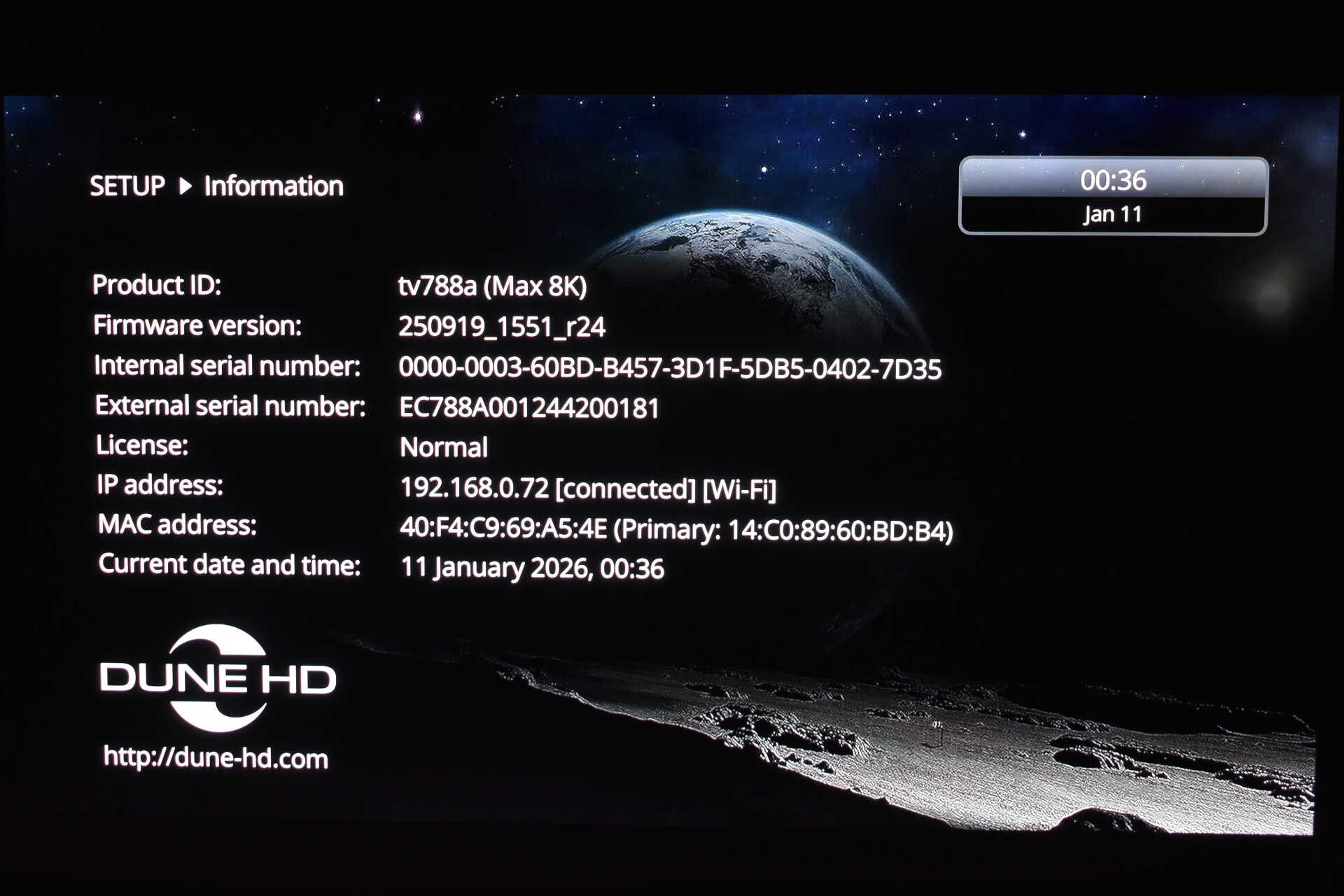
The information page lists the model name, serial number, license, IP/MAC address, connectivity type and time.
TEST RESULTS
Dune HD media players have yet to disappoint and the Max 8K is no exception. Yes, when I received this sample a few months back it still had a couple of bugs that needed ironing out (their support was quick to do so after I pointed them out) but as of this moment the player is virtually flawless (always with my setup).
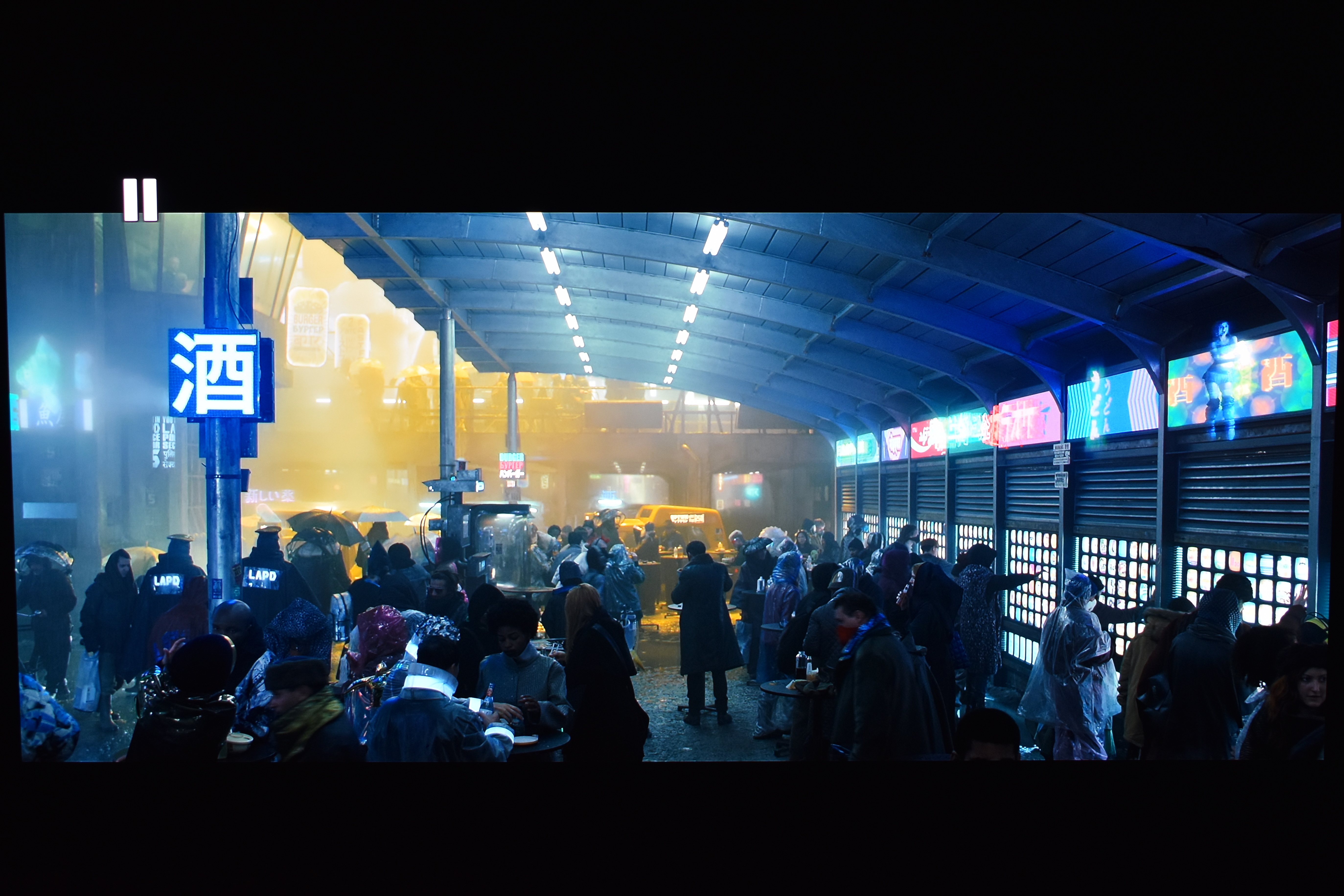


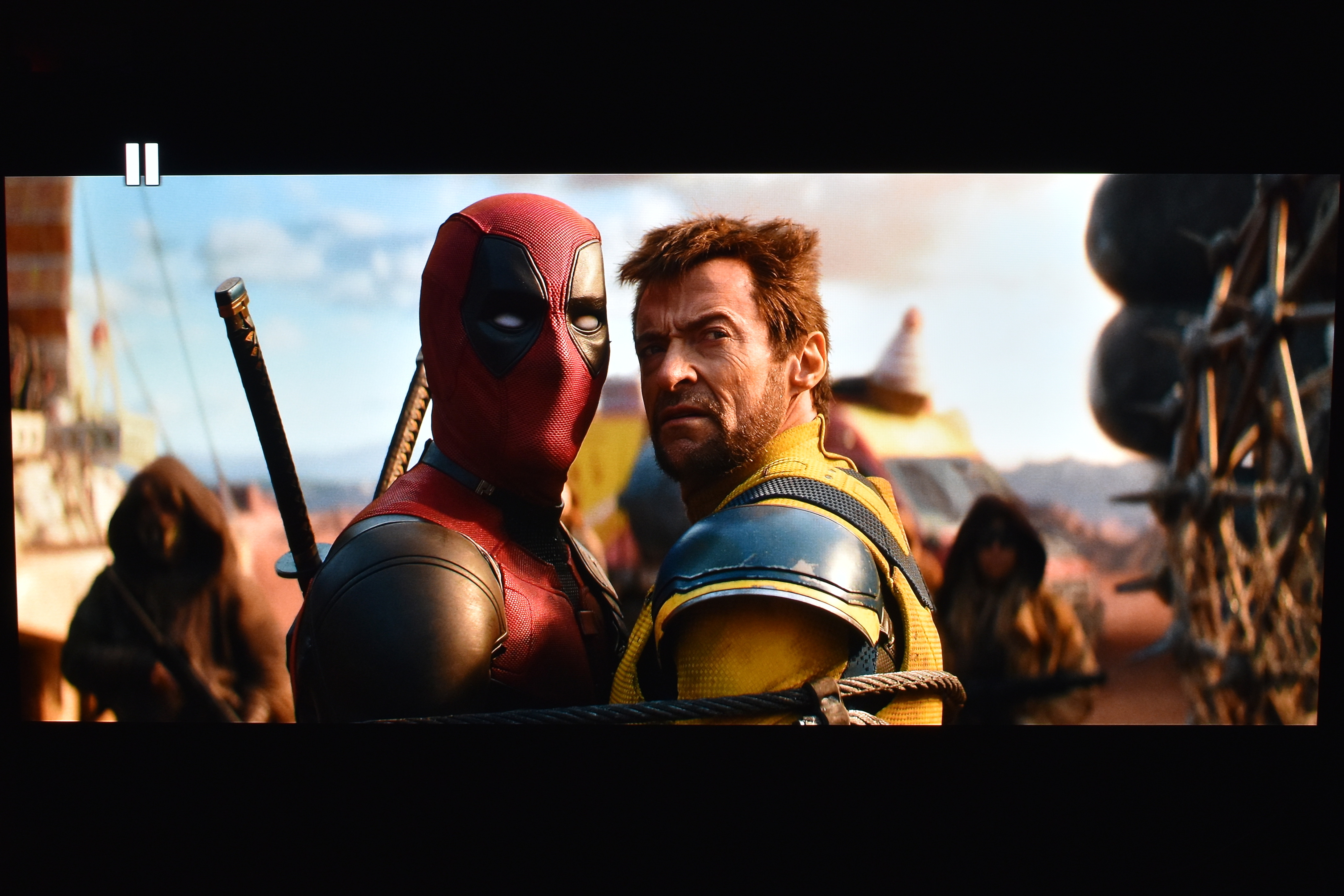
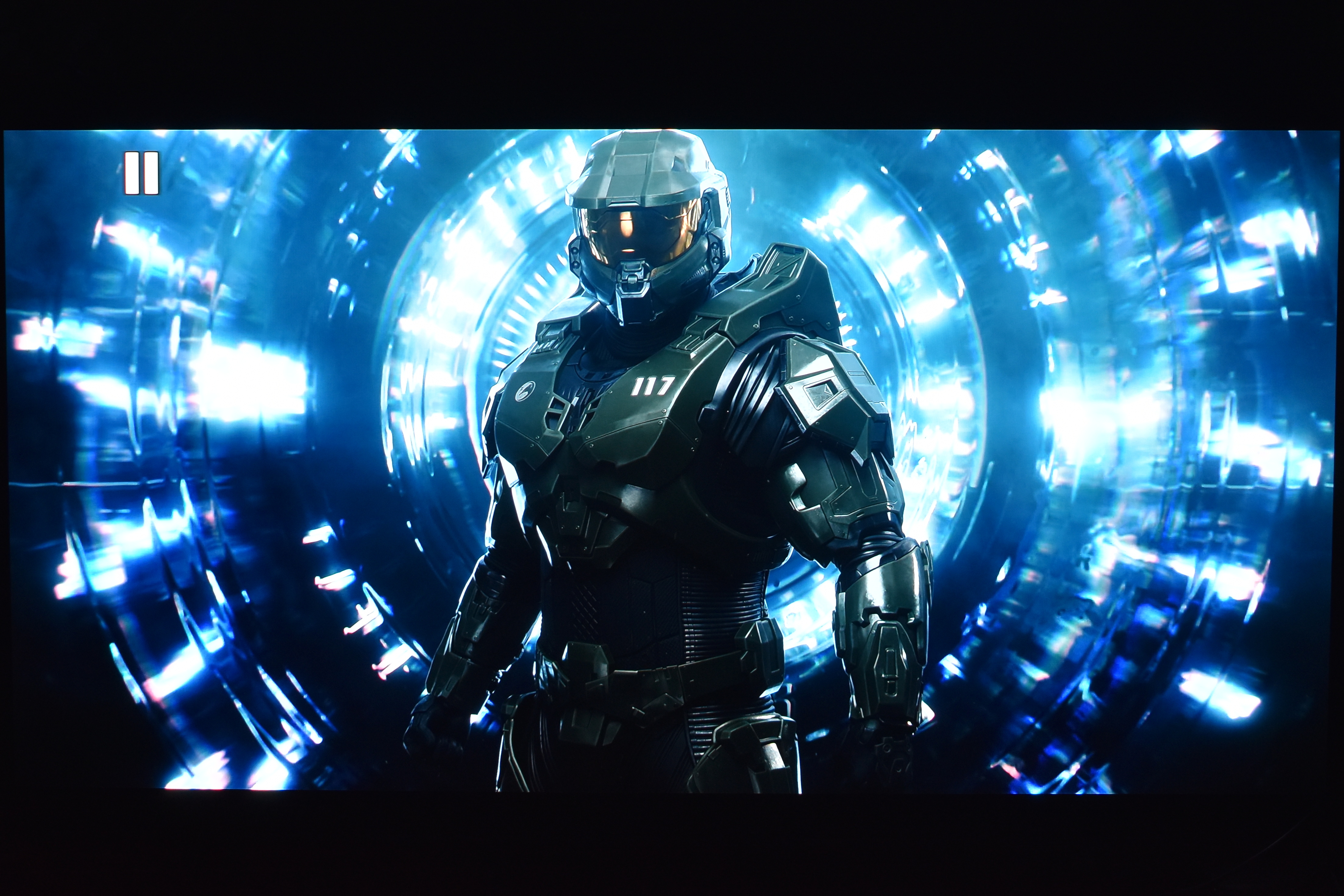
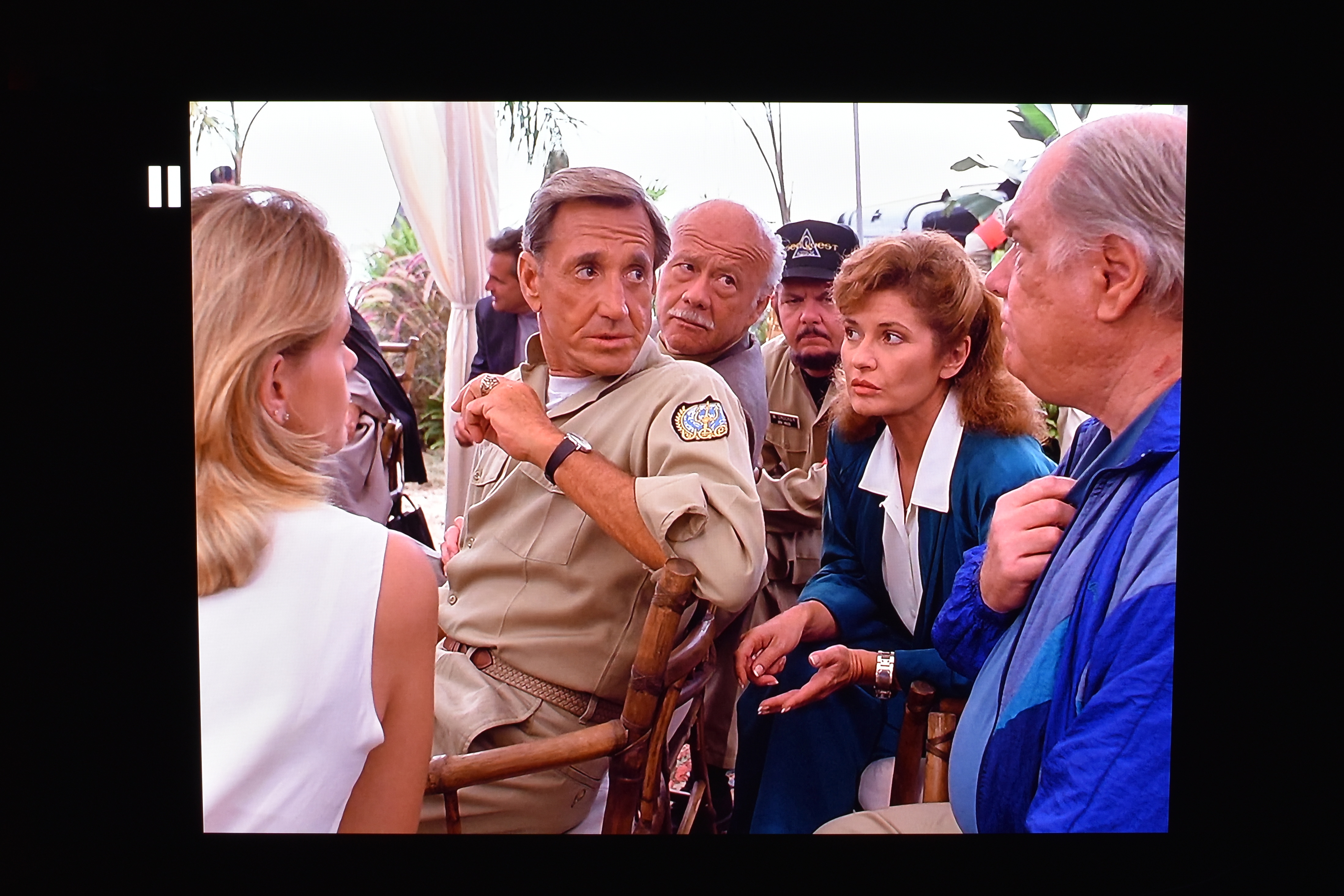
What about the end result? Well, movement is smooth, detail is superb (pictures don't do it justice), colors are vibrant, audio is crystal clear, format compatibility is all but perfect (used MKV, MP4, TS, FLAC and APE files with it) and perhaps even more importantly the player upscales old content (with poor digital transfers) extremely well.
CONCLUSION
The Dune HD Max 8K ultimately stands out as a player that delivers exactly what it promises, superb picture quality with crisp detail, stable motion, and consistently vibrant color reproduction. Audio performance is equally strong, thanks to its Hi‑Fi oriented design, producing clean, full, and accurate sound that can't really get much better than that. Its long‑standing OS remains familiar and easy to navigate, visually simple, fast, and intentionally unchanged for around a decade, which many enthusiasts all over the globe appreciate for its reliability. Whisper‑quiet operation is another highlight, supported by quality cooling (Noctua NF-S12A PWM fan) and a well‑designed metal chassis. Connectivity is rich, covering everything from high‑bandwidth network options to dedicated audio outputs, and the inclusion of a 3.5″ drive bay makes local storage integration effortless. I also need to emphasize its ability to play virtually any format thrown at it regardless of bitrate (at least I didn't come across any that didn't work) thus perfectly aligning with the company's reputation for broad compatibility. The lack of official Netflix support could be an issue for some people but since I don’t use that service (nor any streaming service for that matter), I can’t really make any comments about it (likewise I don’t use Plex so that’s not something I tested the Max 8K with).
Currently consumers can get their hands on the Max 8K Media Player by Dune HD for USD799 inside the USA (Dune HD) and for 879Euros inside the EU (Dune Shop EU) so its target audience is very specific. Cost aside the Max 8K has very little competition in the market today and since it delivers on everything I’d ever look for in a top-tier media player the Platinum Award is in order.

PROS
- Build Quality
- Amlogic S928X‑K/J (1xCortex A76 / 4xCortex A55 / Mali G57 MC2)
- 8GB DDR4 RAM / 64GB RAM
- 8K/60, 4K120 HDR+, Dolby Vision (VS10), AV1 Decoding
- DTS: X, Dolby True HD & Dolby Atmos Support
- WiFi 6 & Bluetooth v5.2
- 4 USB Ports (3xUSB 3.0 / 1xUSB 2.0)
- Internal 3.5" Drive Rack
- Noctua NF-S12A PWM
- S/PDIF, USB & Analog Audio Outputs
- OS (Linux & Android TV v11.0)
- Product Support
- Bluetooth Remote Control
CONS
- Price (For Some)
- Support For Streaming Services (Netflix, etc)