


CONCLUSION
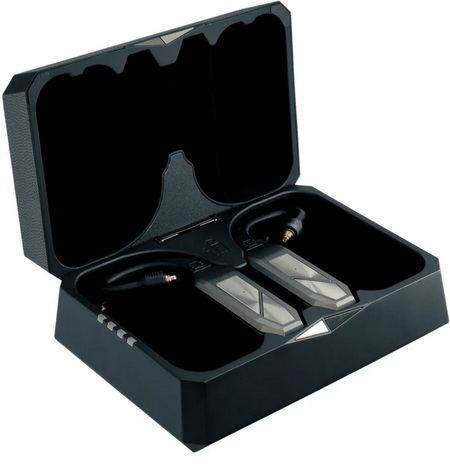
Testing the GO pod Max with multiple IEMs had a single goal, for me to check how close wired audio performance was with wireless and well, the FA9, FH9 and Orchestra Lite IEMs helped a lot with that. All 3 of these IEMs feature armature drivers arranged in such a way that they emphasize clarity and separation, so even small shifts in imaging or micro-detail like those introduced by switching from wired to wireless can become more noticeable. The GO pod Max’s CS43131 DAC, JVCKENWOOD's K2HD technology, automatic impedance matching, and high output voltage let all 3 IEMs operate at their full potential and the result was nothing short of impressive. All 3 delivered crisp treble, accurate mids, deep, controlled bass and a wide high resolution soundstage the likes of which I’ve never encountered before with any TWS model. There are some subtle differences when using the GO pod Max wirelessly with a good hi-res music player like the M15, M23 and R9 by FiiO but to notice them you’ll need to focus and wait for them and well, that’s hardly what most people listening to music will be doing. As for build quality the CNC machined enclosures look and feel great and even though the charging/storage case is made of plastic it’s certainly a lot better compared to what we get with regular TWS models (and let’s not forget the 4 UV lights used for sterilization). Battery life according to iFi audio is set at around 7 hours but that depends a lot not just on volume levels and even audio codec, it also depends on the filters you’ll be using from the iFi Nexis app. After adjusting everything to my needs I couldn’t surpass even 5 and 1/2 hours of music playback, which again is not a bad number considering everything these pack. Also, inside the bundle of the GO pod Max iFi Audio has placed ear loops with two-pin and MMCX connectors but if those aren’t good enough for your IEMs you can also purchase ear loops with Pentaconn and Estron T2 connectors from their website. When it comes to the dual cVc noise suppression microphones they did a very good job, something which I hardly ever expect from TWS models (their positioning certainly helped). My sole issue with the GO pod Max is that the pods are quite large, long and heavy (always compared to regular TWS models) but that’s something you get used to quite fast so I can hardly call it a drawback (some people however will probably not like that).
At the time of this review the GO pod Max already count 4 months in the global market and currently retail for USD599 inside the USA (Amazon.com) and for 624.17Euros inside the EU (Amazon.de). Yes, the GO pod Max may not come cheap, but they are clearly aimed towards audiophiles who already own one or more high-end IEMs and would like to also use them wirelessly and since they clearly outperform every TWS model I’ve used to date the Platinum Award is in order.

PROS
- Build Quality (IPX5 Certified CNC Machined Aluminum Housings)
- Audio Performance (Cirrus Logic MasterHIFI CS43131 DAC / Automatic Impedance Matching / JVCKENWOOD's K2HD technology)
- Audio Codec Compatibility (aptX Adaptive, aptX Lossless, aptX Classic, aptX HD, LDAC, LDHC/HWA)
- Dual cVc Noise Suppression Microphones
- Battery Life (Up To 7 Hours Of Playback Per Charge)
- Touch Controls
- Charging / Storage Case (Up To 30 Extra Hours / 4 UV Lights / USB C & Qi Wireless Charging)
- IEM Compatibility (MMCX & 0.78mm 2 Pin Connectors Included / Pentaconn and Estron T2 Available)
- iFi Nexis App
CONS
- Price (For Some)
- Size (For Some)