

INTRODUCTION
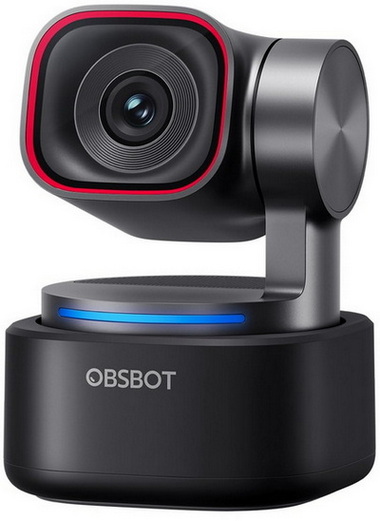
Webcams have come a long way from the grainy, fixed‑focus modules we once tolerated. As more people create content, stream, teach, and collaborate online, the demand has shifted toward cameras that behave less like simple peripherals and more like miniature production tools. Larger sensors, smarter autofocus, and AI‑driven framing have become the new baseline for anyone who wants consistent, professional‑looking video without building a full studio. A handful of companies have embraced this shift, blending PTZ mechanics, real‑time tracking, and computational imaging into compact devices that sit quietly on a monitor yet perform far above typical webcam expectations. OBSBOT has been one of the most active players in that space, and their latest entry, the Tiny 3, continues that push.
Founded in 2016, OBSBOT is an innovative imaging technology and hardware brand dedicated to using new technologies such as AI to inject new vitality into the videography market. With the artificial intelligence as the core, OBSBOT focuses on the application research of new technologies in the field of videography. It hopes to use revolutionary technology and innovative products to innovate the way of public records and image creation, and to change people's social way.
The Tiny 3 is an AI‑Powered 4K Webcam which OBSBOT has equipped with a 1/1.28" CMOS sensor (50M effective pixels, ƒ/1.8 aperture, 82.4°/74° FOV depending on aspect ratio, 70° horizontal FOV and 1–4x digital zoom), built‑in intelligent directional microphone system (1 omnidirectional + 2 directional mics) with multiple audio modes and automatic gain control, and a body featuring a non‑removable 2‑axis gimbal (±130° pan / 32° down to –60° up tilt controllable range, ±150° pan / ±90° tilt mechanical range) complete with auto‑tracking, voice tracking, voice locator, gesture control, and voice control. The Tiny 3 is capable of recording 4K video at up to 3840x2160@30 in MJPEG (with additional MJPEG modes at 1920x1080 up to 120fps, 1280x720 up to 120fps, and several 4:3 resolutions), as well as YUV output at lower resolutions. Thanks to its upgraded imaging pipeline it supports HDR, All‑Pixel PDAF autofocus, manual focus, a 100–12800 ISO range, ±3EV exposure compensation, and a minimum focus distance of 14cm. All AI‑assisted functions, including tracking, framing, exposure logic, and audio mode selection, are accessible through the OBSBOT Center software.