

INTRODUCTION
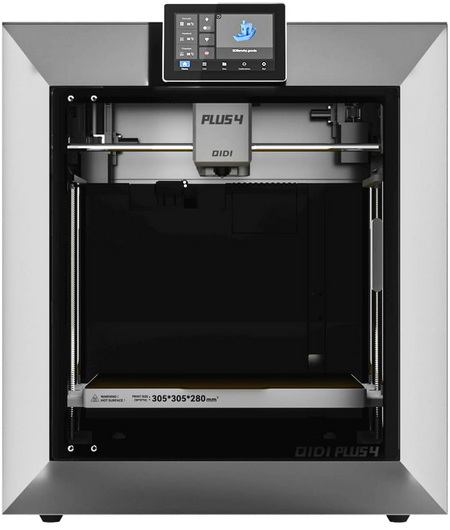
3D printing has quietly shifted from a niche hobby to a practical tool that more people rely on for prototyping, repairs, and small‑batch creations. What used to feel experimental now feels almost routine, with printers becoming faster, more reliable, and far easier to live with. The real difference these days isn’t just print quality, it’s how smoothly a machine fits into your workflow. After using and testing a wide range of models over the years, I’ve learned that the best printers are the ones that disappear into the background and simply get the job done. That brings me to today’s review subject, the QIDI PLUS 4, a machine that promises industrial‑level stability without the industrial‑level headache.
Our story formed in 2014, QIDI Tech began with a small team of engineers with a big vision: we wanted to make 3D printing accessible to everyone. Crazy? A little bit. With our journey have consistently focused on more than just producing machinery; it's about enabling creators of all kinds to bring their ideas to life. Every day, we're doing more than just constructing printers. We are establishing an environment where seasoned designers and adventurous individuals can join forces, work together, realize ideas, and develop. QIDI Tech 3D printers are created to be intuitive and efficient, after all, delivering a hassle free printing process for all users from the beginning should be the top priority. Our extensive manufacturing plant and advanced research and development center embody our commitment to creativity, excellence, and teamwork.
The QIDI Plus 4 comes in with a roomy 305x305x280mm build volume and a CoreXY motion system driven by 9mm belts for stability at high speeds. It’s rated for up to 600mm/s with acceleration up to 20,000mm/s², backed by input shaping and closed‑loop control to keep prints clean even when pushing it. The direct‑drive extruder can reach temperatures of up to 370°C, letting it handle tougher materials like Nylon, ABS, ASA, PETG, TPU, and carbon‑ or glass‑fiber composites. A second‑generation actively heated chamber climbs to 65°C, which helps reduce warping on engineering filaments. The dual‑sided textured PEI plate makes part removal painless, and the fully automatic leveling system keeps setup hands‑off. QIDI also features an 5-inch 800x480 touch screen, Wi-Fi 2.4GHz connectivity, USB port, Ethernet RJ45 port, filament runout and tangle detection (quad filament box is also supported), and an auxiliary part‑cooling fan for sharper details. The machine runs on Windows, macOS, or Linux and supports STL, OBJ, and 3MF files. With a solid metal frame, dual Z‑axis lead screws, and a carbon‑filtered circulation fan, it’s clearly built for reliability. All of this comes wrapped in a chassis that feels more industrial than hobby‑grade.